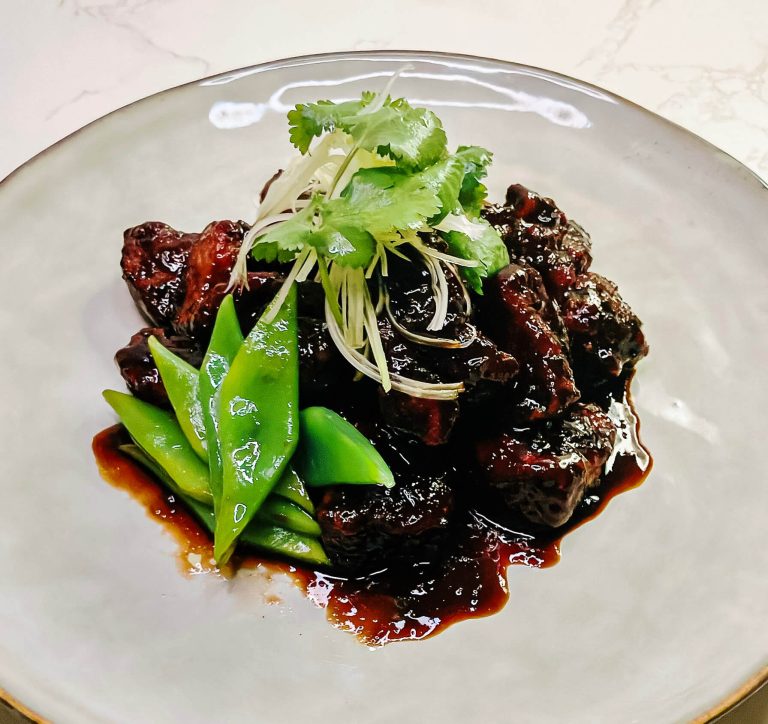

How to Cook Brown Rice (4 Easy Methods + Water Ratios)
This guide shows exactly how to cook brown rice on the stovetop, in a rice cooker, microwave, or by boiling, with tested water ratios for each method.
Tested with: short-grain, medium-grain (Calrose), jasmine, and basmati brown rice.

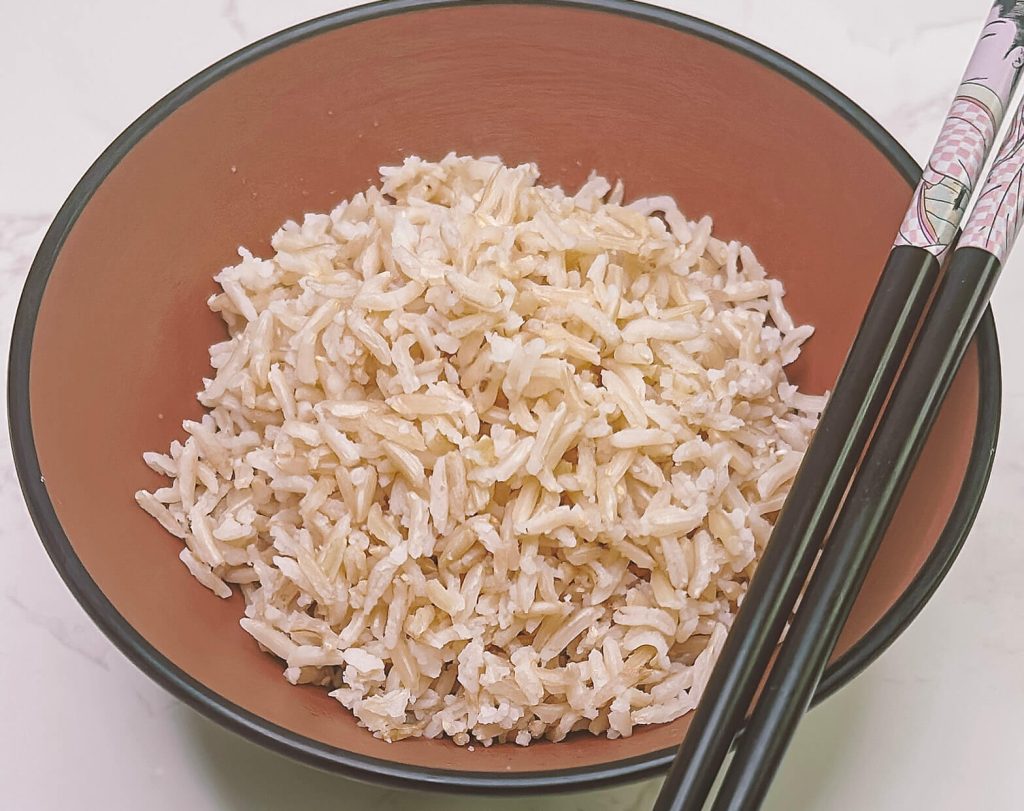
Brown rice has become much more popular in recent years, especially in salads and everyday meals where people want something a bit more wholesome than white rice.
But for many of us, it’s not something we grew up eating. White rice is still the default in most kitchens — it cooks faster, feels softer, and is easier to get right.
Brown rice is different.
It takes longer, needs more water, and if you’ve ever tried cooking it without a clear method, you’ve probably ended up with rice that’s too firm, uneven, or just not enjoyable.
At the same time, once it’s cooked properly, brown rice has a great texture — slightly chewy, nutty, and perfect for salads, bowls, and everyday meals.
In this guide, I tested four common cooking methods — stovetop, rice cooker, boiling, and microwave — using the same setup so you can clearly see what works best.
The goal isn’t to find one “perfect” method, but to give you a simple baseline that works consistently. If you’ve struggled with how to cook brown rice properly, this guide will walk you through everything step by step.
Here’s What You’ll Learn
- How to cook brown rice perfectly using 4 simple methods
- Tested water ratios that actually work
- Which method gives the best result
- How to avoid hard or uneven rice
Jump to:
- Brown Rice Types (Quick Overview)
- Why Rinsing Brown Rice Matters
- Optional: Should You Soak Brown Rice?
- 4 Ways to Cook Brown Rice
- Water Ratios for Each Cooking Method
- Results: Which Method Works Best?
- Common Mistakes When Cooking Brown Rice
- How to Reheat Rice Properly
- Final Thoughts
Why Brown Rice Is Different

From left to right: short-grain, medium-grain, jasmine, and basmati brown rice
Brown rice still has its outer bran layer, which makes it firmer and slower to cook than white rice.
Compared to white rice:
- Needs more water
- Takes longer cooking time
- Has a slightly firmer texture
Because of this, cooking brown rice requires a bit more time and liquid — but it’s also more forgiving.
In testing, brown rice handled extra water much better than white rice, especially when using boiling and microwave methods.
Brown Rice Types (Quick Overview)
All four types work with the methods in this guide:
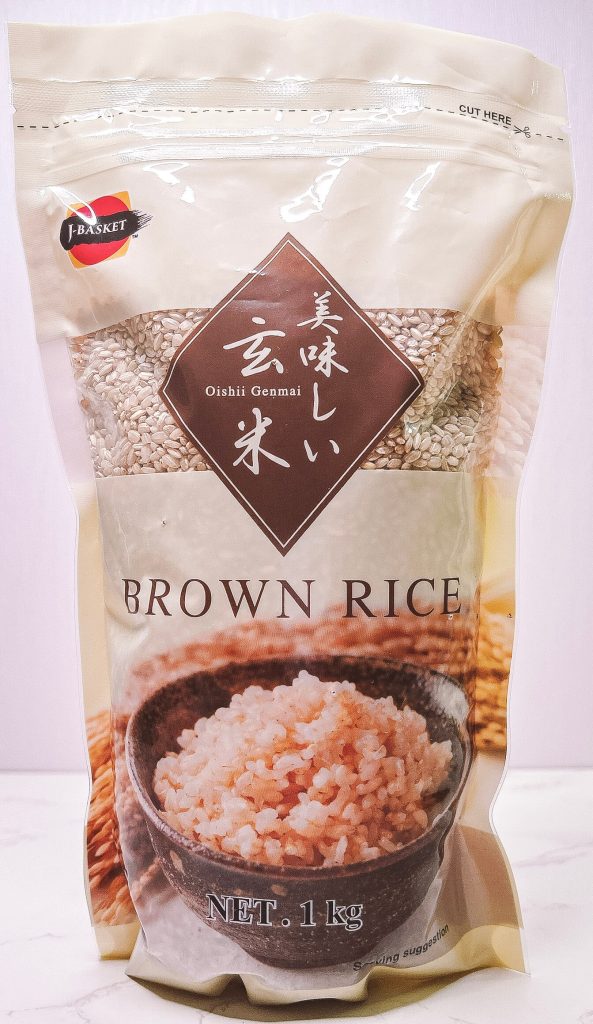
Japanese short-grain brown rice (genmai) with its short, rounded grains and slightly sticky texture when cooked 
Australian medium-grain brown rice (Calrose), known for its slightly soft and tender texture when cooked 
Long-grain brown jasmine rice, known for its light, fluffy texture and subtle aroma when cooked 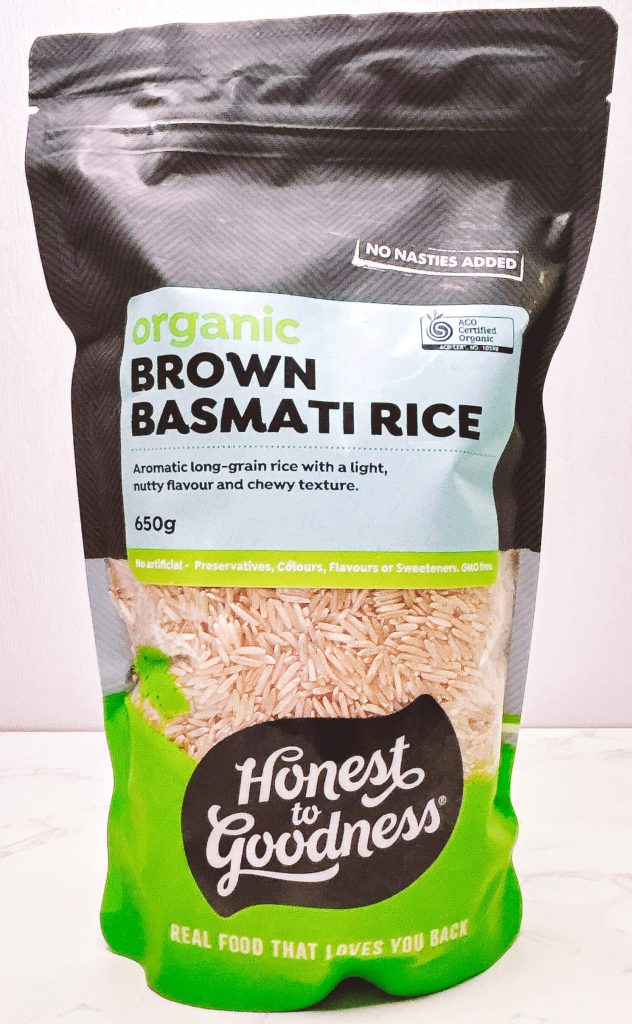
Long-grain brown basmati rice, known for its dry, fluffy texture and separate grains when cooked
- Short grain → softer, slightly sticky
- Medium grain (Calrose) → balanced, everyday rice
- Jasmine (long grain) → lighter, more separate
- Basmati → long, fluffy, needs more water
👉 No need to overthink — the method matters more than the type.
Why Rinsing Brown Rice Matters

Rinse brown rice under cold running water to remove excess surface starch 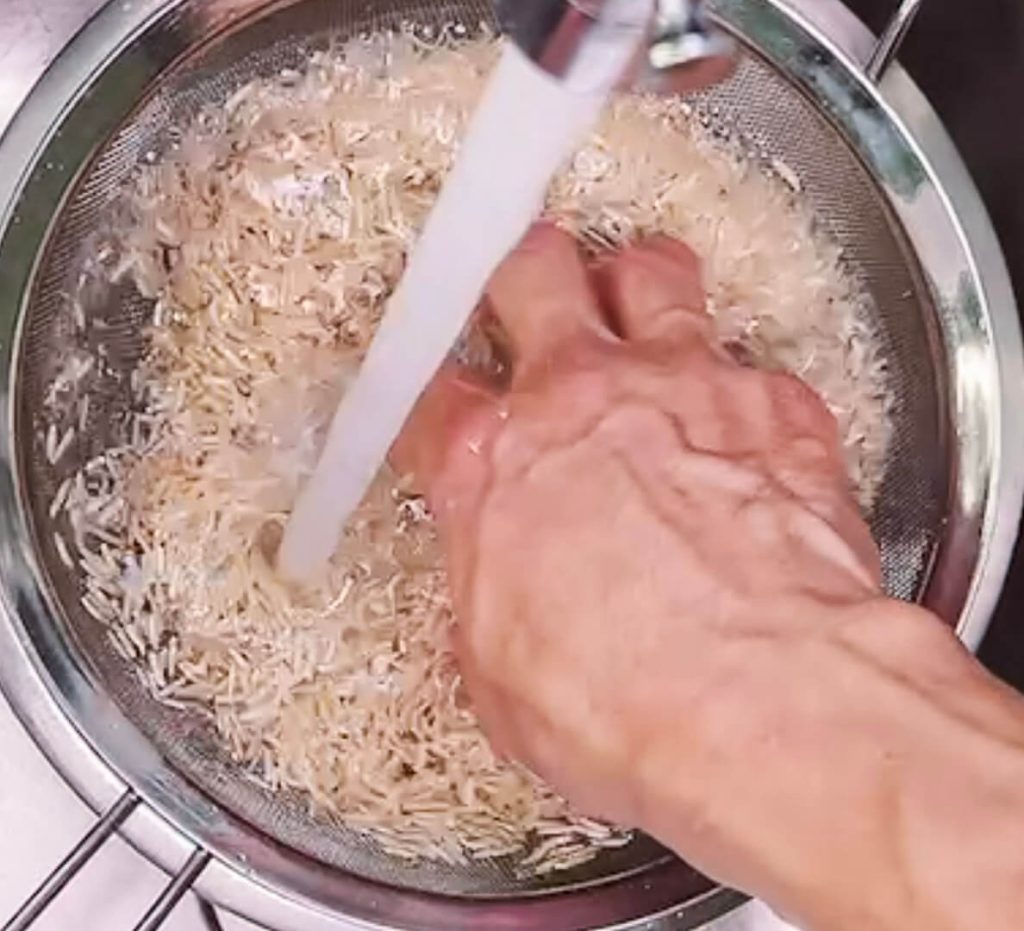
Gently wash the rice by rubbing the grains lightly to release excess starch 
Drain the rice well after rinsing to remove excess water
Rinse the rice 2–3 times until the water becomes mostly clear.
In testing:
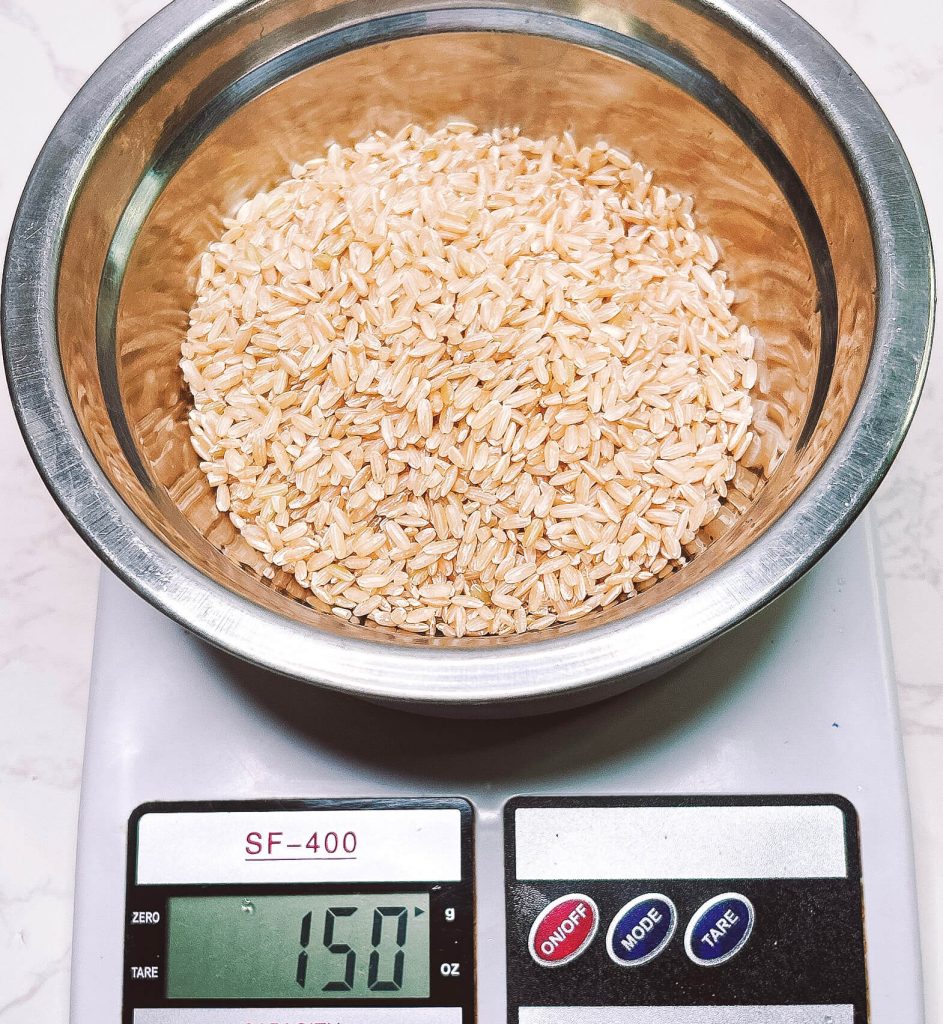
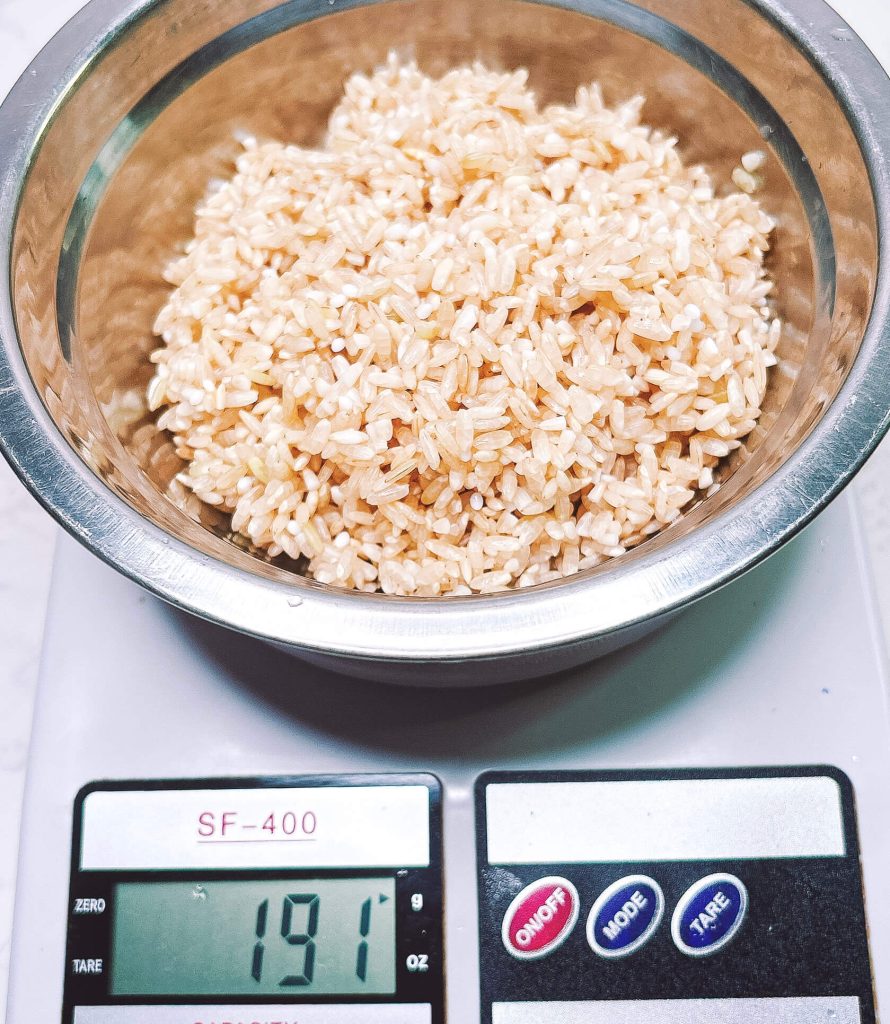
- 150g raw rice → ~165g after washing


Because rice absorbs some water during rinsing, all ratios in this guide are based on washed rice.
Optional: Should You Soak Brown Rice?
Brown rice can be soaked before cooking, but it’s not required.
In testing, soaking for 30–60 minutes:
- Increases water absorption before cooking
- Slightly reduces cooking time
- Produces a softer texture
However, all methods in this guide are designed to work without soaking.
👉 For most home cooking, skipping soaking is simpler and more consistent.
4 Ways to Cook Brown Rice
Here are the best methods to learn how to cook brown rice consistently at home.
1. Rice Cooker (Best Overall)
If you’re wondering how to cook brown rice with the least effort, the rice cooker is the best method.
Best for: easiest and most consistent result
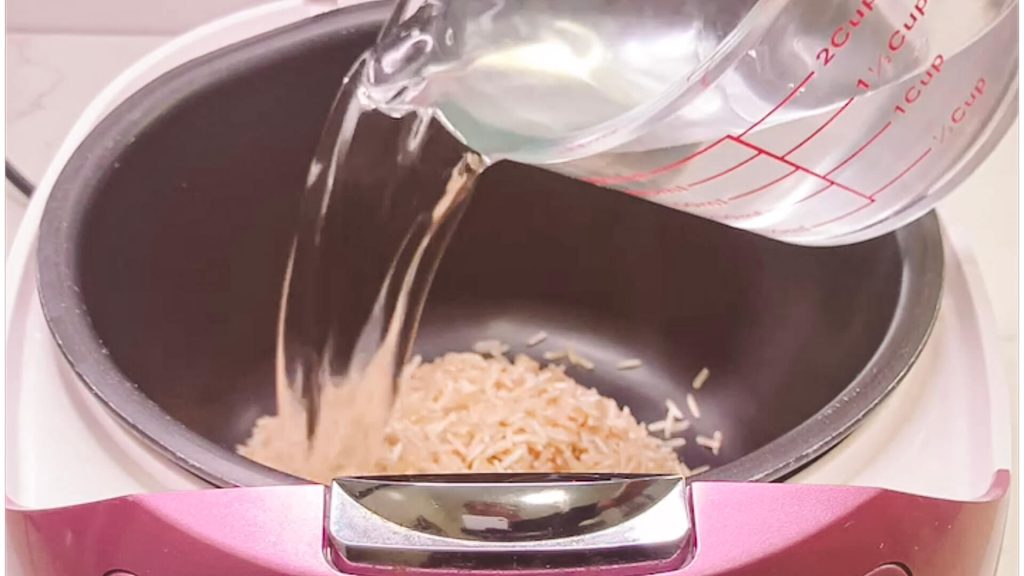
Add the measured water to the rice in the rice cooker 
Start the rice cooker and let it cook automatically 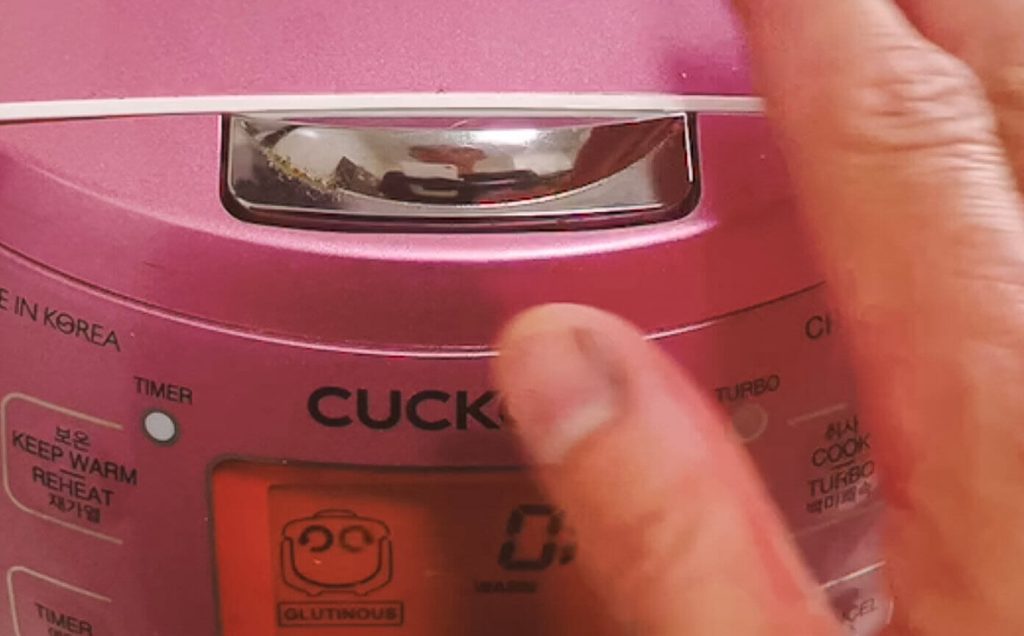
Rice cooker switches to keep warm once cooking is complete 
Do not open the lid immediately — let the rice rest to finish steaming 
Open the lid after resting to reveal soft, evenly cooked brown rice 
Cooked brown rice with a soft, fluffy texture and well-separated grains
- Add washed rice + water
- Start normal rice setting
- Let it finish
- Rest 20 minutes before opening
- Fluff before serving
👉 Most reliable texture with minimal effort
2. Stovetop Method
This is a classic way to learn how to cook brown rice without a rice cooker.
Best for: simple cooking without a rice cooker
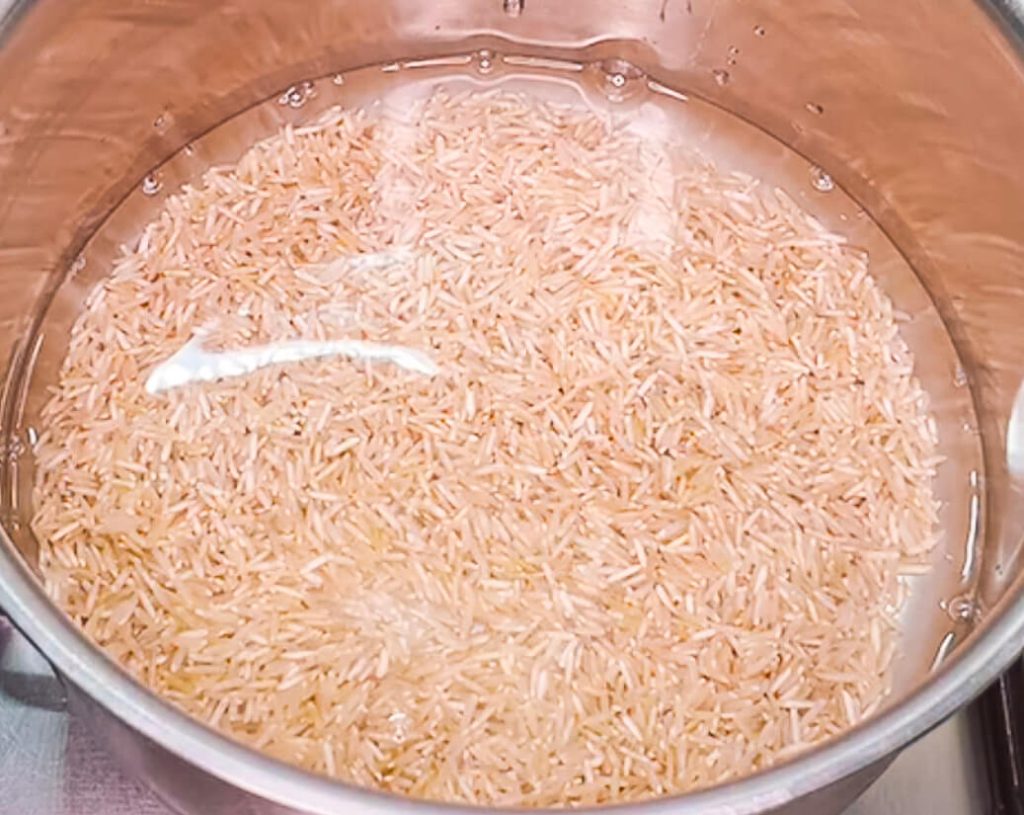
Brown rice with measured water ready for stovetop absorption cooking 
Bring the rice and water to a gentle boil on the stovetop 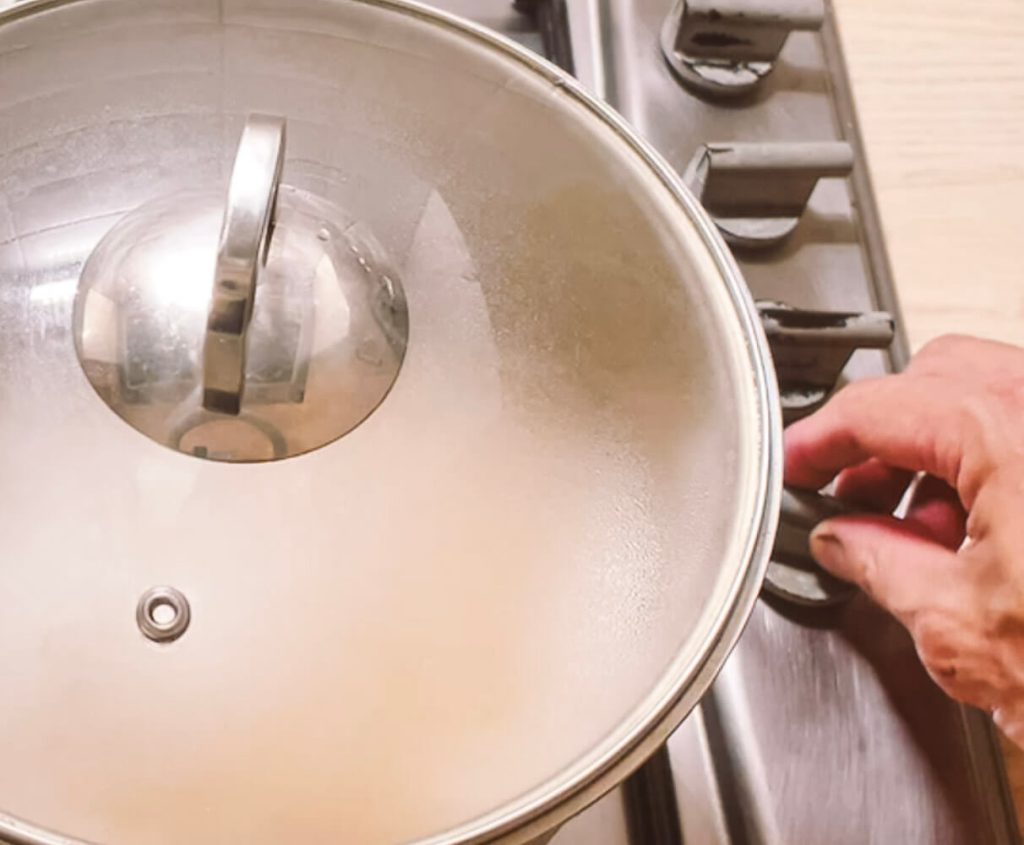
Once boiling, cover with a lid and reduce heat to low to simmer. 
Let the rice simmer gently with the lid on—avoid opening during cooking. 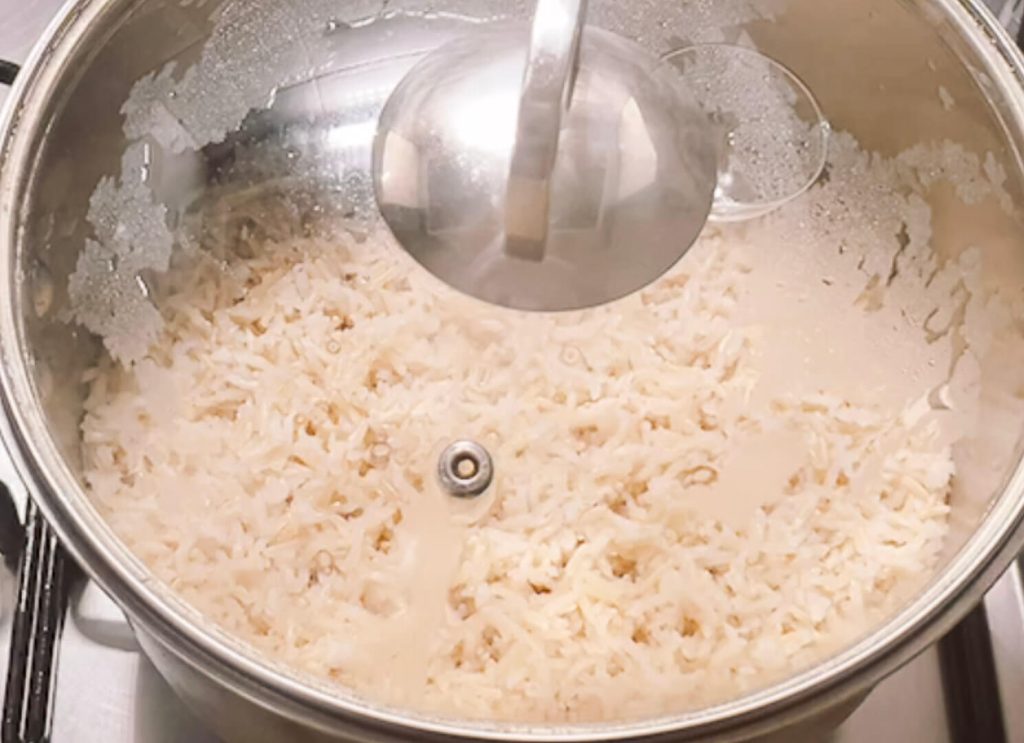
Once the water is absorbed and small holes appear, the rice is nearly ready. 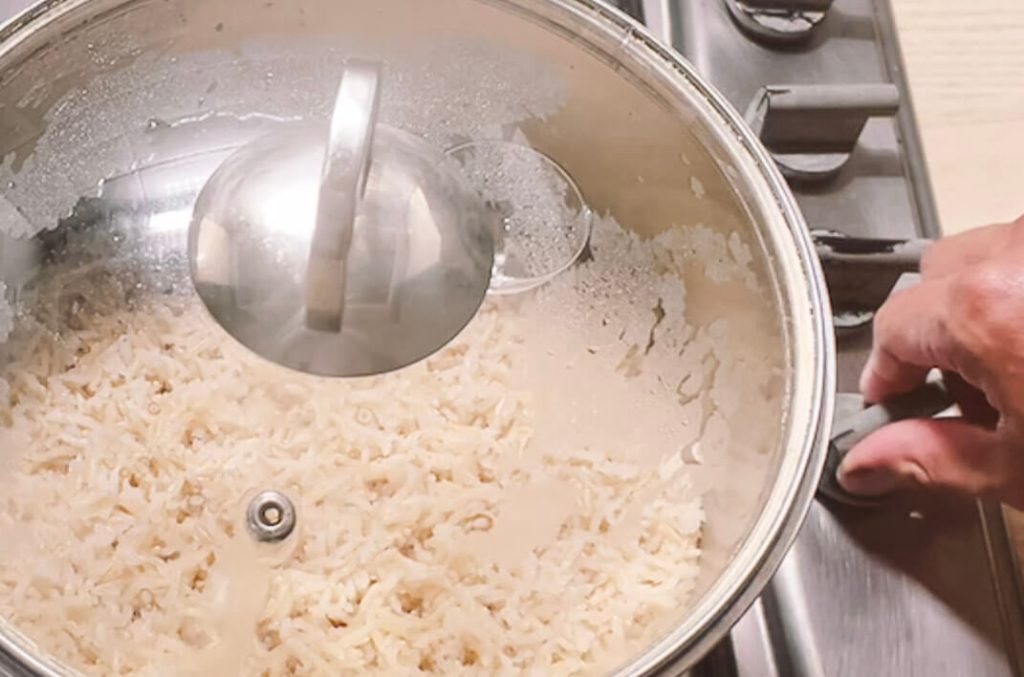
Turn off the heat as soon as the water is fully absorbed. 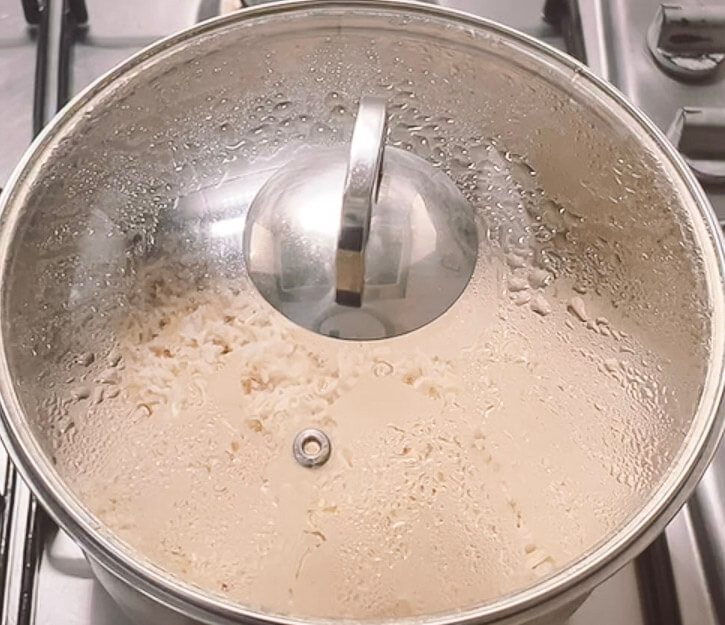
Let the rice rest covered for at least 15 minutes to finish steaming. 
Fluff the rice gently after resting to separate the grains and improve texture.
- Add rice + water to pot
- Bring to gentle boil
- Cover → low heat
- Cook ~18 minutes
- Rest 20 minutes
- Fluff
👉 Good results, but requires some heat control
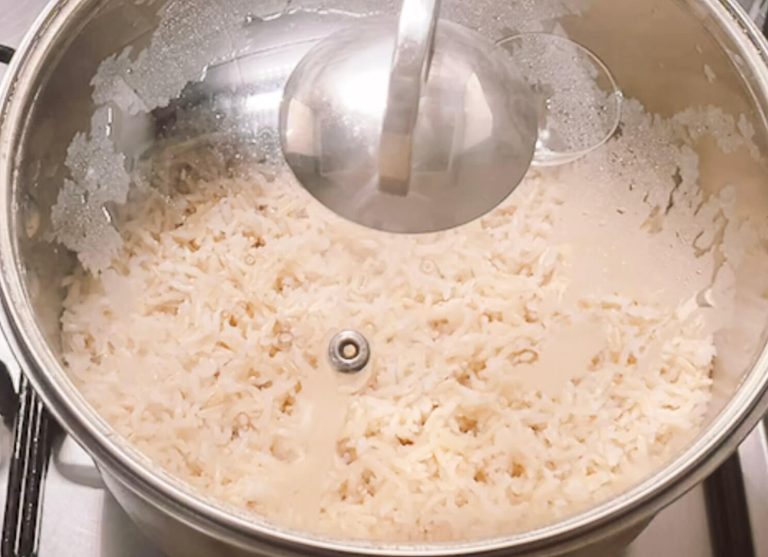
Pro Tip: When to Turn Off the Heat
Watch the surface of the rice closely near the end of cooking.
- Small holes (craters) will start to form on the surface
- At first, you’ll see bubbles actively coming up through the holes
- As the water finishes absorbing, the bubbling will stop
👉 This is your signal
- If the holes are visible and no more bubbles are coming up,
→ the water is fully absorbed
→ the rice is ready
Turn off the heat immediately, keep lid on and rest.
3. Boiling Method (Most Forgiving)
Best for: easy method with low risk of failure
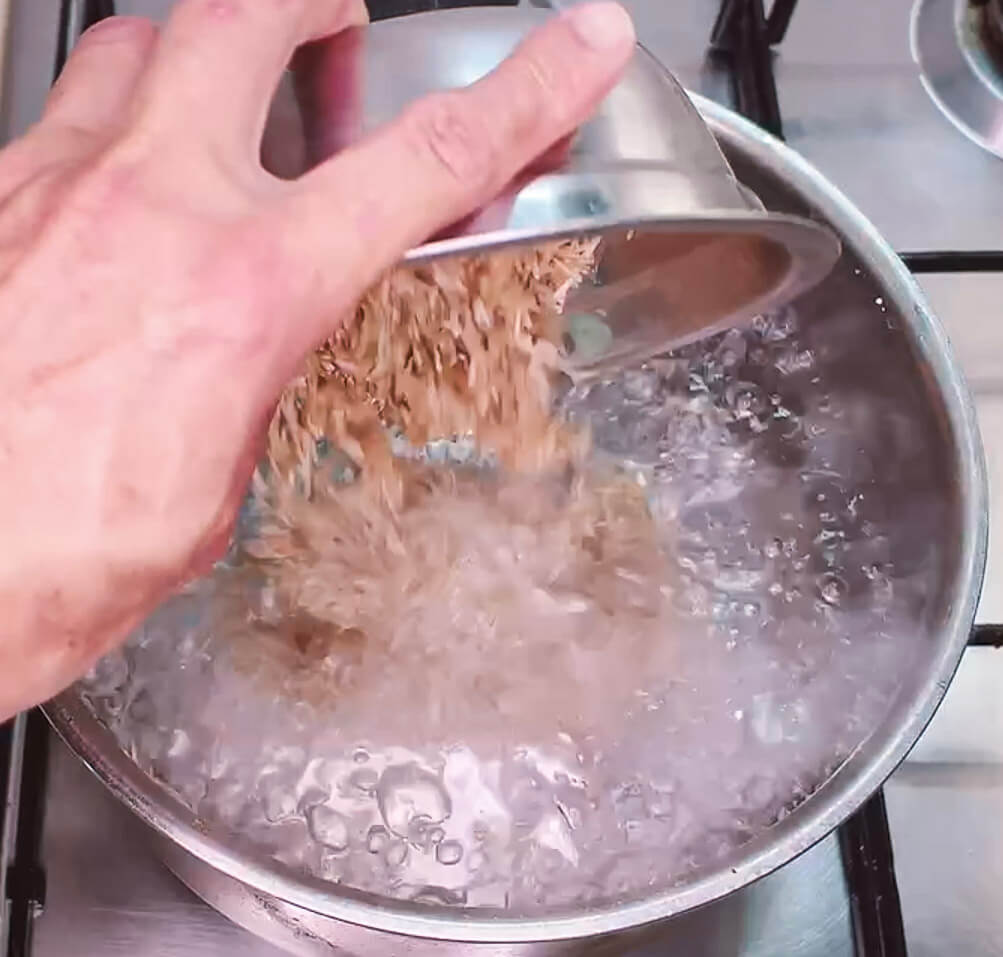
Add the rice to rapidly boiling water, like cooking pasta. 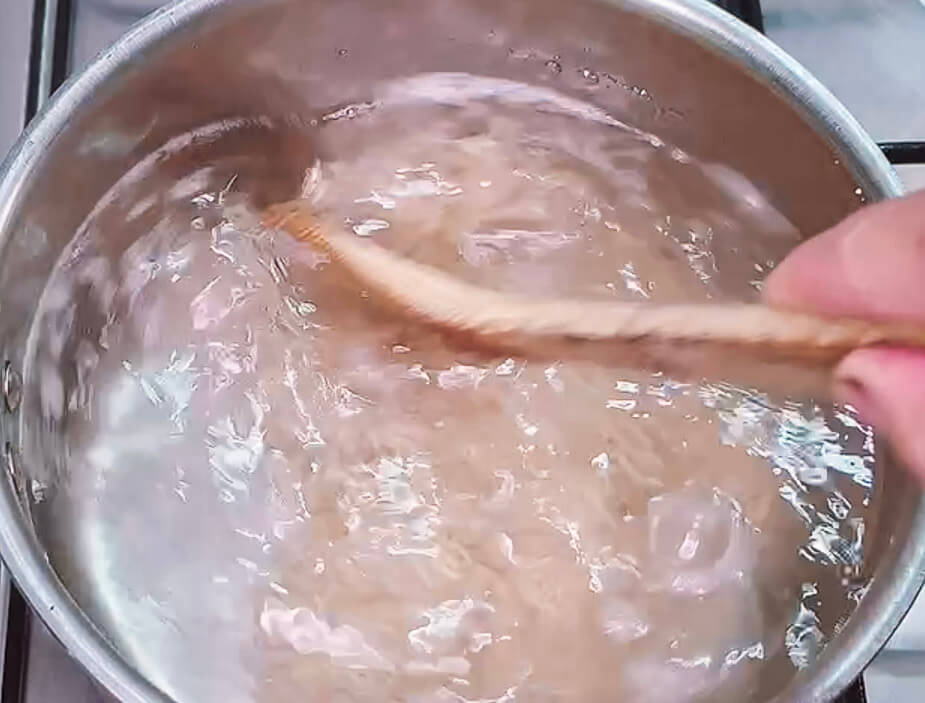
Stirring brown rice in boiling water to prevent sticking 
Cook the rice at a steady boil until tender. 
Check doneness by pressing a grain—soft with a slight bite means it’s ready. 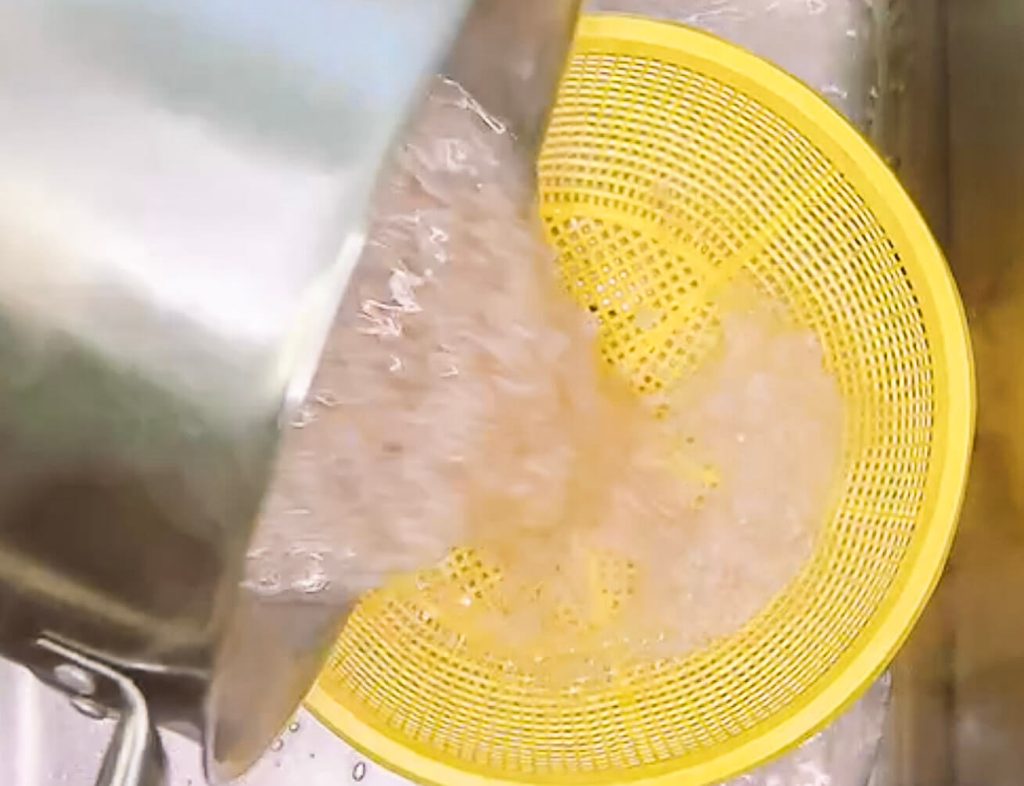
Drain the rice well once it’s tender—just like pasta. 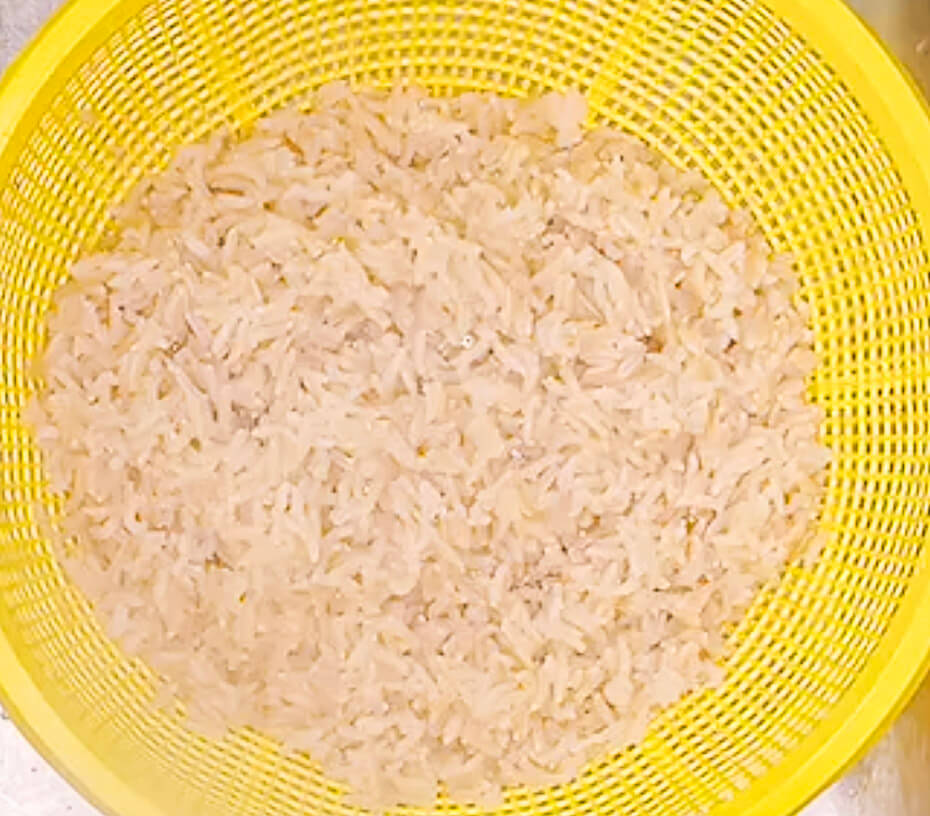
Let excess water drain off before returning the rice to the pot. 
Return the drained rice to the pot, uncover, and let it steam off the heat. 
Let the rice sit uncovered briefly to allow excess moisture to evaporate. 
After steaming, the rice should be soft, fluffy, and evenly cooked.
- Bring a large pot of water to a boil
- Add rice
- Cook until tender (see timing below)
- Drain well
- Rest 10 minutes uncovered to allow excess moisture to evaporate.
- Ready to serve
👉 Very forgiving — easy to monitor and adjust
4. Microwave Method
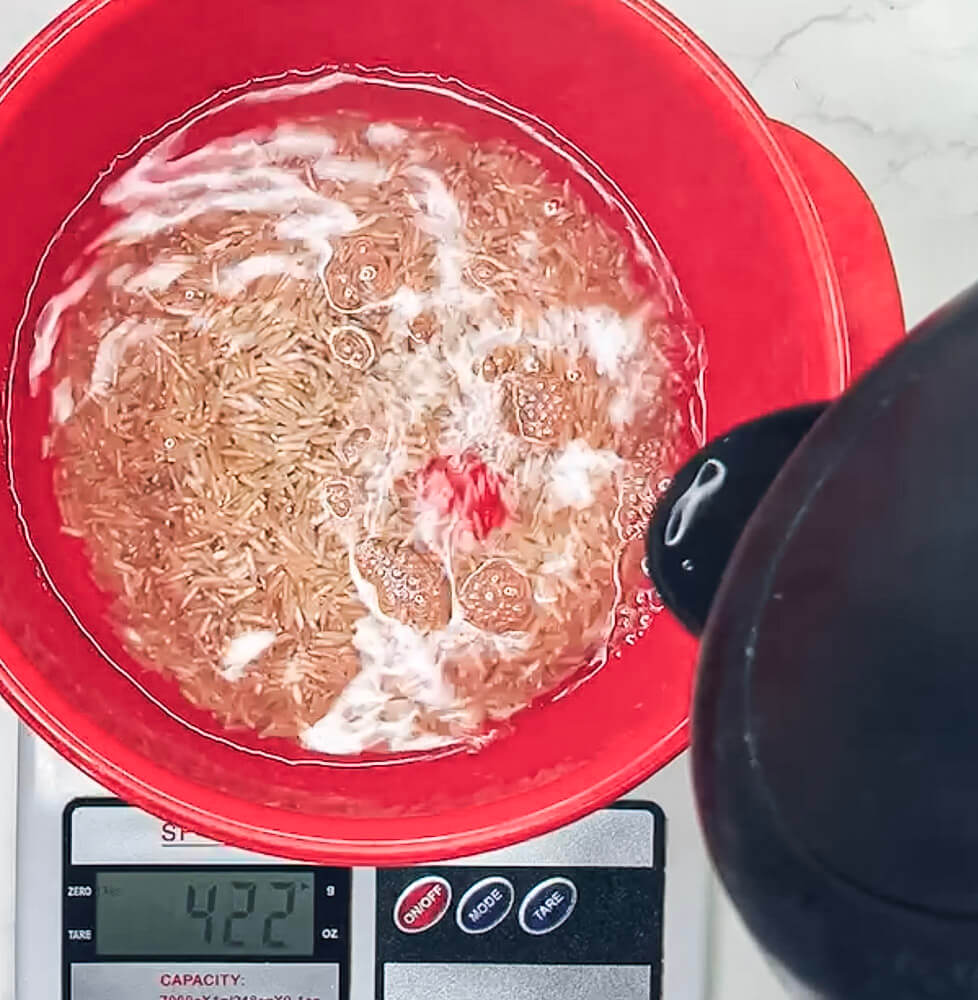
Pour boiling water over the rice to start the microwave cooking process. 
Cover with a vented lid to allow steam to escape during cooking. 
Cover with a vented lid—do not seal tightly. 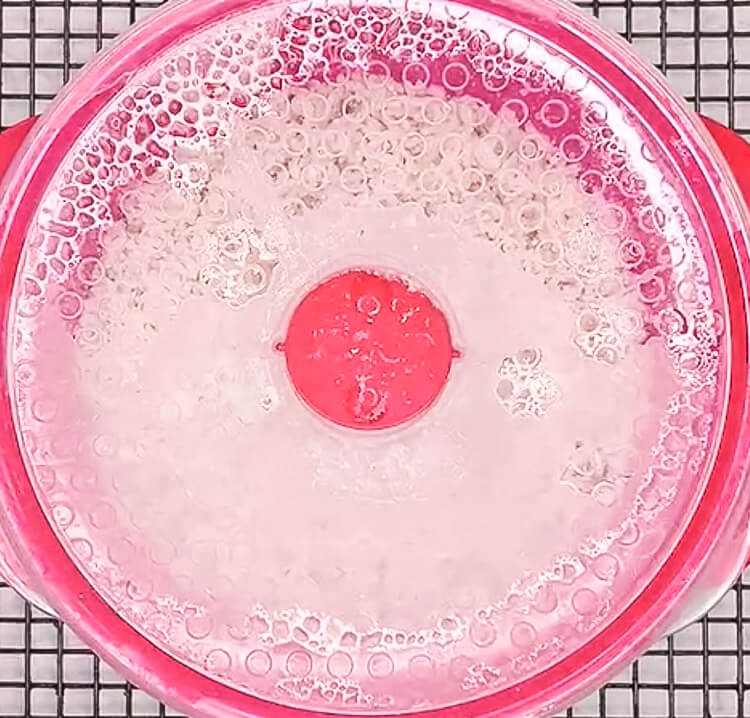
Let the rice rest covered after cooking to finish steaming. 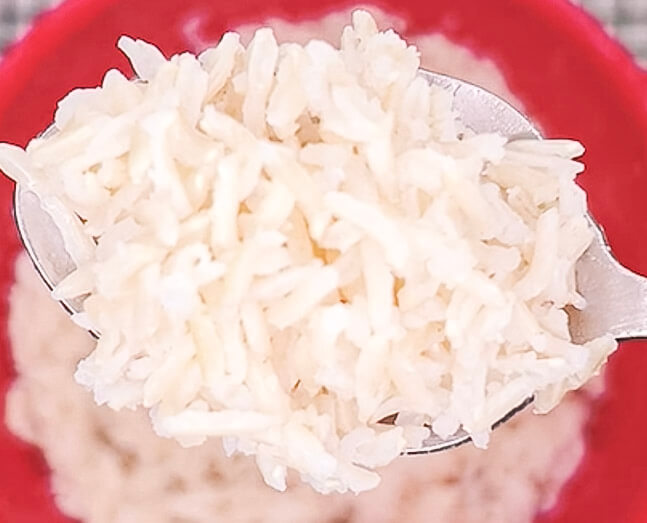
After resting, the rice should be soft, fluffy, and evenly cooked.
Best for: small portions
- Add boiling water to the rice
- Microwave about 25 minutes
- Cover and rest 20 minutes
- Fluff before serving
👉 Works better than expected for brown rice
Water Ratios for Each Cooking Method (Tested)
Based on 150 g (5.3 oz) washed brown rice
Stovetop Absorption Method
| Rice Type | Water for 150 g (5.3 oz) Rice |
|---|---|
| Short-grain rice | 300 g (10.1 fl oz) |
| Medium-grain rice | 320 g (10.8 fl oz) |
| Long grain / Jasmine | 330 g (11.2 fl oz) |
| Basmati rice | 340 g (11.5 fl oz) |
Rice Cooker Method
| Rice Type | Water for 150 g (5.3 oz) Rice |
|---|---|
| Short-grain rice | 280 g (9.5 fl oz) |
| Medium-grain rice | 300 g (10.1 fl oz) |
| Long grain / Jasmine | 320 g (10.8 fl oz) |
| Basmati rice | 320 g (10.8 fl oz) |
Microwave Method
| Rice Type | Water for 150 g (5.3 oz) Rice |
|---|---|
| Short-grain rice | 360 g (12.2 fl oz) |
| Medium-grain rice | 380 g (12.8 fl oz) |
| Long grain / Jasmine | 380 g (12.8 fl oz) |
| Basmati rice | 420 g (14.2 fl oz) |
Boiling Method
| Rice Type | Cooking Time |
|---|---|
| Short-grain rice | 20–25 min |
| Medium-grain rice | 25–30 min |
| Long grain / Jasmine | 15–20 min |
| Basmati rice | 15–20 min |
Results: Which Method Works Best? (Tested Comparison)
After testing all four methods across different brown rice types, one thing is clear:
🏆 Best Overall: Rice Cooker

From left: short grain, medium grain, jasmine, and basmati brown rice cooked in a rice cooker.
- Most consistent results across all rice types
- Even cooking with minimal effort
- Reliable texture every time
👉 If you have a rice cooker, this is the best method to use.
Other Methods (All Work — Different Trade-offs)
All other methods produced good results when done correctly. The difference comes down to ease, control, and consistency.
Stovetop Absorption
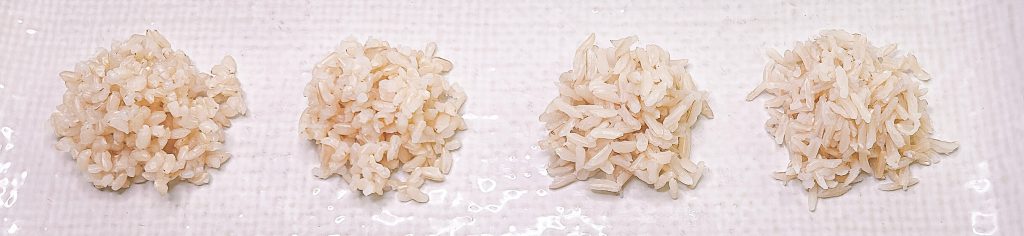
From left to right: short grain, medium grain, jasmine, and basmati brown rice cooked using the stovetop method.
- Produces good, structured grains
- Requires attention to heat and timing
- Results can vary depending on pot and heat control
Boiling Method
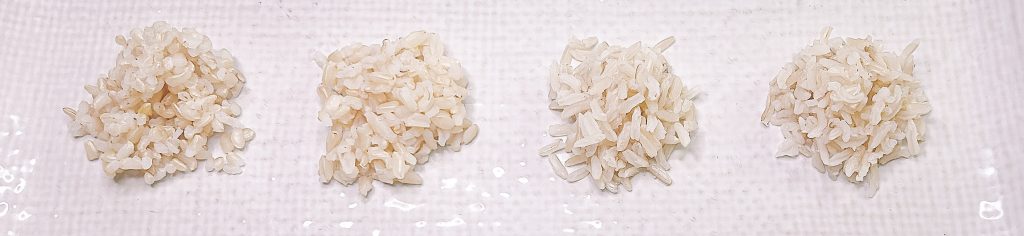
From left to right: short grain, medium grain, jasmine, and basmati brown rice cooked using the boiling method.
- Very forgiving and easy to manage
- No need for exact water ratios
Microwave Method
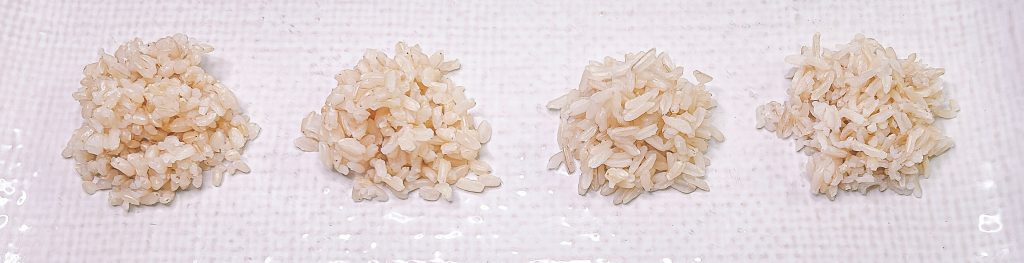
From left to right: short grain, medium grain, jasmine, and basmati brown rice cooked using the microwave method.
- Works for small portions
- Requires more water and careful setup
- Results depend heavily on container and microwave power
Common Mistakes When Cooking Brown Rice
1. Not Using Enough Water
Brown rice needs significantly more water than white rice.
👉 Result:
- Undercooked center
- Hard or chewy texture
2. Skipping the Resting Step
This is one of the biggest mistakes.
👉 Result:
- Wet or uneven texture
- Steam hasn’t redistributed
👉 Always rest for at least 10–15 minutes after cooking.
3. Using High Heat Throughout (Stovetop)
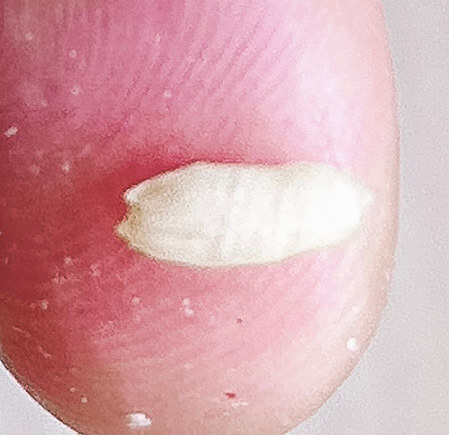
Undercooked brown rice will have a firm outer texture with a hard white center inside.
Brown rice needs gentle cooking after boiling.
👉 Result:
- Water evaporates too fast
- Rice cooks unevenly or burns
👉 Bring to boil → then low heat + lid on
4. Not Draining Properly (Boiling Method)

Leaving excess water will ruin the texture.
👉 Result:
- Mushy or waterlogged rice
👉 Drain thoroughly, then rest covered.
5. Using the Wrong Container (Microwave)
Not all containers handle steam properly.
👉 Result:
- Overflow or uneven cooking
- Dry or partially cooked rice
👉 Use a deep, vented container with enough space
6. Not Adjusting for Your Rice

This is the most overlooked mistake.
Not all rice cooks the same — even within the same category.
- Different brands absorb water differently
- Older rice tends to need more water
- Processing and polishing levels can vary
- Even the same “medium grain” rice can behave differently
- Inconsistent results even when following a recipe
👉 Different brands and batches absorb water differently — adjust slightly as needed.
Final Tip
If your rice isn’t perfect the first time, don’t assume the method is wrong —
👉 adjust water slightly and try again.
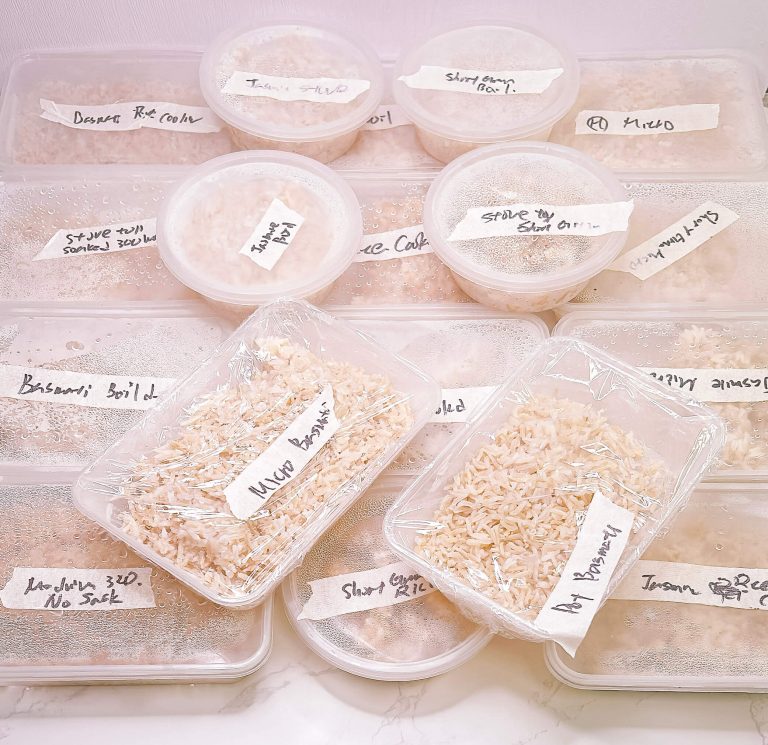
Test setup showing different brown rice types and cooking methods used in this guide.
How to Reheat Brown Rice Properly

Leftover rice can dry out in the refrigerator, but reheating it correctly restores moisture and texture.
Microwave Method (Best)
The microwave is the most effective way to reheat rice.
Place the rice in a bowl and add 1–2 tablespoons of water per cup of rice. Cover the bowl loosely with a lid or damp paper towel and heat until hot.
The added moisture turns into steam, which helps rehydrate the rice and soften the grains again.
Stovetop Method
You can also reheat rice in a small pot.
Add a small splash of water, cover the pot, and warm the rice over low heat for a few minutes, stirring occasionally until heated through.
Rice Cooker (Keep Warm)
If the rice is already in a rice cooker, you can reheat it using the keep warm setting.
Sprinkle a small amount of water over the rice, close the lid, and allow the rice to warm gently. The steam will help restore moisture and soften the grains again.
This method works well, but it is much slower than using a microwave and can take 30 minutes or longer, so it’s mainly useful when the rice is already in the cooker.
For best results, reheat only once and avoid repeated cooling and reheating.
Final Thoughts
Now that you know how to cook brown rice using different methods, you can choose the one that fits your kitchen best. Brown rice takes a little more time and water than white rice, but once you understand how it behaves, it’s very straightforward to cook.
From testing all four methods, the rice cooker gives the most consistent results, but every method in this guide works well when done properly. The key is using the right amount of water, controlling heat, and allowing the rice to rest after cooking.
It’s also important to remember that not all rice is the same. Different brands, ages, and grain types can affect how much water is needed, so small adjustments are normal.
Once you get comfortable with these methods, brown rice becomes just as easy to cook as white rice — with a slightly firmer texture and a more nutty flavor that works well in bowls, salads, and everyday meals.

How to Cook Brown Rice (4 Methods Tested)
Equipment
- 1 Pot with lid
- 1 Rice cooker
- 1 Microwave-safe container with lid
- 1 Large pot (boiling method)
- 1 Bowl (for rinsing)
- 1 Fine strainer or sieve
Ingredients
Brown rice – 150 g (short-grain, medium-grain, jasmine, or basmati)
- Water depends on method:
Stovetop:
- Short-grain – 300 g water
- Medium-grain – 320 g water
- Jasmine – 330 g water
- Basmati – 340 g water
Rice Cooker:
- Short-grain – 280 g water
- Medium-grain – 300 g water
- Jasmine – 320 g water
- Basmati – 320 g water
Microwave:
- Short-grain – 360 g water
- Medium-grain – 380 g water
- Jasmine – 380 g water
- Basmati – 420 g water
Boiling:
- 1.5 -2 L water no exact ratio needed
Instructions
Prep (ALL METHODS)
- Rinse rice twice under running water.
- Drain very well before cooking.
Stovetop Absorption Method
- Add rice and measured water to a pot.
- Bring to a gentle boil over medium heat.
- Once boiling, cover and reduce heat to low.
- Cook for 18 minutes without opening the lid.
- Turn off heat when holes appear in the rice and there is no bubbling inside them.
- Rest covered for 20 minutes.
- Fluff before serving.
Rice Cooker Method
- Add rice and water to the rice cooker.
- Start the brown rice setting if your rice cooker has one. If not, use the standard rice setting.
- Once finished, keep lid closed and rest for 20 minutes.
- Fluff before serving.
Microwave Method
- Place rice in a deep microwave-safe container.
- Add measured boiling water.
- Cover with a vented lid.
- Microwave on high for 25 minutes.
- Let rest covered for 20 minutes.
- Fluff before serving.
Boiling Method
- Bring 1.5–2 liters of water to a boil.
- Add rice.
- Cook until tender:
- Short grain: 20–25 min
- Medium grain: 25–30 min
- Jasmine: 15–20 min
- Basmati: 15–20 min
- Drain well.
- Put back in pot, uncover and rest for 10 minutes.
- Fluff before serving.
Notes
👉 Thanks for visiting! If you try this recipe, I’d love to hear how it turned out.
Leave a comment or tag me on Instagram @seasonedwithflavor — it makes my day!