Easy Air fryer Sweet & Sour Pork (Subuta) – Two Sauce Styles (Black Vinegar & Ketchup)
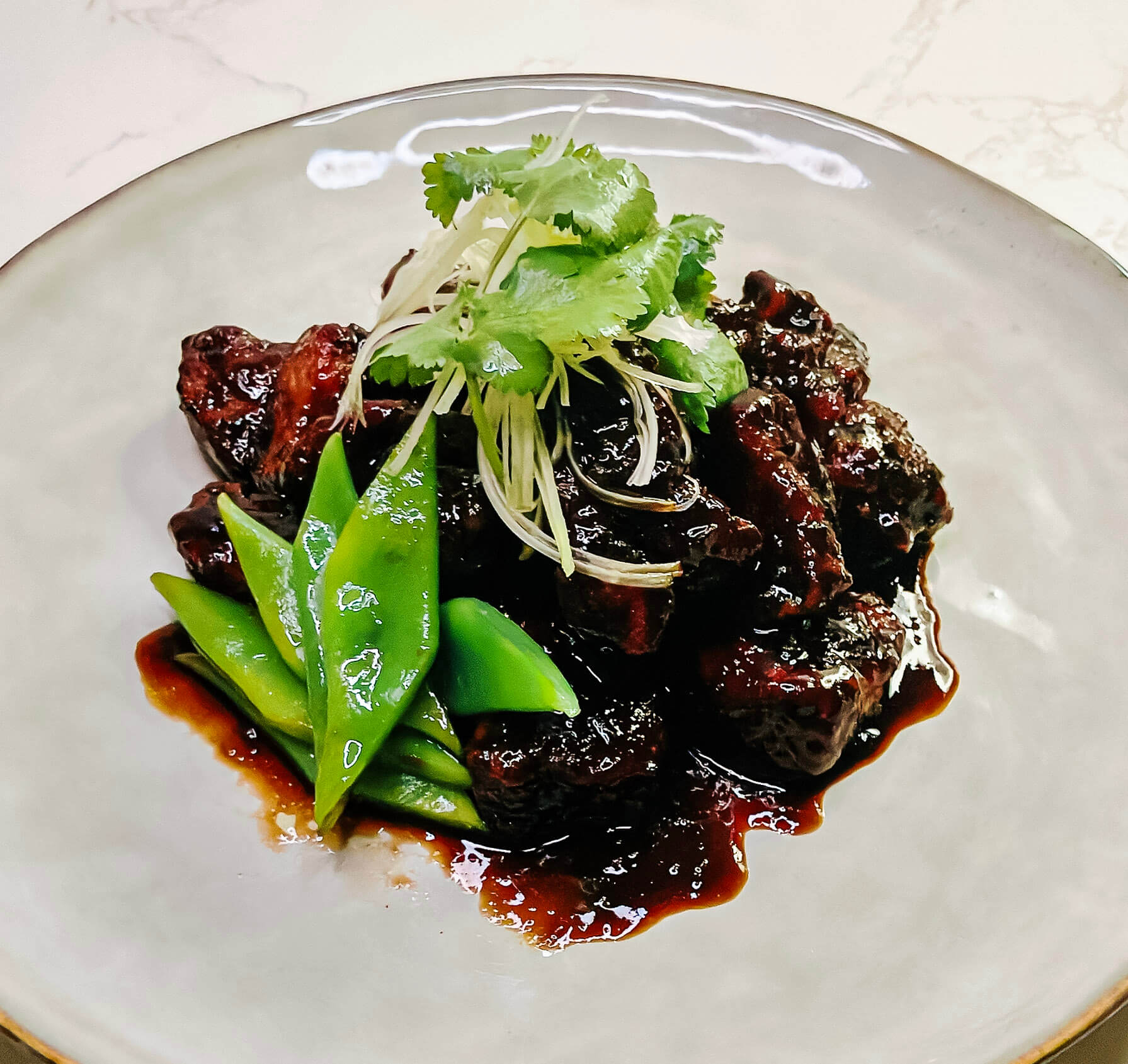
Crispy air fryer sweet and sour pork (Subuta) with rich black vinegar glaze – light, tangy, and perfectly balanced.
Crispy, juicy, and coated in a tangy-sweet glaze — this Air fryer Sweet and Sour Pork (Subuta) is my cleaner, weeknight-friendly take on Japan’s version of sweet and sour pork.
To be honest, deep-frying gives the absolute best crispness — nothing beats it for that first bite. But at home, the oil smell, splatter, and cleanup can be a deal-breaker. This Air fryer Sweet and Sour Pork takes a few minutes longer yet comes surprisingly close in texture, with a lighter, cleaner finish and no mess. That’s why even I reach for the air fryer most nights.
In Japan, Subuta comes in two familiar styles: the bright red ketchup version (what most people picture when they hear “sweet and sour pork”) and the black vinegar (Kurozu) version, darker in color but balanced with smooth acidity and caramel depth. This Air fryer Sweet and Sour Pork may look different, but it’s actually quite common in Japan and loved for its mellow, restaurant-style flavor.
I chose the black vinegar style for this Air fryer Sweet and Sour Pork because it’s more balanced and modern — though I’ve also included my ketchup version below, the one I used to cook for our school canteen take-home dinners here in Australia.
Whether you prefer the glossy black glaze or the nostalgic red one, this Air fryer Sweet and Sour Pork post shows you both — crisp, flavorful, and practical for everyday cooking.
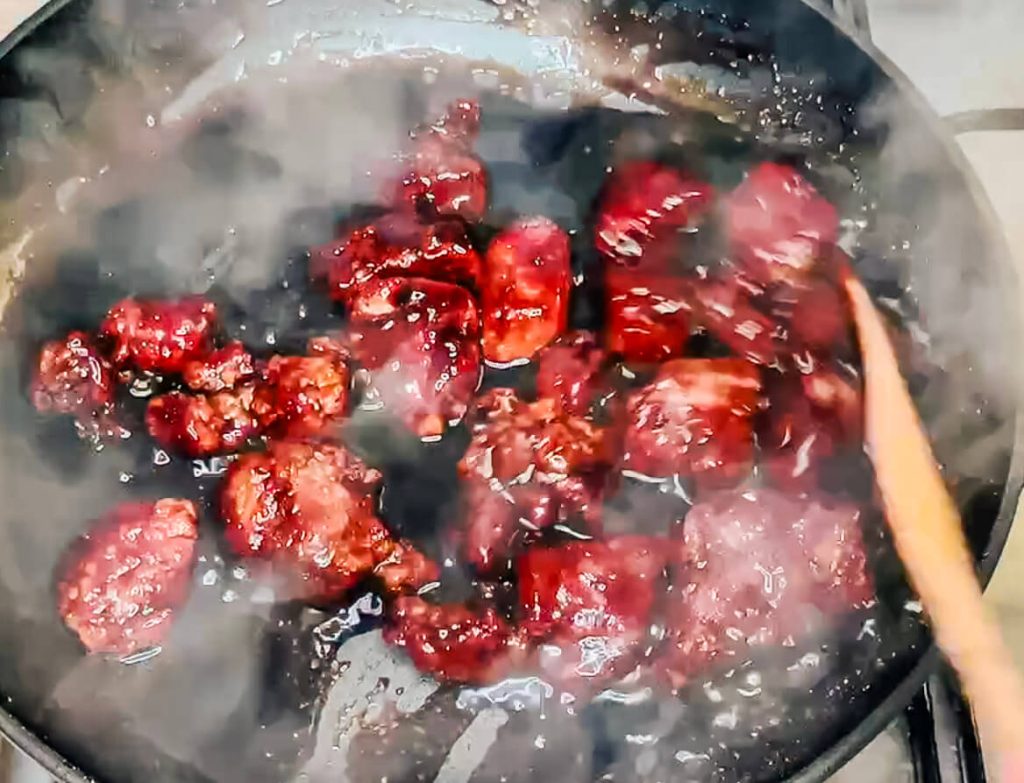
Toss the crispy pork in the thickened sweet and sour sauce until evenly coated. 
The pork is evenly glazed in a shiny, tangy sauce—ready to serve.
Why You’ll Love This Air fryer Sweet and Sour Pork
✅ Crispy without deep-frying – You’ll get a golden, crunchy coating straight from the airfryer, no messy oil or extra cleanup.
✅ Balanced Japanese-style flavor – Less sugary than takeout versions, the black vinegar glaze has gentle sweetness, smooth acidity, and umami depth.
✅ Restaurant-quality texture at home – Pork neck stays juicy and tender inside while the coating holds up beautifully in the sauce.
✅ Two sauces, two moods – Try the mellow black vinegar Subuta or the classic red ketchup glaze — both tested and included in this post.
✅ Faster cleanup, easier routine – Deep-frying takes minutes to cook but much longer to clean up; the airfryer lets you walk away while it crisps.
What You’ll Need for Air fryer Sweet and Sour Pork (Subuta)
For marinating Pork

Ingredients for the Subuta pork marinade — soy sauce, sake, baking soda, egg, salt, white pepper, and potato starch — ready to tenderize and coat pork neck for crispy Air fryer Sweet and Sour Pork.
- Pork neck – the most balanced cut: juicy, tender, and flavorful after air-frying.
- Potato starch (or cornstarch) – creates a light, crisp coating.
- Egg – helps the starch stick and adds golden color.
- Baking soda (optional) – tenderizes lean cuts like loin or fillet.
- Salt & white pepper – base seasoning before coating.
- Neutral oil spray – helps crisp the surface evenly in the air fryer.
For the Black Vinegar Sauce

Key ingredients for the black vinegar version of sweet and sour sauce—Chinkiang vinegar, soy sauce, balsamic vinegar, apple juice, and oyster sauce. 
Ingredients for the black vinegar Subuta sauce — Chinkiang vinegar, soy sauce, balsamic vinegar, brown sugar, sake, apple juice, and oyster sauce — ready to create a deep, glossy glaze for Airfryer Sweet and Sour Pork.
- Chinese black vinegar (Chinkiang / Zhenjiang) – rich, smoky acidity and depth.
- Balsamic vinegar – smooths out sharpness and adds caramel notes.
- Soy sauce – umami backbone and color.
- Brown sugar – sweetness and glossy finish.
- Sake or Shaoxing wine – adds aroma and removes pork odor.
- Apple juice – adds gentle fruit acidity and natural sweetness.
- Oyster sauce (optional) – deepens umami.
- Cornstarch slurry – for thickening if the sauce feels too thin.
For Serving
- Steamed rice – balances the tangy-sweet flavor.
- Blanched snow peas or green vegetables – for color and freshness.
What Is Japanese Sweet & Sour Pork (Subuta)?

Air fryer Sweet and Sour Pork – Japanese Subuta with glossy black vinegar glaze. 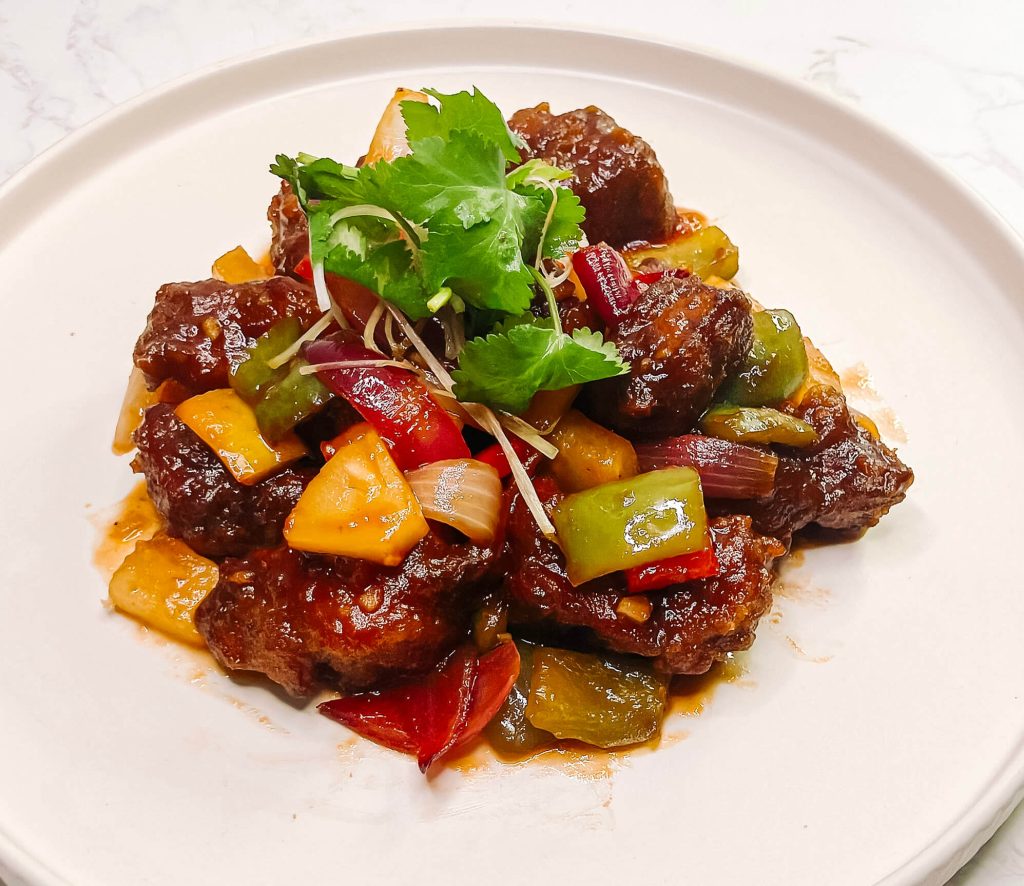
Air fryer Sweet and Sour Pork – the classic red ketchup version with capsicum and pineapple.
Subuta (酢豚) literally means “vinegar pork” in Japanese (酢 = vinegar, 豚 = pork). It’s Japan’s take on sweet-and-sour pork, adapted from the Cantonese classic Gu Lou Yuk (咕嚕肉) of southern China.
When Chinese restaurants flourished in Japan’s port cities like Kobe and Yokohama in the early 1900s, local chefs began reimagining the dish to suit Japanese tastes—using less oil, gentler sweetness, and a lighter starch coating.
Over time, Subuta became a cornerstone of Chūka-fū (中華風) cuisine—Japanese-style Chinese cooking that’s now completely woven into everyday home meals and restaurant menus across Japan.
Key Characteristics
- Crispy pork cubes (neck, shoulder, or loin) lightly coated with potato or corn starch—not a thick batter—and shallow- or air-fried until golden.
- Vegetables: usually bell pepper, onion, and carrot; pineapple is optional but occasionally used.
- Sauce: balanced sweet-sour glaze made from soy sauce, sugar, and vinegar—either regular rice vinegar or Chinese black vinegar (Chinkiang / Pearl River Bridge) for deeper flavor. Some home versions use ketchup for a brighter red tone.
- Texture & taste: lighter, cleaner, and tangier than Western takeaway versions; not overly sweet or greasy.
- Everyday dish: served in Japanese-Chinese restaurants and home kitchens alike—familiar, comforting, and part of modern Japanese food culture.
Quick Origin Snapshot
| Style | Where It Came From | Flavor & Look | Typical Vinegar |
|---|---|---|---|
| Chinese “Gu Lou Yuk” (咕嚕肉) | Canton / Hong Kong | Bright red, sweet-tart, glossy sauce | Rice or black vinegar |
| Japanese “Subuta” (酢豚) | Japan (Chūka-fū cuisine) | Milder, lighter, balanced; red or dark brown glaze | Usually Chinese black vinegar (Chinkiang) or rice vinegar |
| Western Takeaway | USA / UK / Australia | Very sweet, thick, pineapple-heavy, bright red | White vinegar + ketchup |
Choosing the Right Vinegar for Air fryer Sweet and Sour Pork

Side-by-side comparison of vinegars used in Subuta (Japanese-style sweet and sour pork) – balsamic, Chinese Chinkiang black vinegar, Japanese kurozu, and rice vinegar.
If you’ve come across kurozu (黒酢) in Japanese recipes, it literally means “black vinegar” — but not all black vinegars taste alike. In Japan, many home cooks and restaurants actually use Chinese black vinegar, especially Chinkiang (鎮江香醋 / Zhenjiang), rather than Japanese kurozu.
Flavor Comparison
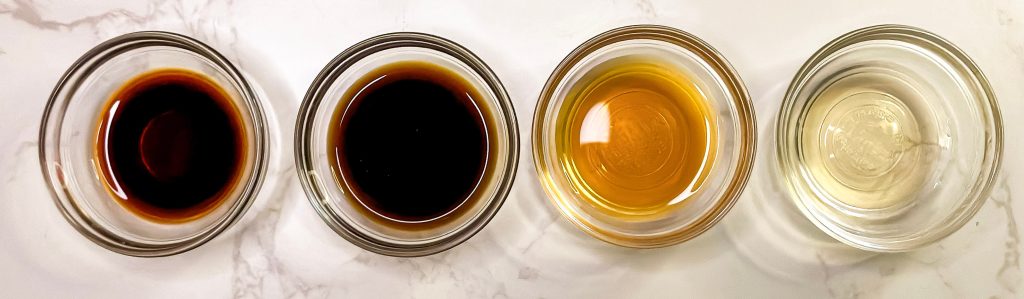
Comparing key ingredients for sweet and sour pork sauce – balsamic vinegar ,Chinese black vinegar, Japanese black vinegar , and rice vinegar for Japanese-style Subuta.
Balsamic Vinegar – Adds rounded sweetness and depth. Great as a backup when you can’t find Chinese black vinegar — especially when blended with rice vinegar.
Chinese Black Vinegar (Chinkiang / 鎮江香醋) – Made from aged glutinous rice or grains, it’s darker, smokier, and more complex. This is what gives Subuta its mellow acidity, caramel-like depth, and signature glossy finish.
Japanese Kurozu (黒酢) – Smooth and mild with light fruity notes; lovely in dressings but too gentle to balance the bold sweet-and-sour glaze of Subuta.
Rice Vinegar – Clean and light. Works well for the brighter, ketchup-style version of sweet and sour pork.
This recipe uses Chinkiang vinegar, the same style found in many Japanese-Chinese restaurants. It creates the ideal balance of depth, color, and tang without overpowering sweetness — the signature taste of modern Subuta.
Chef’s Tip
If you can’t find Chinese black vinegar, mix
2 parts rice vinegar + 1 part balsamic vinegar + a small pinch of sugar.
It won’t be identical, but it creates similar balance and color for home cooking.
Ketchup vs Black Vinegar Air fryer Sweet and Sour Pork
Air fryer Sweet and Sour Pork – the classic red ketchup version with capsicum and pineapple. 
Black vinegar Subuta — a Japanese-style sweet and sour pork made with Chinkiang vinegar for a mellow, restaurant-style flavor.
In Japan, Subuta (酢豚) comes in two main styles — the bright red ketchup version and the black vinegar version (黒酢酢豚).
Both share the same foundation of fried pork and sweet-sour glaze, but the taste, color, and mood are completely different.
Ketchup Version – Classic Home Favorite
- Flavor: Sweet and tangy with a tomato-based sauce that appeals to families and kids.
- Color: Bright red-orange, glossy, and vibrant — perfect for bento boxes or nostalgic comfort meals.
- Typical Vinegar: Rice vinegar or a mild blend with ketchup and sugar.
- Texture: Lightly crisp outside, coated in thick, shiny glaze.
- Occasion: Everyday home cooking or school canteen–style take-home meals — simple, familiar, and easy to reheat.
Black Vinegar Version – Modern, Refined, and Balanced
- Flavor: Smooth, layered acidity with subtle caramel and umami depth from Chinkiang black vinegar.
- Color: Deep mahogany-brown with a light sheen, slightly less sticky than ketchup-style.
- Typical Vinegar: Chinese Chinkiang (鎮江香醋) — aged longer for mellow complexity.
- Texture: Crisp on the outside, tender inside, coated evenly in sauce that clings without heaviness.
- Occasion: Restaurant-style meals or elevated home dinners when you want something less sugary and more grown-up.
Which One to Make?
The ketchup version is comforting and nostalgic, while the black vinegar version feels cleaner and more sophisticated — ideal for pairing with rice and a few light greens.
Both are authentic in their own way, reflecting how Japan adapted a Chinese dish for everyday cooking.
In this post, you’ll find both versions:
the bright, family-style ketchup Subuta and the darker, balanced black-vinegar version made with Chinkiang vinegar — so you can cook whichever fits your mood (or try both side by side).
Air fryer vs Deep-Fry: Which One’s Better?
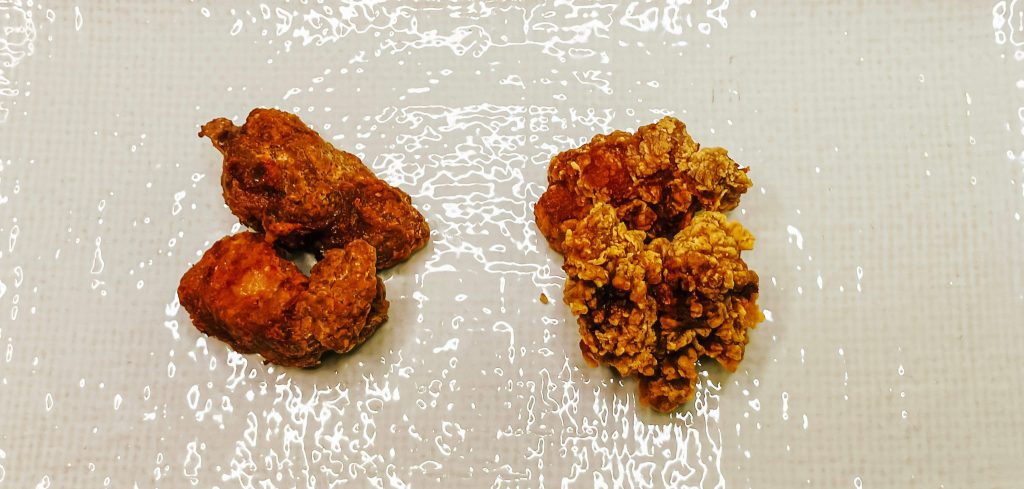
Side-by-side comparison of air fryer and deep-fried Subuta — both crisp, but with slightly different crust textures and colors
To be honest, deep-frying gives the ultimate crunch — that first bite where the coating shatters is hard to beat.
But at home, the smell, splatter, and cleanup can make it more work than it’s worth. That’s where the air fryer version shines — cleaner, lighter, and still surprisingly close in texture.
Air fryer Cooking Method

The Ninja Dual Zone air fryer preheated and ready for cooking sweet and sour pork in two batches. 
At the halfway mark, spray lightly with oil before flipping to ensure even crisping. 
The pork is fully golden and crisp after the second fry—perfect for coating with sauce.
- Preheat air fryer to 190°C / 375°F.
- Lightly oil the basket to prevent sticking.
- Arrange pork in a single layer — don’t overcrowd.
- First fry – Air fry 6 minutes, flipping halfway.
- Rest 6 minutes to let the surface firm slightly.
- Second fry – Increase to 240°C / 465°F and cook 6–7 minutes, flipping halfway, until deep golden and crisp.
If your air fryer doesn’t reach 240°C, extend the cooking time at 200°C until the coating turns deep golden and feels dry to the touch.
Optional: For extra crunch, double-coat the pork by lightly dusting with starch again before the first fry. It gives a thicker crust that grips the sauce better.
Chef’s Note – Deep-Fry Method (for reference)
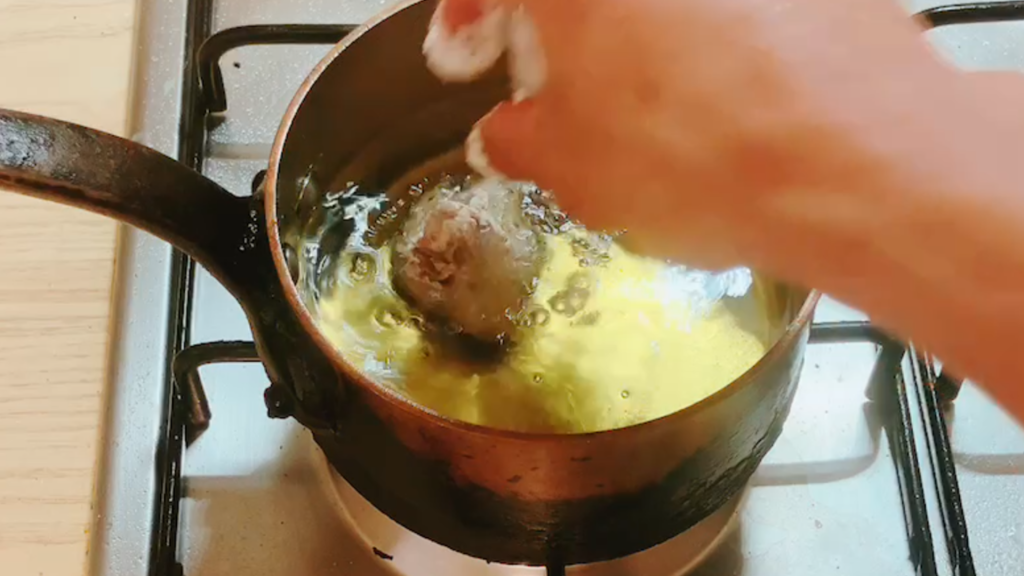
Pork pieces being gently added to hot oil at 170 °C — the first stage of double frying for crispy sweet and sour pork. 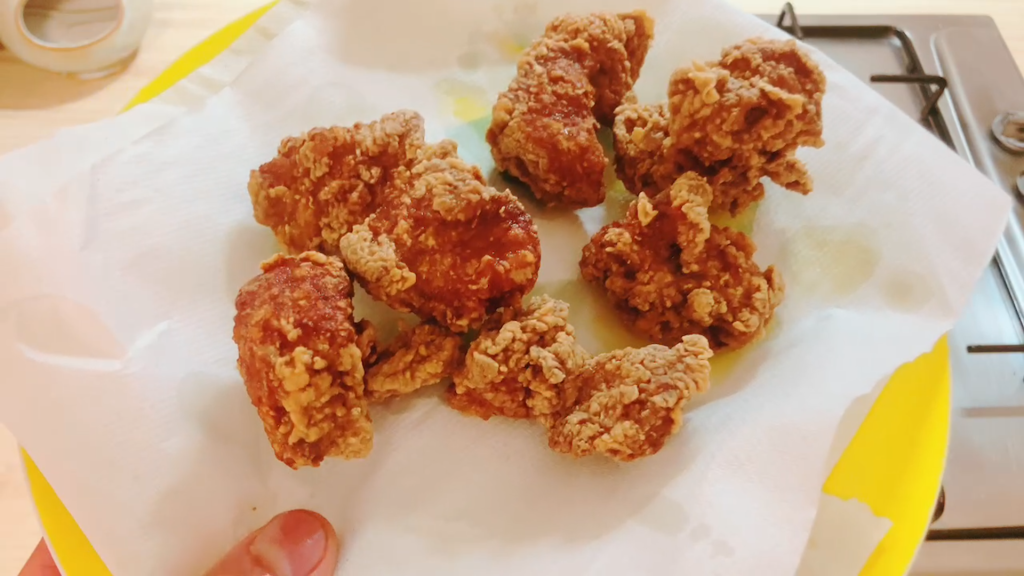
Deep-fried pork pieces after the second fry — evenly golden, crisp, and ready to be tossed in the black vinegar sweet and sour sauce.
Traditional Subuta (and karaage) is often double-fried for a crisper texture:
Fry at 170°C / 340°F for 3–4 minutes until just cooked.
Rest 5-6 minutes.
Return to hot oil at 200°C / 390°F for 1–2 minutes until golden and crisp.
Deep-frying cooks faster and gives a cleaner golden crust, while airfrying creates a slightly drier, thinner shell — but it stays crisp even after coating in sauce.
Both methods work beautifully — the choice depends on whether you want restaurant texture or home convenience.
I often deep-fry for testing and use the air fryer at home.
This Air fryer Sweet and Sour Pork was designed to match the deep-fried texture as closely as possible — no oil pooling, no sogginess, and just a fraction of the cleanup.
Pork Cut Comparison (Bicarb + Slit Test)
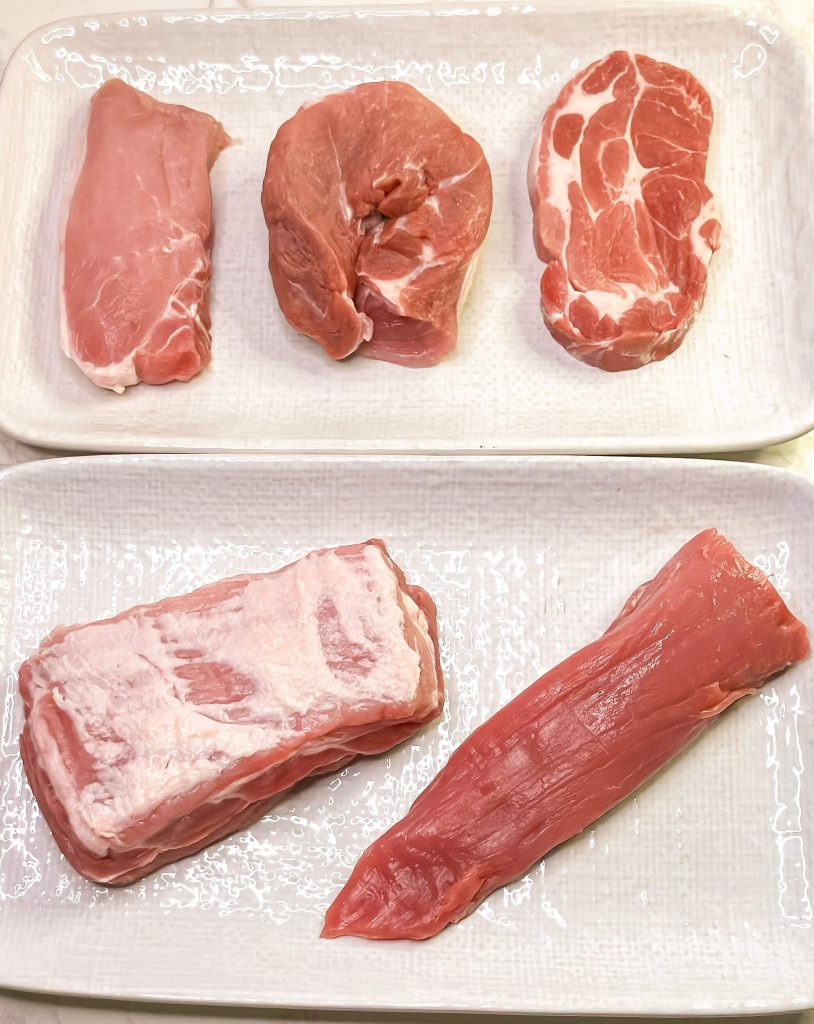
Top row (left to right): Loin, Shoulder, Neck. Bottom row (left to right): Belly, Fillet. These five pork cuts were tested side by side to compare how bicarb and slitting affect tenderness, juiciness, and texture in Japanese-style Subuta (Sweet and Sour Pork). 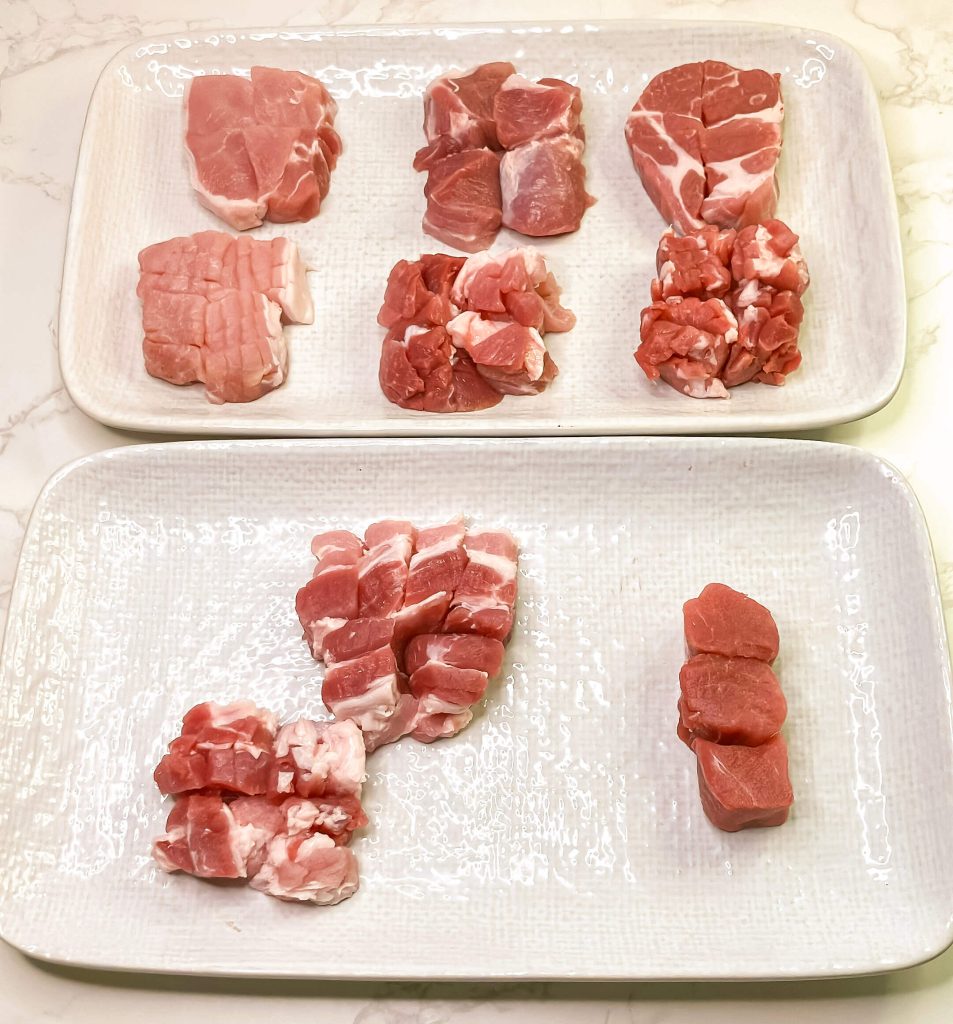
Top row (left to right): Loin, Shoulder, Neck. Bottom row (left to right): Belly, Fillet. Each cut was tested with and without bicarb, and with or without surface slits, to study how each method affects tenderness, plumpness, and juiciness for Japanese-style Subuta (Sweet and Sour Pork).
To find the best cut for this Air fryer Sweet and Sour Pork , I tested five cuts — fillet, shoulder, neck, belly, and loin — with and without bicarb and slits.
Bicarb didn’t just make the meat softer; it gave every cut a plumper, fuller texture, though the surface could feel slightly drier.
The slits helped pieces stay flat, but I found that leaving the meat uncut kept it juicier overall, even for tougher cuts like shoulder.
Cut Comparison Table
| Cut | Use Bicarb? | Add Slits? | Result & Notes |
|---|---|---|---|
| Neck | Optional (0.5-0.6%) | ❌ No | Naturally tender and balanced with good marbling. Bicarb adds slight plumpness but not needed. My top pick for this recipe. |
| Loin | ✅ Yes (0.5%) | ❌ No | Lean and firm. Bicarb keeps it juicy and easier to bite. No slits needed — better moisture retention. |
| Fillet | ✅ Yes (0.5%) | ❌ No | Very soft already. Bicarb adds a nice bounce but too much can dry the surface. |
| Shoulder | ✅ Yes (0.6%) | ❌ No | Slightly firm but chewable. Without slits it stays juicier; bicarb gives a softer bite and fuller texture. |
| Belly | ✅ Yes (0.6%) | ❌ No | Fat keeps it moist, but a small amount of bicarb helps tenderize lean streaks without losing that rich texture. |
Bicarb benefits every cut in its own way — not just for tenderness, but for that springy, juicy texture that holds up during airfrying.
Chef’s Pick
For this Airfryer Sweet and Sour Pork recipe, I use pork neck — naturally tender, flavorful, and perfectly balanced in fat.
It doesn’t need slits or much bicarb; just a light coating and airfrying brings out the ideal texture — juicy inside, crisp outside.
Step By Step Air fry Sweet and Sour Pork
Steps – Air fry Sweet & Sour Pork (Cut & Marinate)
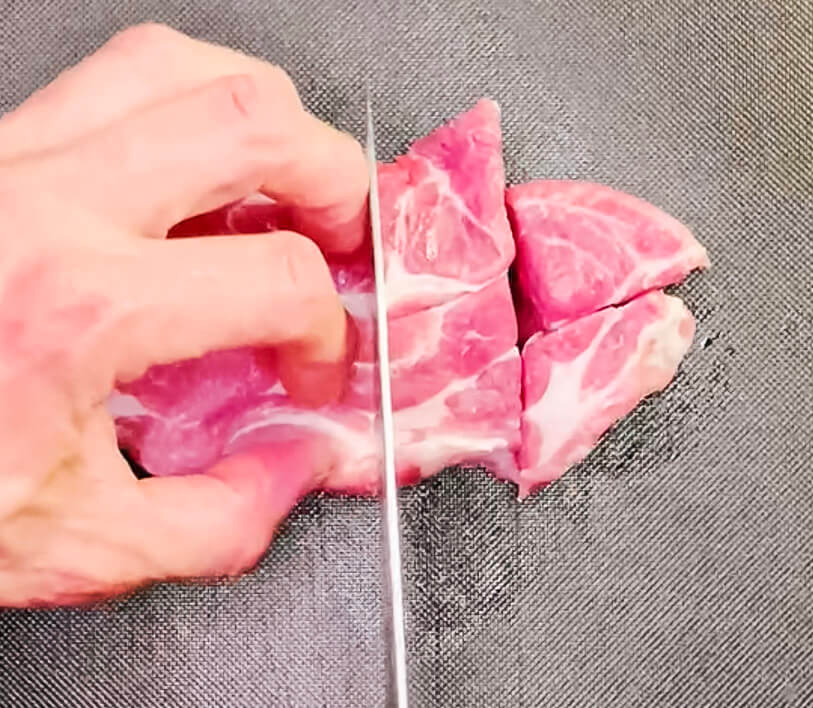
Slice pork neck into thick bite-sized cubes — about 3 to 3.5 cm — for tender and juicy results when air-fried. 
Cubed pork neck ready for marinating — aim for 3–3.5 cm pieces so they stay juicy after air-frying. 
Soak pork neck in a mild bicarb + water mix to tenderize and make the meat plumper before seasoning. 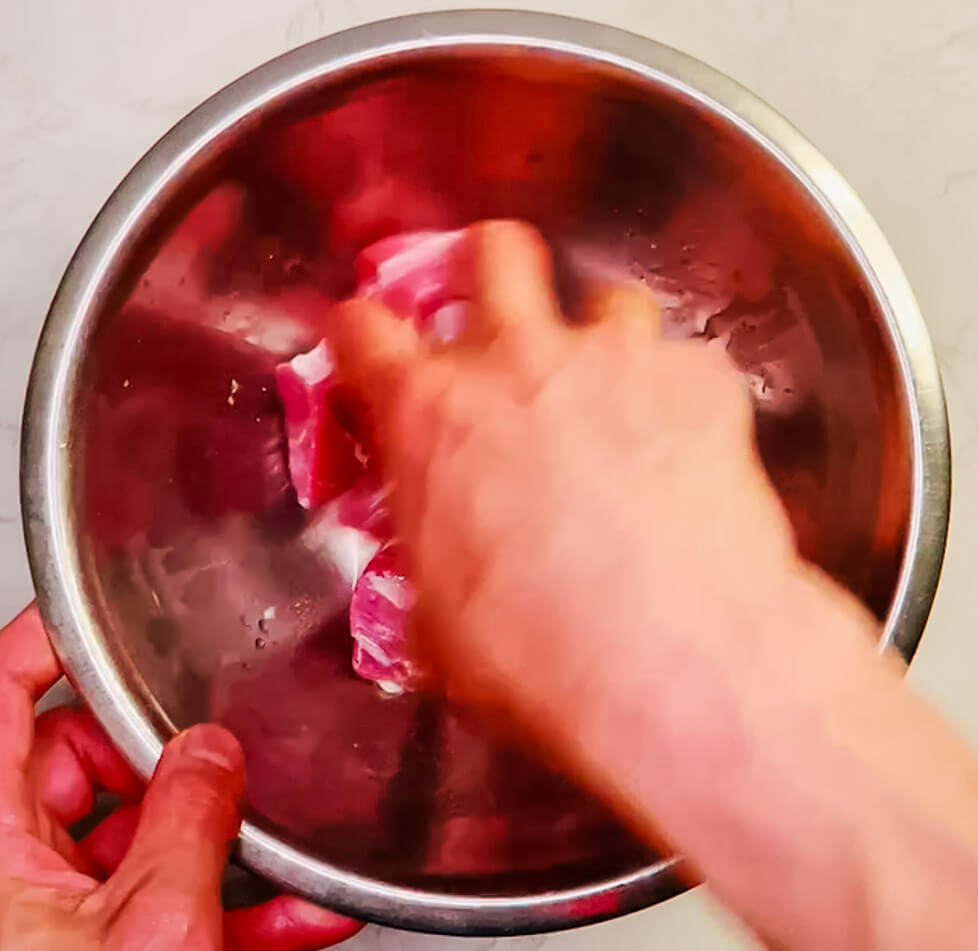
Mix pork with water and bicarb to start the tenderizing process. 
Add egg and seasoning to coat the pork evenly before coating with starch. 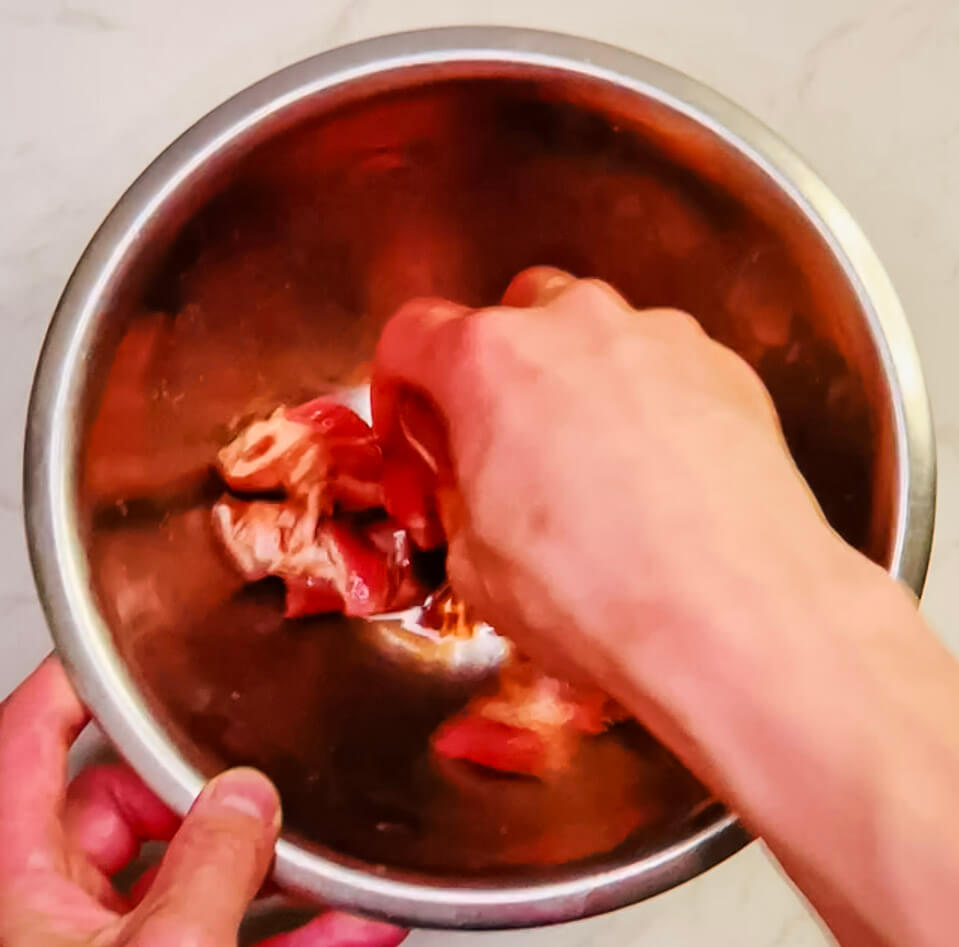
Mix the pork well until evenly coated with the full marinade before adding starch. 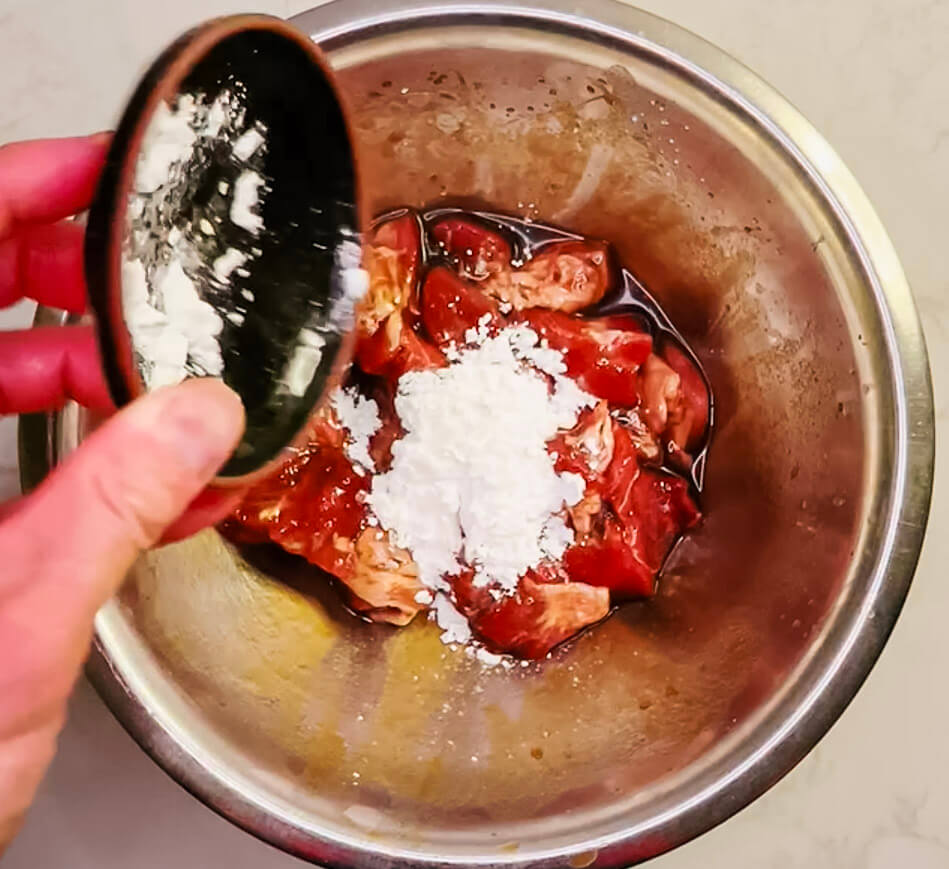
Mix well until all pork pieces are evenly coated with cornstarch. 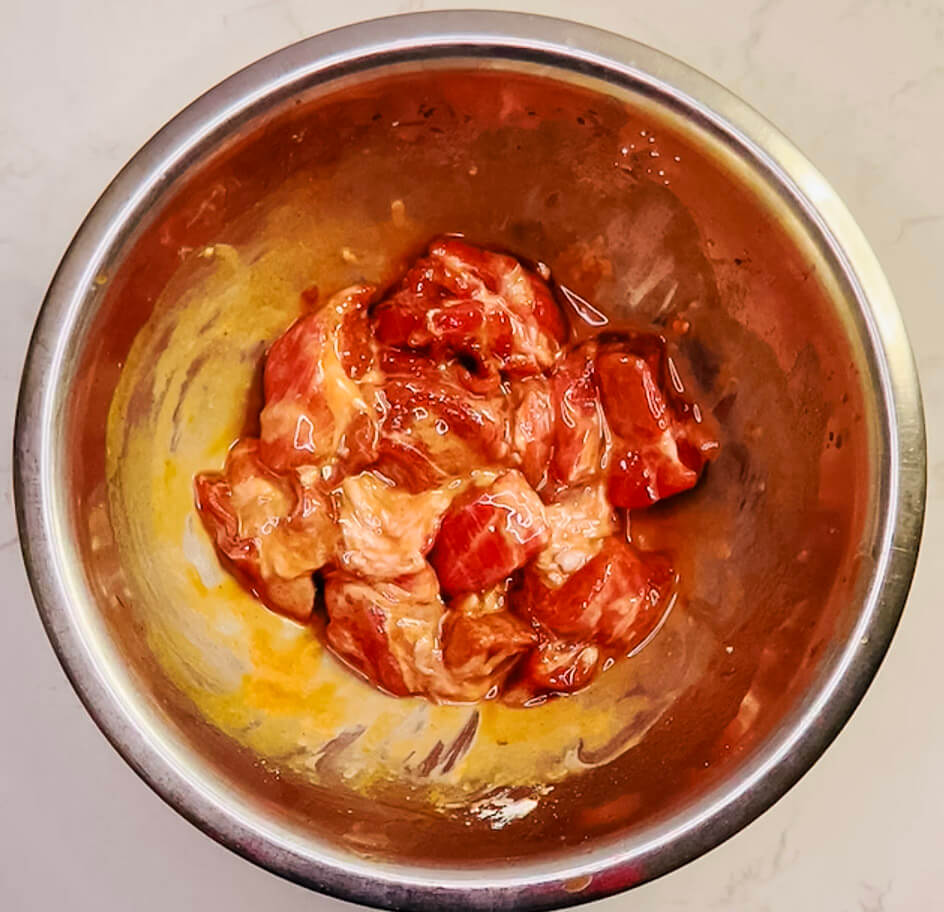
The pork is fully marinated and coated, ready to air-fry until golden.
- Trim pork neck or shoulder, removing any excess fat or sinew.
- Cut into bite-size pieces, about 3–4 cm cubes (roughly 40–45 g each).
- Pre-tenderize (optional):
Mix pork with a small amount of water and bicarb soda, then stir well and let sit for 10 minutes to help soften the texture. - Add seasonings:
Add soy sauce, egg, sake, salt, and pepper, mixing thoroughly until the meat is evenly coated. - Add starch:
Sprinkle cornstarch over the marinated pork and toss until every piece is lightly coated. - Rest for 10–15 minutes at room temperature (or up to 1 hour in the fridge) to let the coating set before frying or air frying.
Steps – Air Fry Pork

Coat each pork piece evenly with starch for a light, crisp texture after air frying. 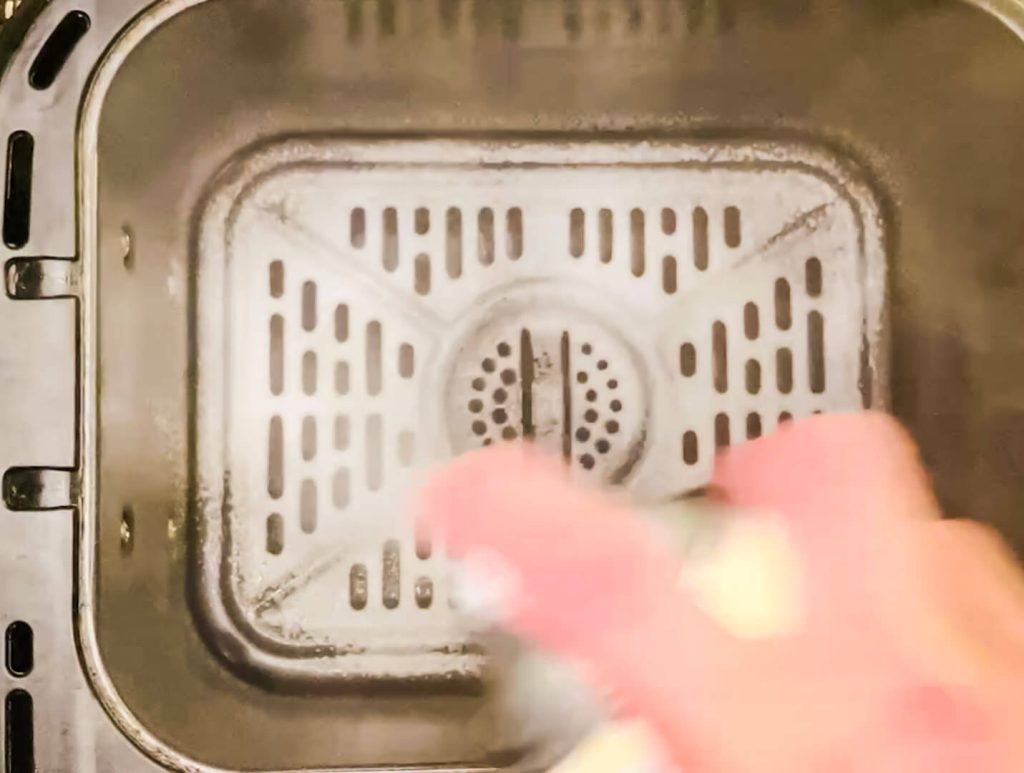
Lightly oil the air fryer basket to prevent sticking and help the pork crisp evenly 
Lightly spray oil over the coated pork before air frying to help the surface crisp up. At the halfway mark, spray lightly with oil before flipping to ensure even crisping. 
Flip the pork pieces halfway through the first fry for even browning on all sides. 
Flip the pork halfway through cooking and spray lightly with oil for even browning. 
After the first fry, the pork should look lightly golden—rest briefly before the second fry. 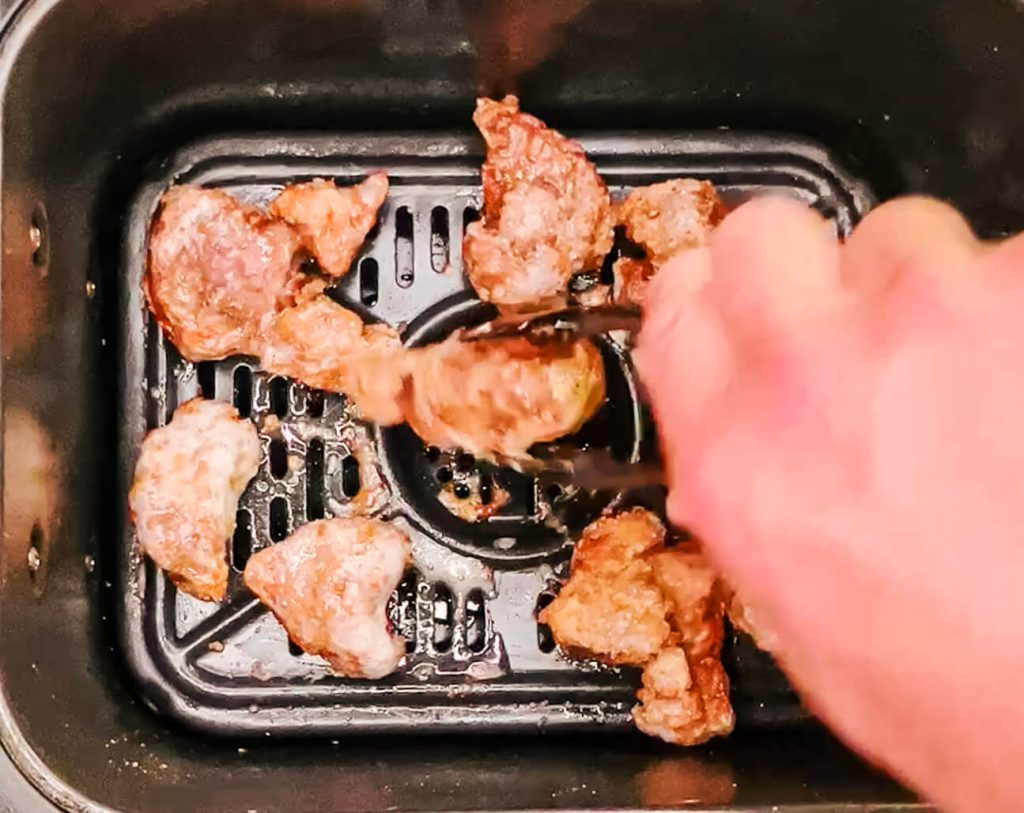
Flip the pork halfway through the second fry for an even golden-brown finish. The pork is fully golden and crisp after the second fry—perfect for coating with sauce.
- Coat pork with starch
Coat each marinated pork piece evenly with cornstarch so it forms a thin layer that turns light and crisp after air frying. - Oil the basket
Lightly spray the air fryer basket to prevent sticking and to help the coating crisp evenly. - Load and mist
Arrange coated pork in a single layer with space between pieces, then spray a light layer of oil over the tops to promote browning. - Halfway mist (Stage 1)
At the halfway mark of Stage 1, spray lightly with oil before flipping—this helps both sides crisp evenly. - Flip (Stage 1)
Flip all pieces halfway through the first fry so they brown and cook evenly on all sides. - Post-flip mist (Stage 1)
After flipping, give one more light spray of oil to promote an even golden color. - End of Stage 1
After the first fry, the pork should be pale-to-light golden. Rest briefly (about 6 minutes) to let the crust set before Stage 2. - Stage 2: High heat crisp
Air fry at 240°C for 6–7 minutes, flipping halfway for a deep golden-brown finish.
If your air fryer maxes at 200°C, extend the time slightly until crisp and golden. - Ready for sauce
When fully golden and crisp after Stage 2, the pork is ready to be tossed in the sweet-and-sour sauce.
Steps – Sauce, Toss & Finish
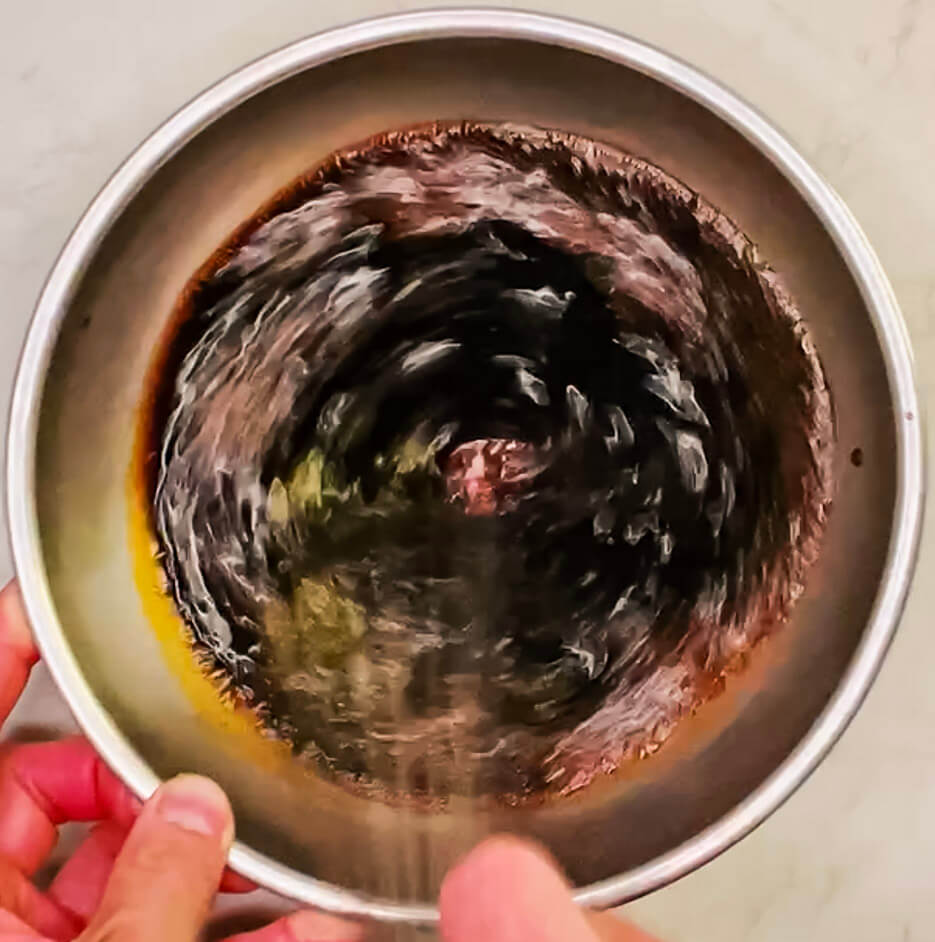
Combine all sauce ingredients in a bowl before cooking. 
Bring the sweet and sour sauce to a boil until it starts to thicken and bubble. Toss the crispy pork in the thickened sweet and sour sauce until evenly coated. The pork is evenly glazed in a shiny, tangy sauce—ready to serve. 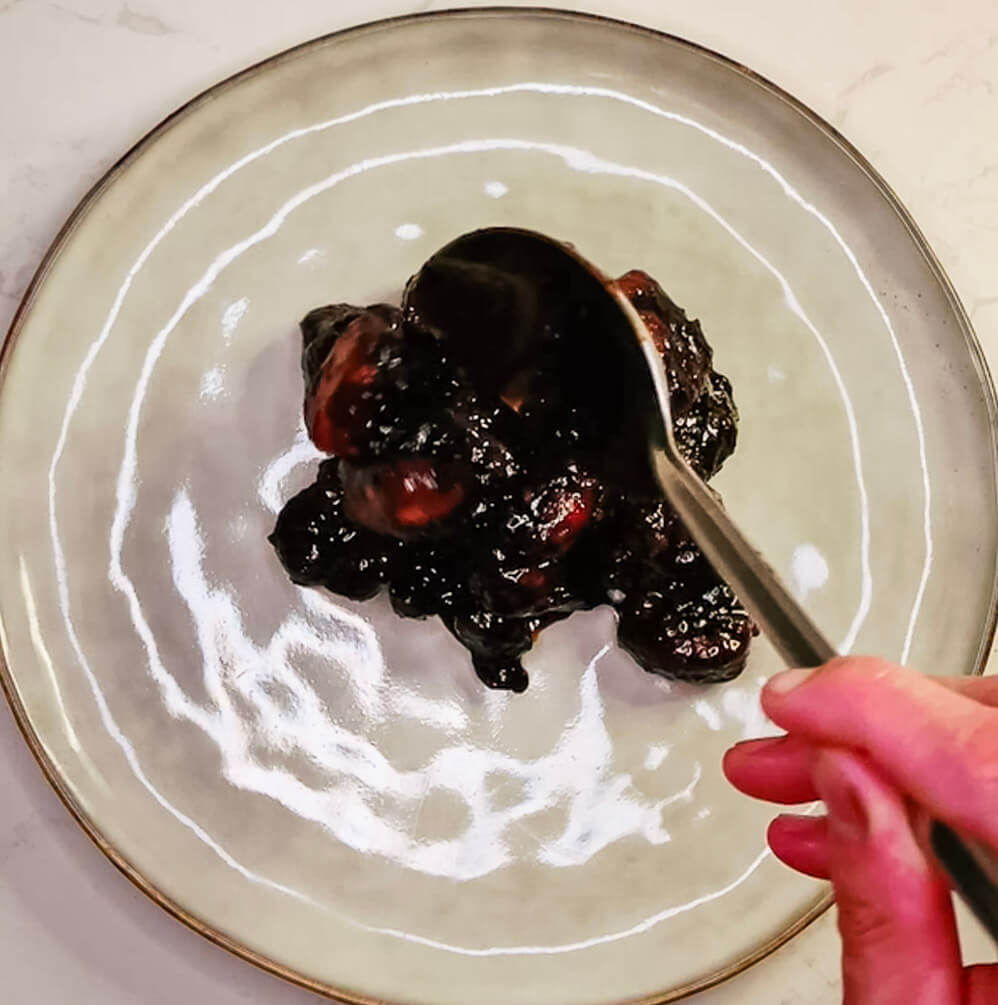
Transfer the sweet and sour pork onto a plate while the glaze is still hot and glossy. 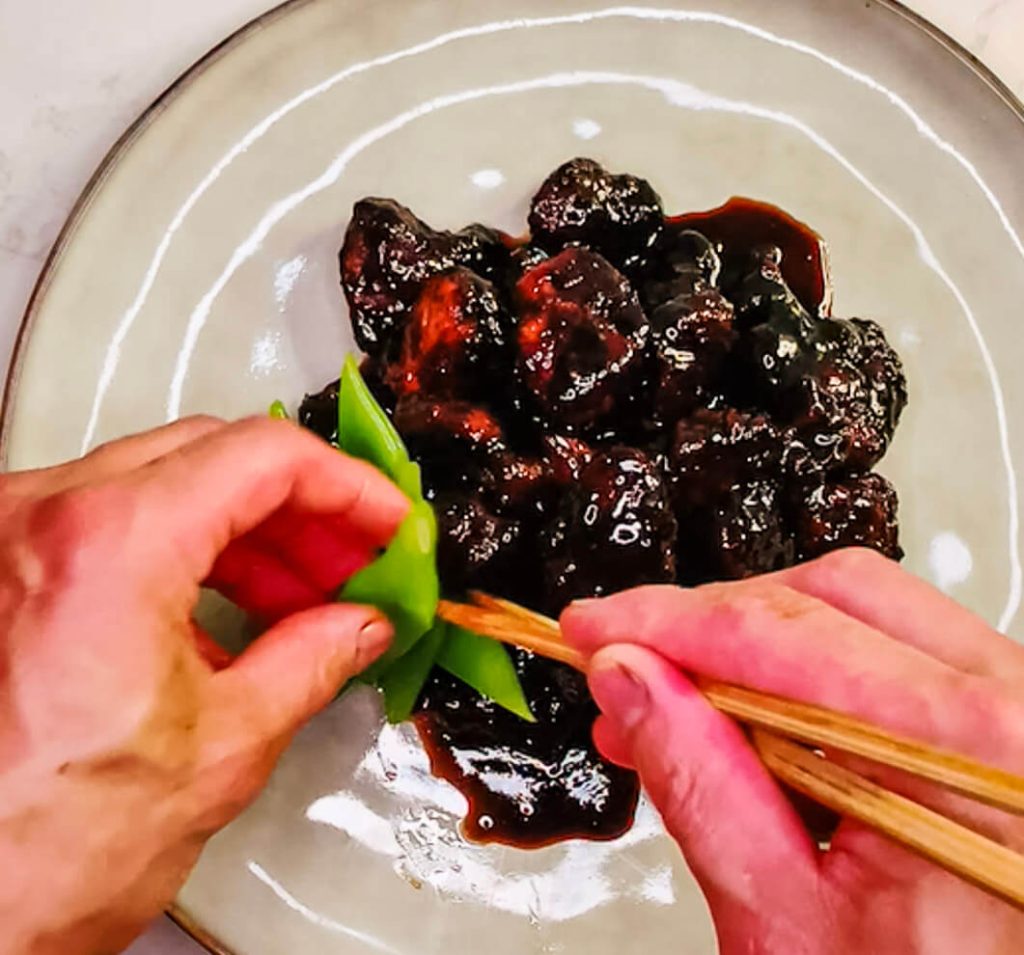
Add your final garnish for a fresh contrast and a professional finish. 
Finish with a few fresh herbs for color and aroma before serving. Air fryer Sweet and Sour Pork – Japanese Subuta with glossy black vinegar glaze.
- Combine sauce ingredients
Mix all the sweet and sour sauce ingredients in a bowl before cooking to ensure the flavors blend evenly. - Bring to a boil
Pour the sauce into a saucepan and bring it to a boil over medium heat until it starts to bubble and thicken slightly. - Coat the pork
Add the crispy air-fried pork to the thickened sauce and toss gently until each piece is evenly coated in the glossy glaze. - Check the glaze
The sauce should cling to the pork in a shiny, tangy layer — perfectly balanced and ready to serve. - Plate while hot
Transfer the coated pork onto a serving plate while the glaze is still glossy and warm. - Add garnish
Place your final garnish (such as blanched snow peas, beans, or fresh herbs) for contrast and a polished look. - Finish with herbs
Add a few fresh herbs on top for aroma, color, and freshness right before serving. - Ready to serve
Serve immediately — your Air fryer Sweet and Sour Pork (Japanese Subuta) should have a deep, glossy black vinegar glaze with a perfect crisp-and-tender bite.
Quick Variation – Ketchup Air fryer Sweet and Sour Pork (Red Sweet & Sour Sauce)
Air fryer Sweet and Sour Pork – the classic red ketchup version with capsicum and pineapple. 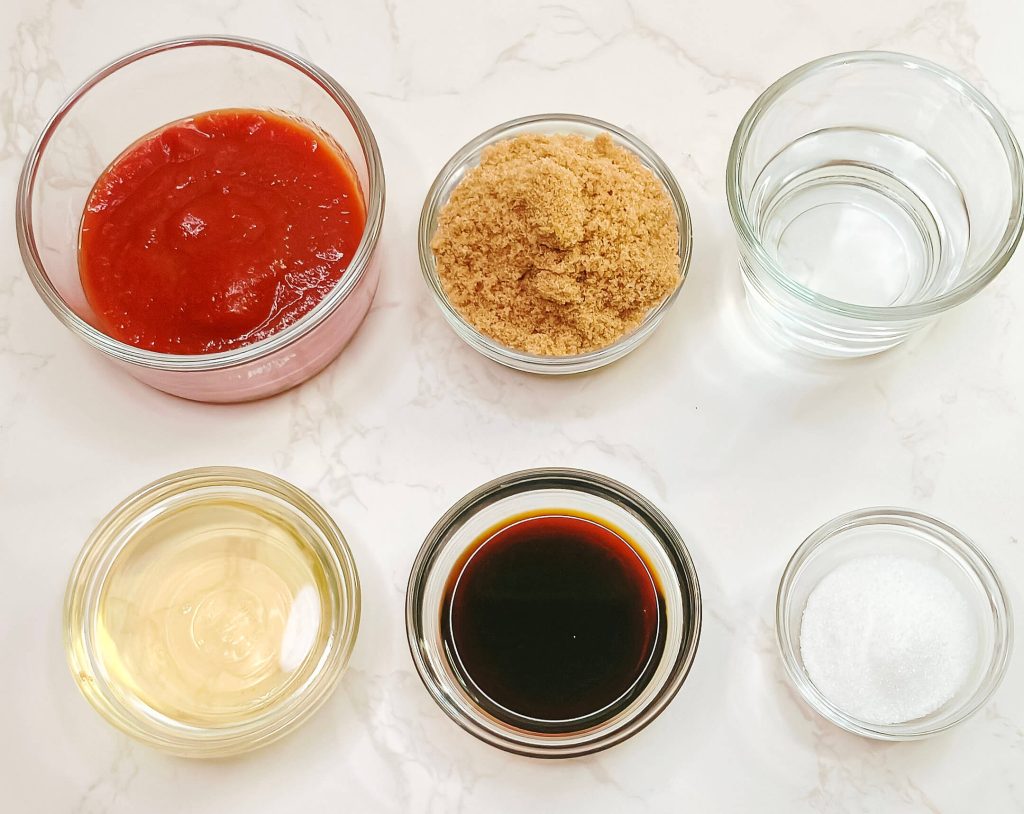
Ingredients for the Japanese-style ketchup Subuta sauce — a bright, glossy red sweet and sour glaze made with ketchup, soy, vinegar, and sugar. 
Colorful vegetables and pineapple used for the Japanese ketchup-style sweet and sour pork — bright, classic, and family-friendly.
This is the bright, nostalgic Japanese-style ketchup version of Subuta — sweet, tangy, and glossy, perfect for family-style meals or bento boxes.
Ketchup Sauce (for 300 g pork)
- 95 g ketchup
- 45 g brown sugar
- 5 g caster sugar
- 45 g apple cider vinegar
- 22 g soy sauce
- 50 ml water
Vegetables
- 1 clove garlic, chopped
- 55 g onion (mix of red and brown, diced)
- 130 g capsicum (mixed colors, diced)
- 60 g unsweetened tinned pineapple, drained
Method
- Sauté vegetables: Heat a little oil in a pan. Add onion and capsicum; stir-fry for 1–2 minutes until slightly softened. Add garlic and sauté briefly until fragrant.
- Make sauce: In a bowl, mix ketchup, sugars, vinegar, soy sauce, and water. Pour into the pan and bring to a gentle boil.
- Simmer: Reduce slightly until the sauce thickens and becomes glossy (about 1–2 minutes).
- Add pineapple: Stir through the drained pineapple pieces.
- Coat pork: Add crispy air-fried pork and toss until evenly coated in the thickened sauce.
- Serve: Plate immediately while the glaze is still shiny and hot.
Tip:
If you prefer a thicker glaze, reduce a little longer
FAQ
Can I use chicken instead?
Yes — chicken thigh works well. Use the same marinade and cooking method, but adjust the cooking time as needed and cook the chicken to an internal temperature of 165°F / 74°C.
No black vinegar?
Mix 2 parts rice vinegar + 1 part balsamic and a pinch of sugar.
Can I bake instead of airfry?
Yes — bake at 200 °C (400 °F) for 15–17 min, flipping halfway.
Serving Suggestion Air fryer Sweet and Sour Pork
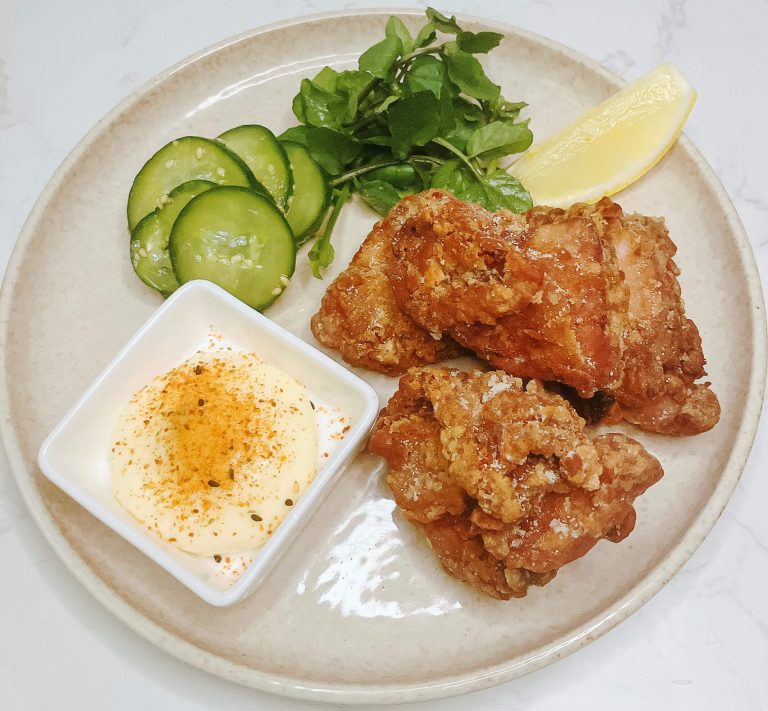
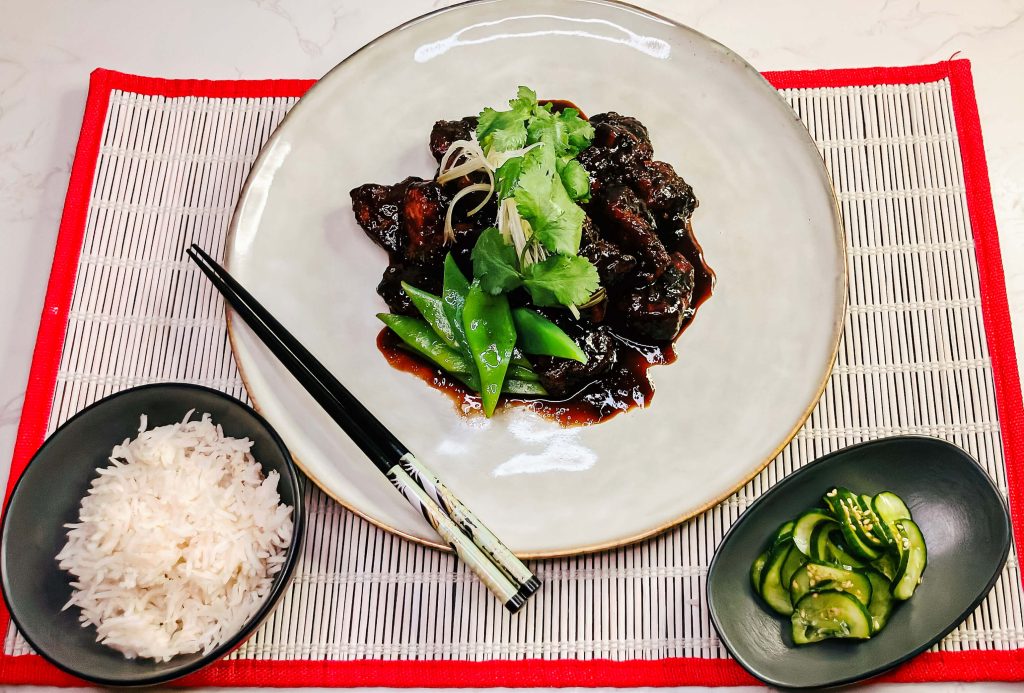
Serve hot with steamed white rice, brown rice, or cauliflower rice, depending on what you prefer. For something fresh and crunchy on the side, try the quick cucumber pickles from my Air Fryer Karaage Chicken recipe.
Airfryer Sweet and Sour Pork Final Thoughts
Of all the Subuta variations I’ve tested, this Airfryer Sweet and Sour Pork still amazes me — it keeps that golden, crisp texture without the oil splatter or cleanup of deep-frying. The black vinegar glaze has become my personal favorite for its mellow acidity and caramel depth — balanced, modern, and closer to the restaurant-style flavor I love.
The ketchup version, though, will always have a place in our home. It’s the one I used to make for our school canteen take-home dinners — sweet, tangy, and comforting, especially for families. My kids always choose the red version, and I can’t blame them — it’s bright, familiar, and tastes like pure comfort.
These days, I reach for the air fryer more than the fryer — it’s lighter, cleaner, and still delivers that satisfying crunch that makes this dish hard to stop eating.
Try both versions of this Air fryer Sweet and Sour Pork and let me know which one wins in your kitchen — the mellow, grown-up black vinegar or the nostalgic red ketchup glaze that kids love.
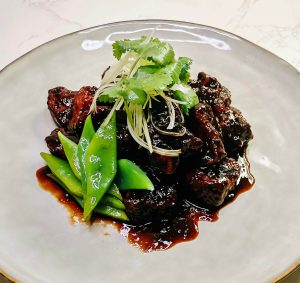
Air fryer Sweet and Sour Pork (Japanese-Style Subuta) – Black Vinegar
Equipment
- 1 air fryer
- 2 Mixing bowl
- 1 tong
- 1 Frying pan
- 1 scale
Ingredients
For the Pork
- 300 g pork neck cut into 3 cm cubes
- 40 g water
- 2 g baking soda bicarb
- 10 g sake or Shaoxing wine
- 10 g soy sauce
- 1 g salt & white pepper mix
- 16 g egg lightly beaten
- 14 g potato starch or cornflour
- extra cornstarch for light dusting before air frying – helps create crisp surface
- spray oil for air fryer coating – promotes even browning and crisp texture
Black Vinegar Sauce
- 60 g Chinkiang black vinegar
- 15 g balsamic vinegar
- 30 g tamari or dark soy
- 85 g brown sugar
- 15 g sake or dry sherry
- 30 g 100% apple juice
- 3 g oyster sauce
- 30 g water
- 2 g cornstarch
To Serve Optional for garnish
- snow peas or flat beans blanched
- leek white part, thinly sliced
- Cilantro
Instructions
Prep the Pork
- Trim pork neck and cut into bite-sized cubes (about 3–3.5 cm).
- In a bowl, add water and baking soda. Mix until the baking soda fully dissolves.
- Add sake, soy sauce, salt, white pepper, and egg. Mix until all liquid is evenly combined.
- Add starch and mix gently until just combined — do not overmix.
- Rest for 10–15 minutes to allow the coating to set.
Air Fry the Pork
- Lightly dust the marinated pork with extra cornstarch before cooking.
- Preheat air fryer to 190 °C (375 °F).
- Spray the basket lightly with oil to prevent sticking.
- Arrange pork in a single layer with space between each piece.
- Spray the tops lightly with oil.
- **First Fry (Stage 1):** Cook 3 minutes, then spray oil again, flip all pieces, spray lightly once more, and cook another 3 minutes (6 minutes total).
- Rest 5–6 minutes to let the crust firm slightly.
- **Second Fry (Stage 2):** Increase heat to 240 °C (or 200 °C if that’s the max) and cook 6–7 minutes, flipping halfway, until deep golden and crisp.
- Rest briefly before tossing in sauce.
Make the Black Vinegar Sauce
- Combine all sauce ingredients in a bowl and mix well.
- Pour the mixture into a small pan and bring to a boil over medium heat.
- Simmer 30 seconds to 1 minute until sugar dissolves and the sauce thickens slightly.
Toss & Serve
- Add the fried pork directly into the sauce.
- Toss over medium heat until the pork is evenly coated and glossy.
- Transfer to a serving plate.
- Serve with blanched snow peas or flat beans, and garnish with thinly sliced leek and a sprig of cilantro if desired.
Notes
• Dissolve bicarb in water first, then add seasonings and egg; mix, then add starch and mix gently.
• Marinated pork: refrigerate for up to 1 hour before cooking. For longer storage, freeze and thaw in the refrigerator before cooking.
• If your air fryer tops out at 200 °C/400 °F, extend Stage 2 until deep golden and dry to the touch.
• Resting between Stage 1 and Stage 2 helps the crust set and stay crisp when sauced.
Thanks for visiting! If you try this recipe, I'd love to hear how it turned out.
Leave a comment or tag me on Instagram @seasonedwithflavor — it makes my day!