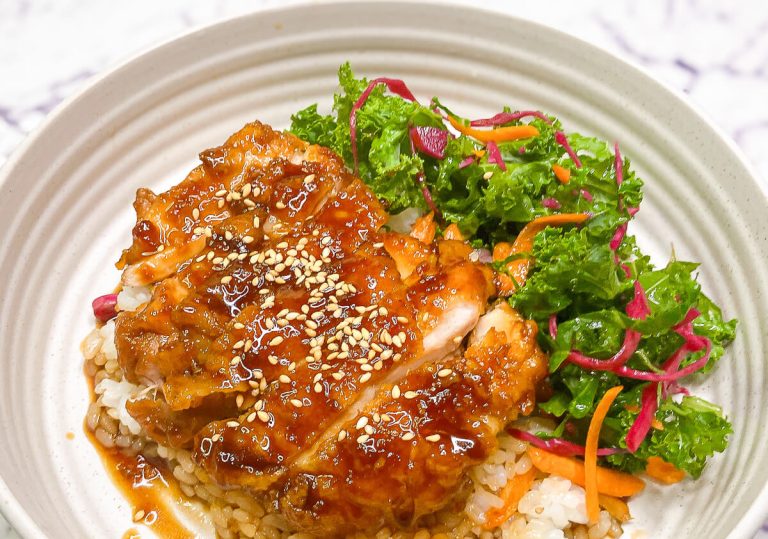
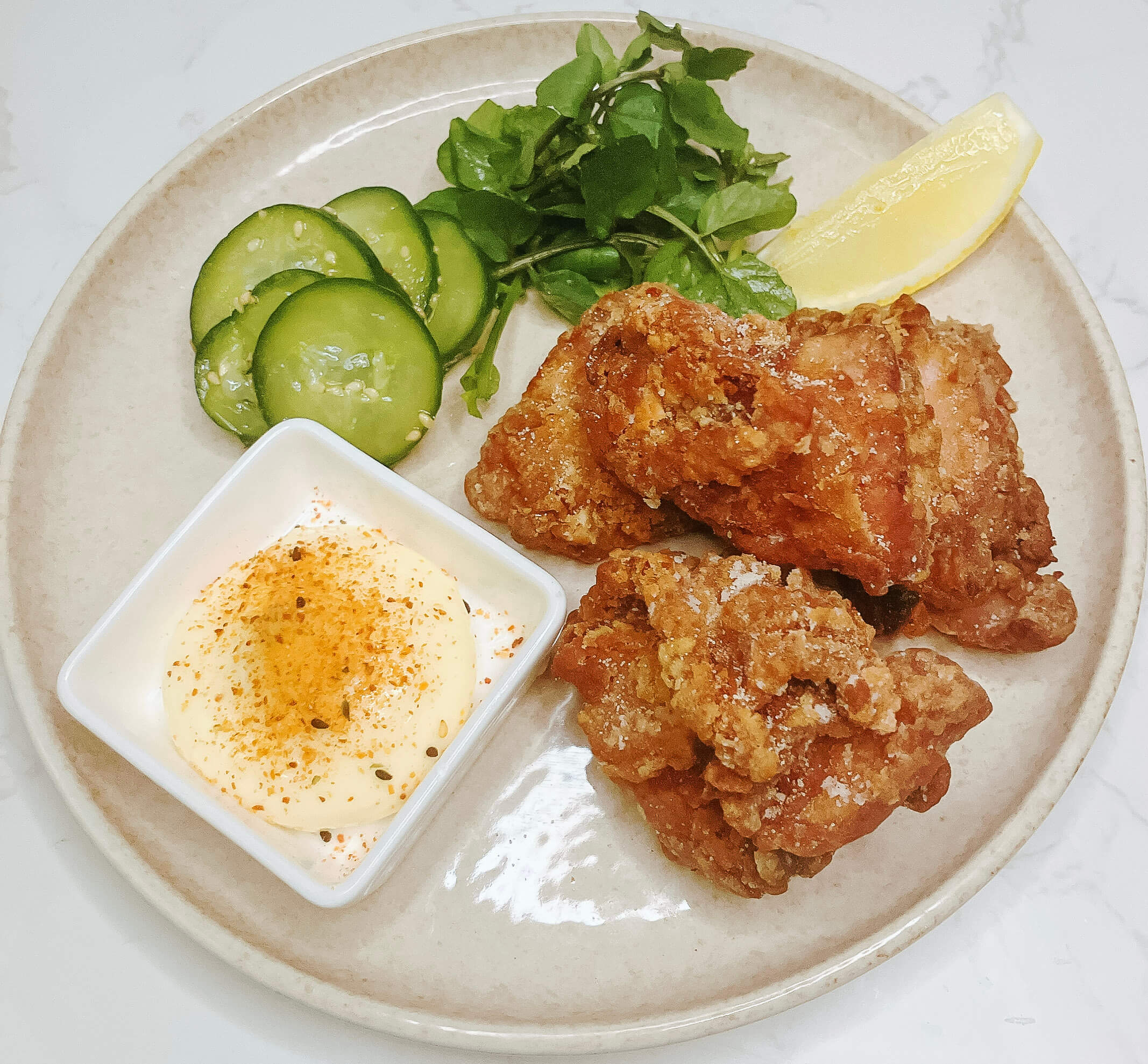
Air Fryer Karaage Chicken with Quick Cucumber Pickles + 5 Delicious Dipping Sauces
What is Karaage Chicken?
Karaage (唐揚げ) is Japan’s style of fried chicken — small bite-sized pieces of meat, usually thigh, marinated in soy sauce, sake (or mirin), garlic, and ginger, then coated in starch and fried until golden. Unlike American fried chicken with a thick, crunchy batter, karaage has a light, smooth crust that keeps the chicken juicy without being heavy.
You’ll find karaage everywhere in Japan: at izakaya pubs with beer, tucked into bento lunch boxes, or served at home with shredded cabbage and a wedge of lemon. It’s comfort food, but also versatile — appearing in rice bowls, sandwiches, and even convenience store hot counters.
This Air Fryer Karaage Chicken with Quick Cucumber Pickles
Learn how to make crispy karaage chicken in the air fryer — less oil, less mess, and the same soy–ginger flavor and juicy texture. In this recipe for air fryer karaage chicken with quick cucumber pickles, I tested different coatings (potato starch, rice flour, plain flour, and blends), different cuts (thigh, breast, tenderloin, wing), and compared deep-fry vs air fry so you know exactly what changes the result.
Because karaage is often served with sauces, you’ll get five dipping options — from Japanese favorites like shichimi mayo and oroshi ponzu to twists like wasabi sour cream, sweet chili sour cream, and sambal chili mayo. For balance, we also make quick cucumber pickles to cut through the richness.
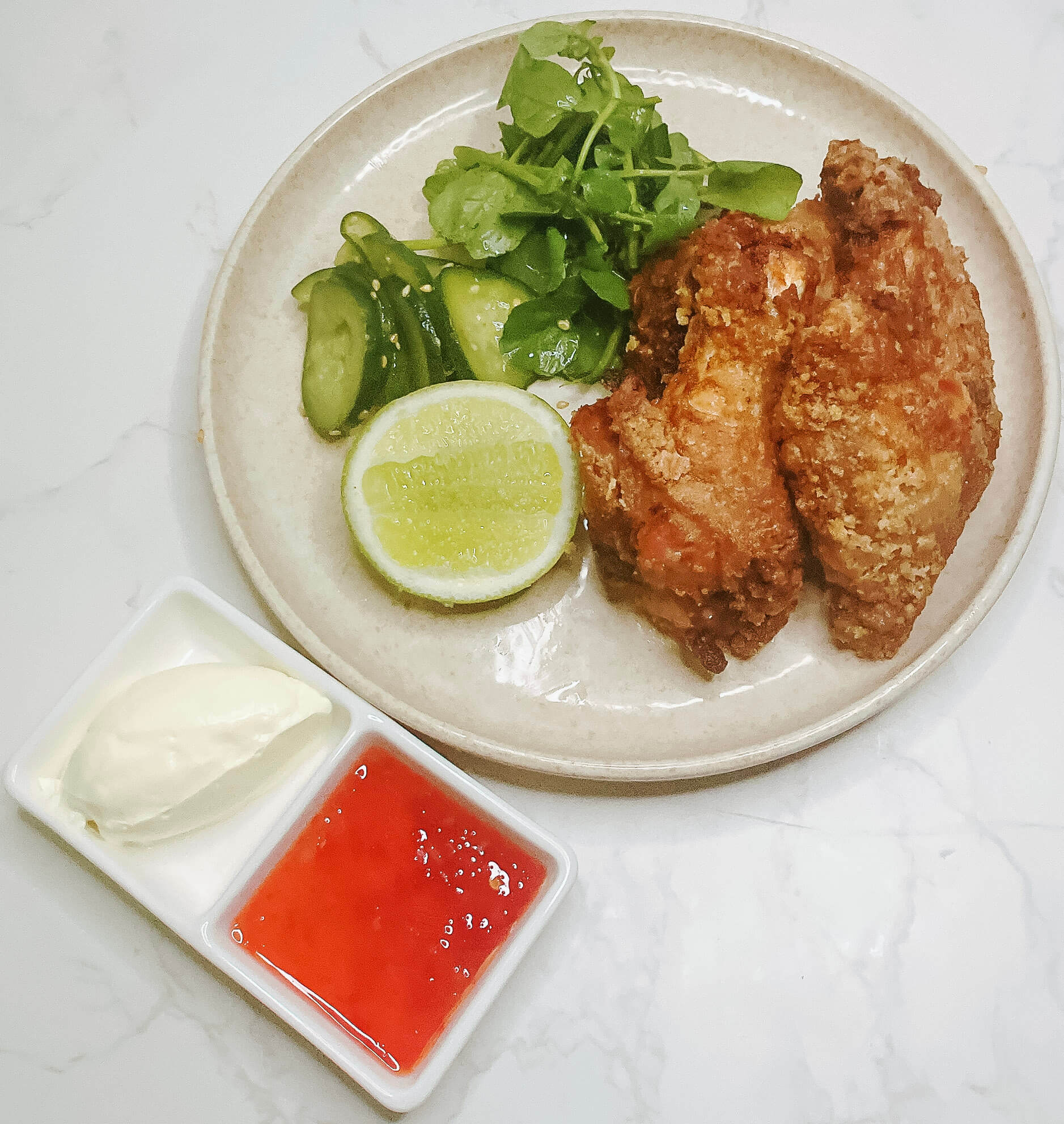
Why You’ll Love This Air Fryer Karaage Chicken with Quick Cucumber Pickles Recipe
- ✅ Authentic Japanese Flavor – soy, ginger, garlic marinade; light, smooth crust (potato + rice flour mix).
- ✅ Juicy & Easy to Eat – thinner coating than Western fried chicken; lighter bite.
- ✅ Fully Tested – coatings, cuts, and air-fry vs deep-fry results explained.
- ✅ Sauce Variety – 5 dips: shichimi mayo, oroshi ponzu, wasabi sour cream, sweet chili sour cream, sambal mayo.
- ✅ Balanced Plate – lemon, quick cucumber pickles, and watercress for freshness.
What You’ll Need for Air Fryer Karaage Chicken with Quick Cucumber Pickles

For the Karaage Chicken Marinade
- Soy sauce (or tamari) – the salty, umami base that defines karaage flavor.
- Sake (or mirin substitute) – adds mild sweetness and depth, helps tenderize the chicken.
- Ginger – brings warmth and freshness, balancing the richness of fried chicken.
- Garlic – adds punchy aroma and savory backbone.
- Salt & sugar – fine-tune the seasoning and bring balance.
- Oil – helps the marinade coat the chicken evenly and promotes crisping later.
For the Coating
Choose one (or make a mix):
- Potato starch – the classic Japanese choice for a light, crisp crust.
- Rice flour – keeps the texture smooth and less heavy.
- Plain flour – softer coating, less traditional but part of my comparison tests.
- Potato + rice flour mix – my preferred balance of crispness and smooth texture.
For the Quick Cucumber Pickles
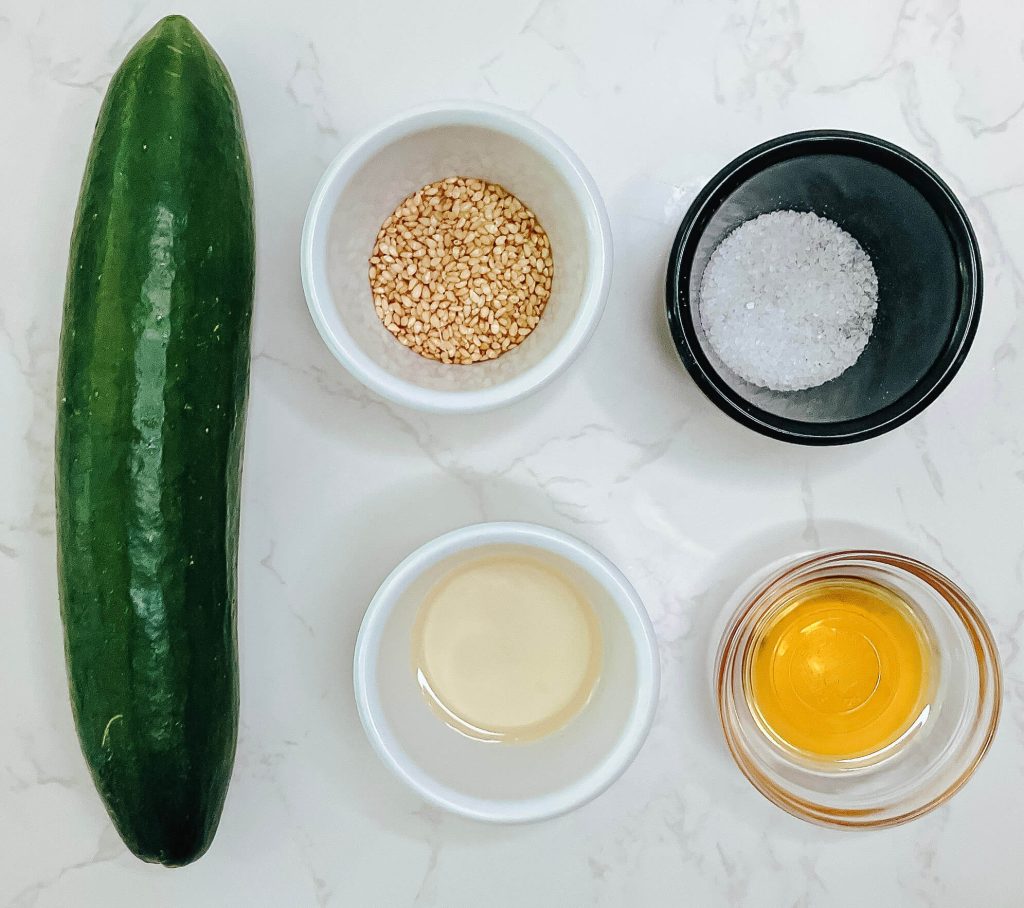
- Cucumber – fresh, crisp base.
- Salt – draws out water and seasons.
- Rice vinegar – adds a sharp, tangy kick.
- Sesame oil – nutty depth of flavor.
- Toasted sesame seeds – extra crunch and aroma.
Sauces for Air fryer Karaage Chicken with Quick Cucumber Pickles
Choose one (or a few) to serve with karaage chicken:
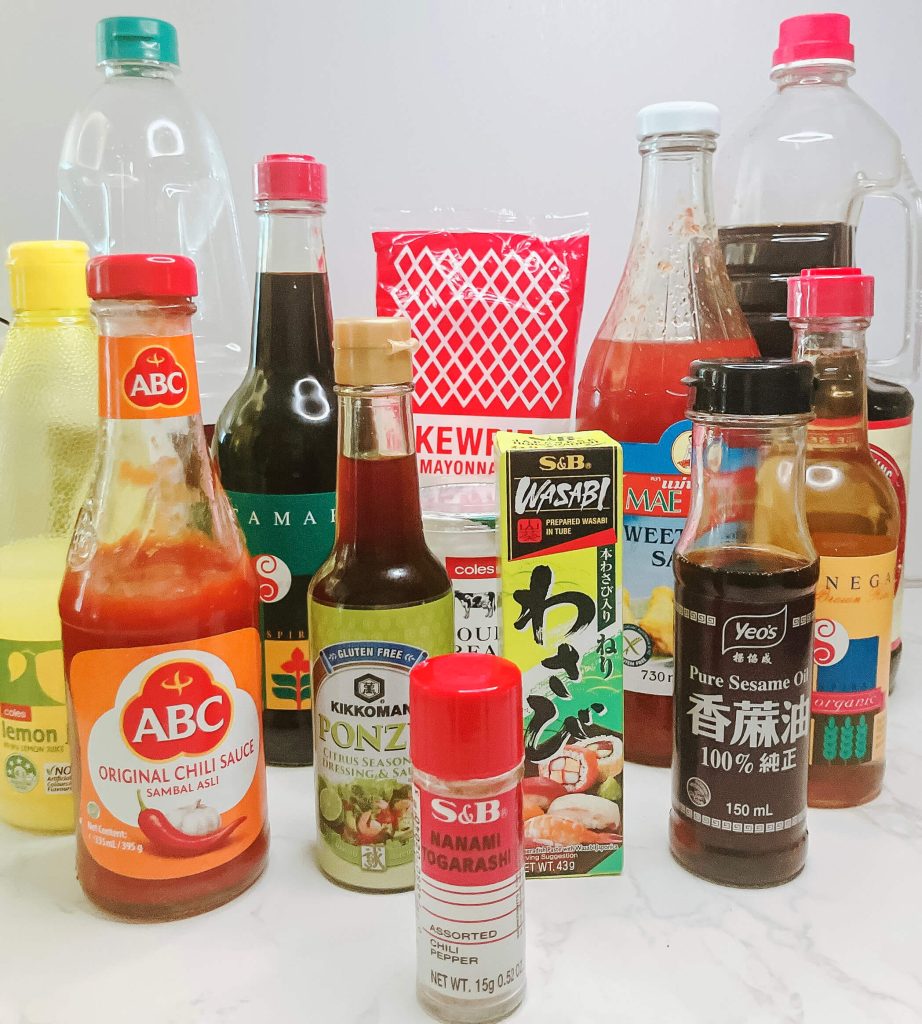
Essential ingredients to make five karaage dipping sauces — from shichimi mayo and oroshi ponzu to wasabi sour cream, sweet chili sour cream, and sambal chili mayo. 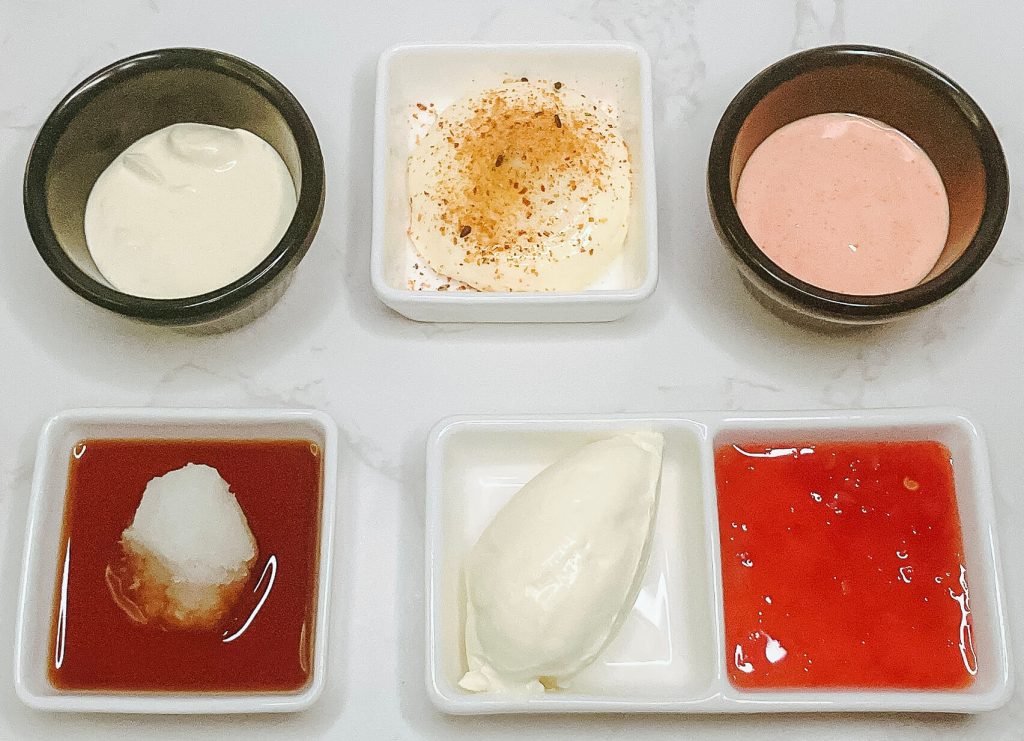
Five different dipping sauces to enjoy with karaage chicken: shichimi mayo, sweet chili sour cream, wasabi sour cream, spicy sambal mayo, and oroshi ponzu 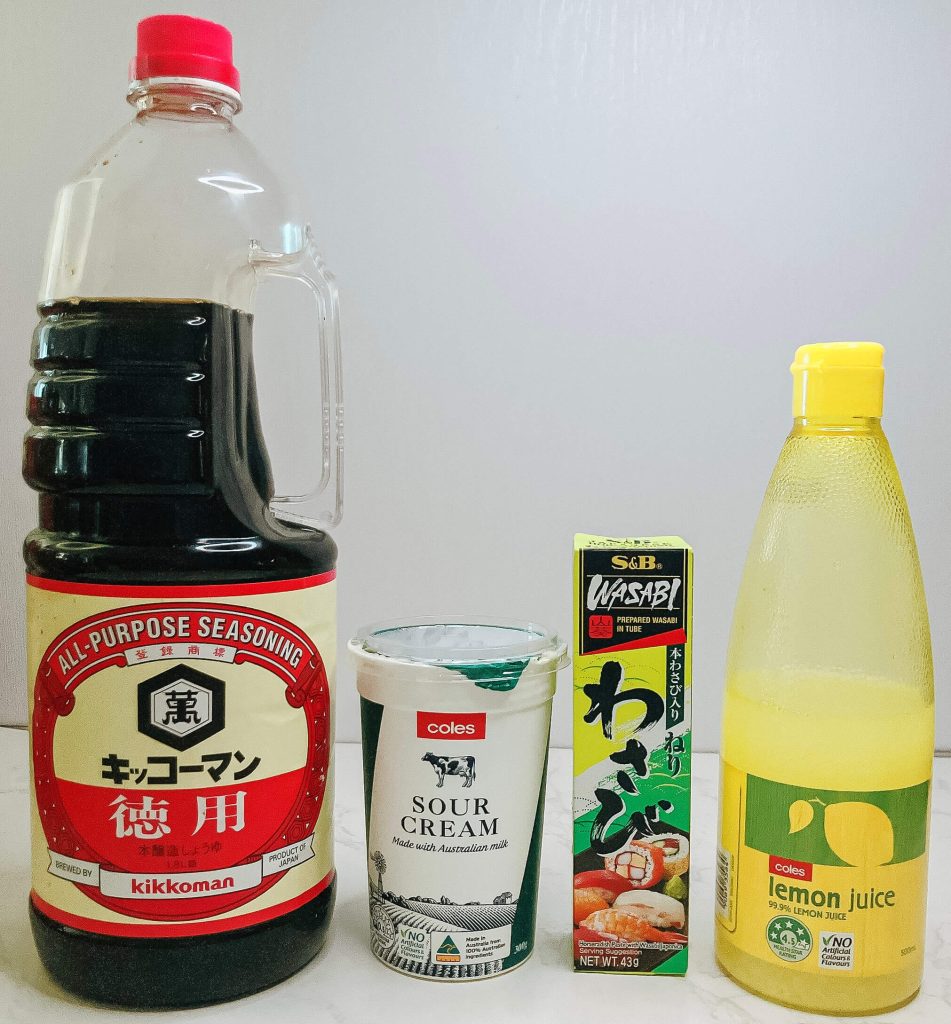
Wasabi, sour cream, soy sauce, and lemon – a bold and creamy dip for karaage chicken 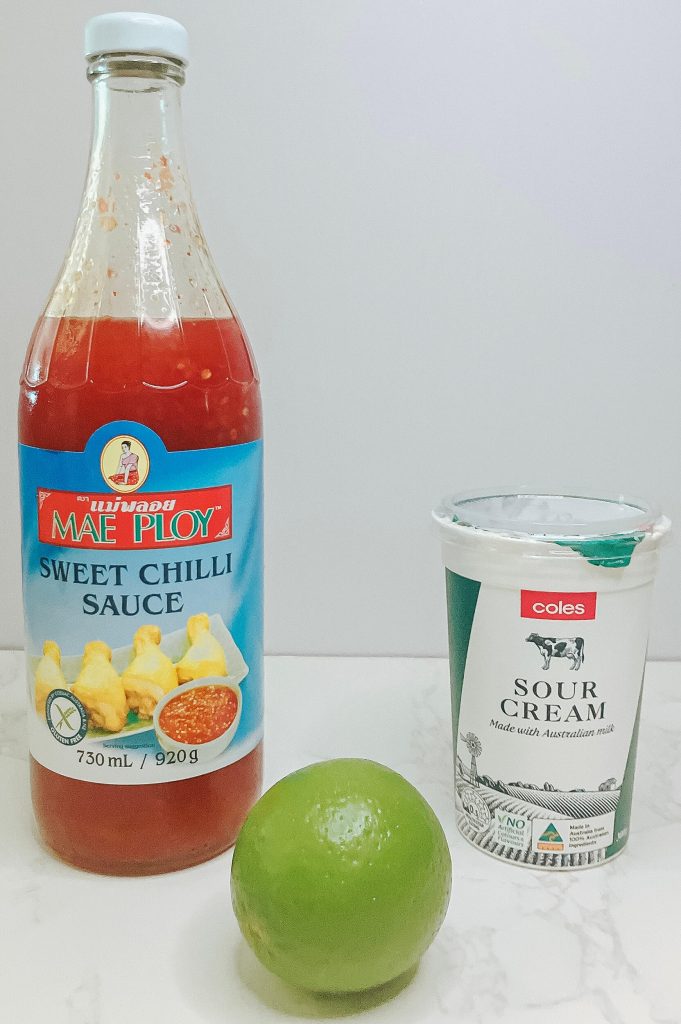
Sweet chili sauce, sour cream, and lime – a creamy, tangy dip to pair with karaage chicken 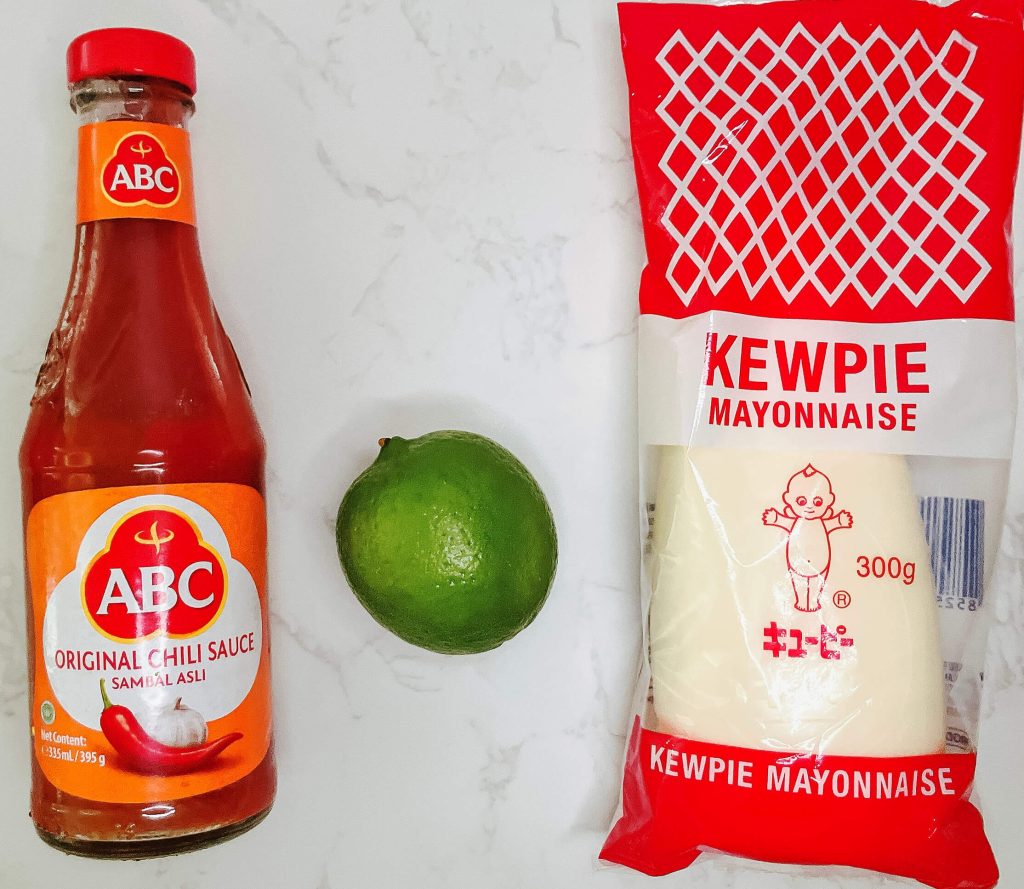
Sambal chili, lime, and Kewpie mayo – a creamy, spicy dipping sauce for karaage chicken. 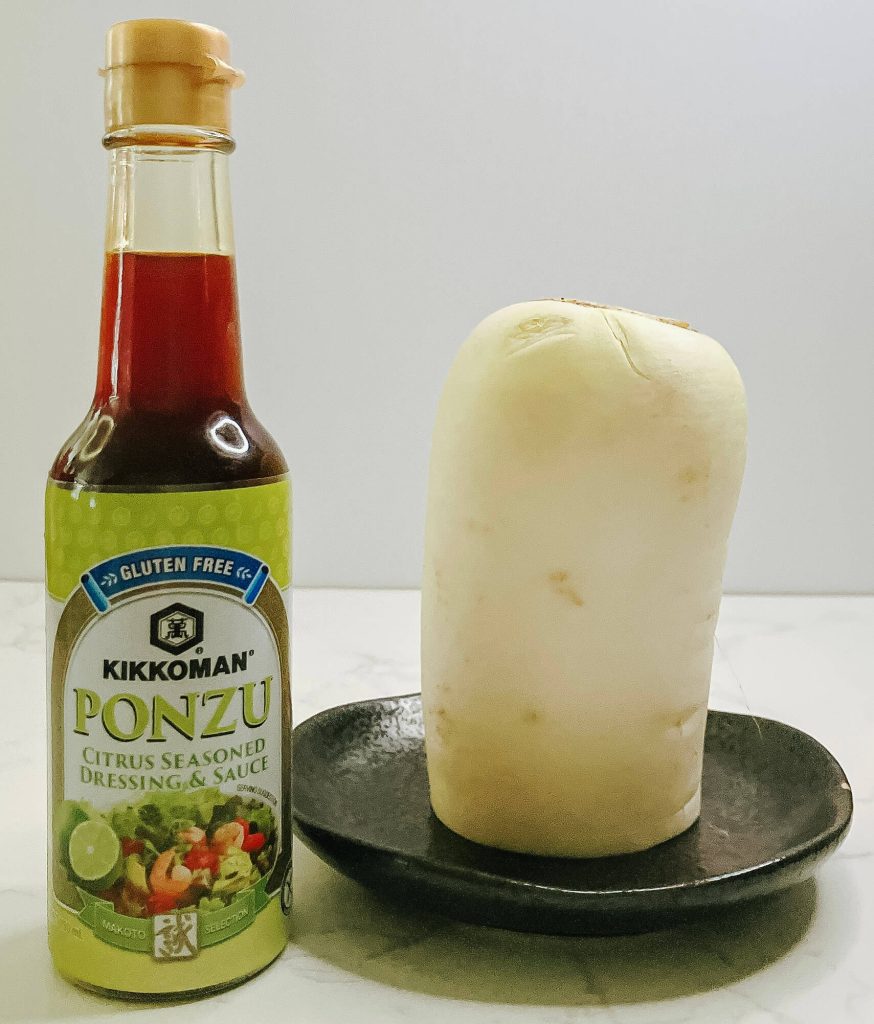
Ponzu sauce and grated daikon – a refreshing oroshi ponzu dip for karaage chicken. 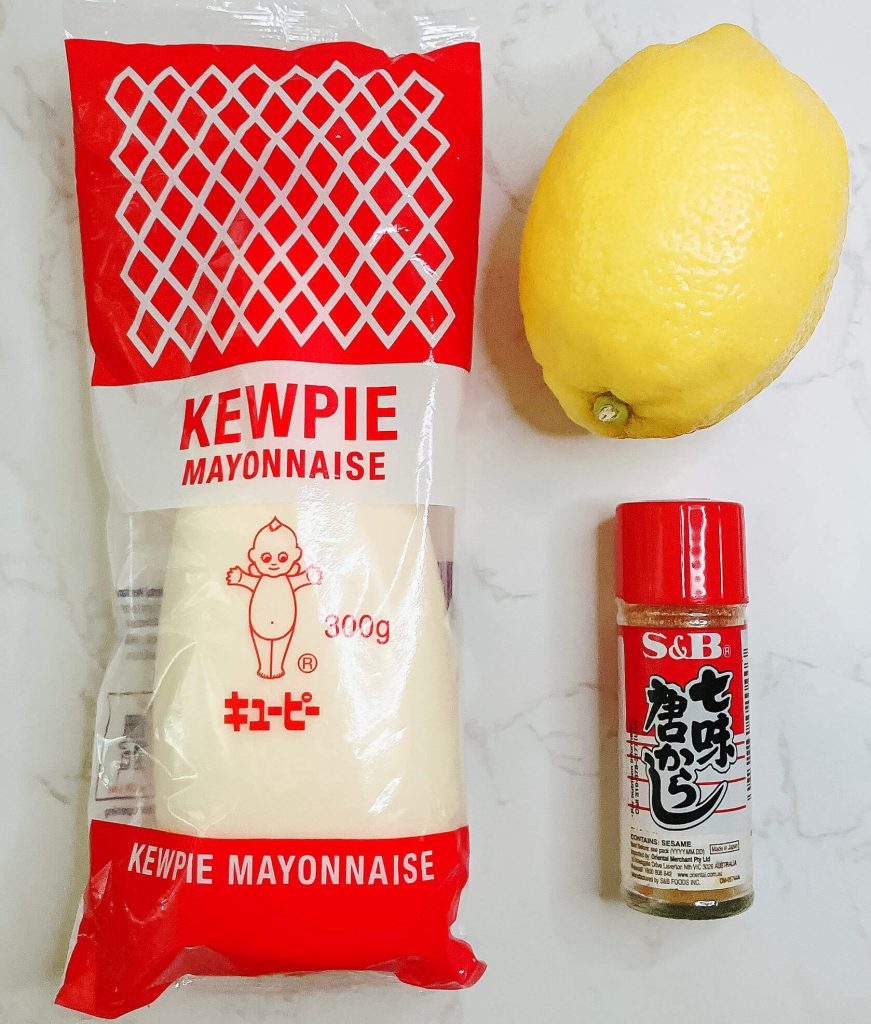
Kewpie mayonnaise, shichimi togarashi, and lemon — simple condiments to serve with karaage chicken
Oroshi Ponzu – light, citrusy, and refreshing.
Shichimi Mayo – creamy mayo with a Japanese spice kick.
Sweet Chili Sour Cream – sweet, tangy, and cooling.
Wasabi Sour Cream – bold heat with citrus balance.
Spicy Sambal Mayo – creamy, garlicky heat with lime.
Shichimi Mayo
Ingredients (1 serve)
- 30 g Kewpie mayonnaise
- Pinch of shichimi togarashi (sprinkled on top)
- Lemon wedge on the side
Method
Spoon mayo into a small dish. Sprinkle shichimi on top. Serve with a lemon wedge — squeeze just before dipping.
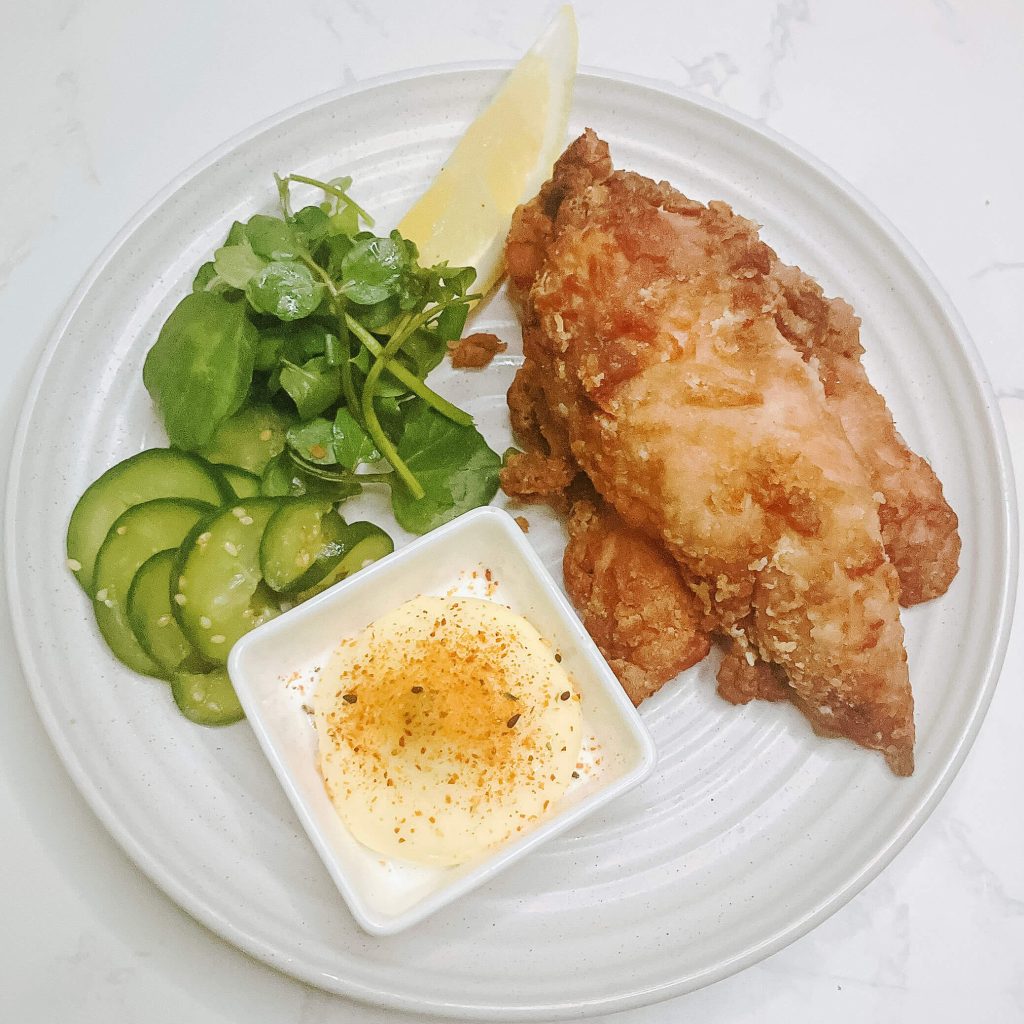
Air fryer karaage chicken tenderloin with cucumber pickles and Japanese mayo and shichimi dipping sauce.
Sweet Chili Sour Cream
Ingredients (makes ~70 g)
- 40 g sour cream
- 25 g sweet chili sauce
- Lime wedge (or 5 g juice, about 1 tsp)
Method
Mix sour cream and sweet chili until smooth. Serve with lime wedge on the side, or add juice directly to taste.

Juicy karaage chicken paired with my twist dipping sauce — sweet chili mixed with sour cream for a creamy, tangy finish.
Wasabi Sour Cream
Base Recipe (1x)
- 20 g sour cream
- 2 g wasabi paste
- 1 g soy sauce
- Pinch of salt
Scaled-Up Batch (4x)
- 80 g sour cream
- 8 g wasabi paste
- 4 g soy sauce
- 2–3 pinches of salt
Method
Whisk until smooth. Chill 10 minutes before serving. Serve with lemon or lime wedge on the side for extra brightness.
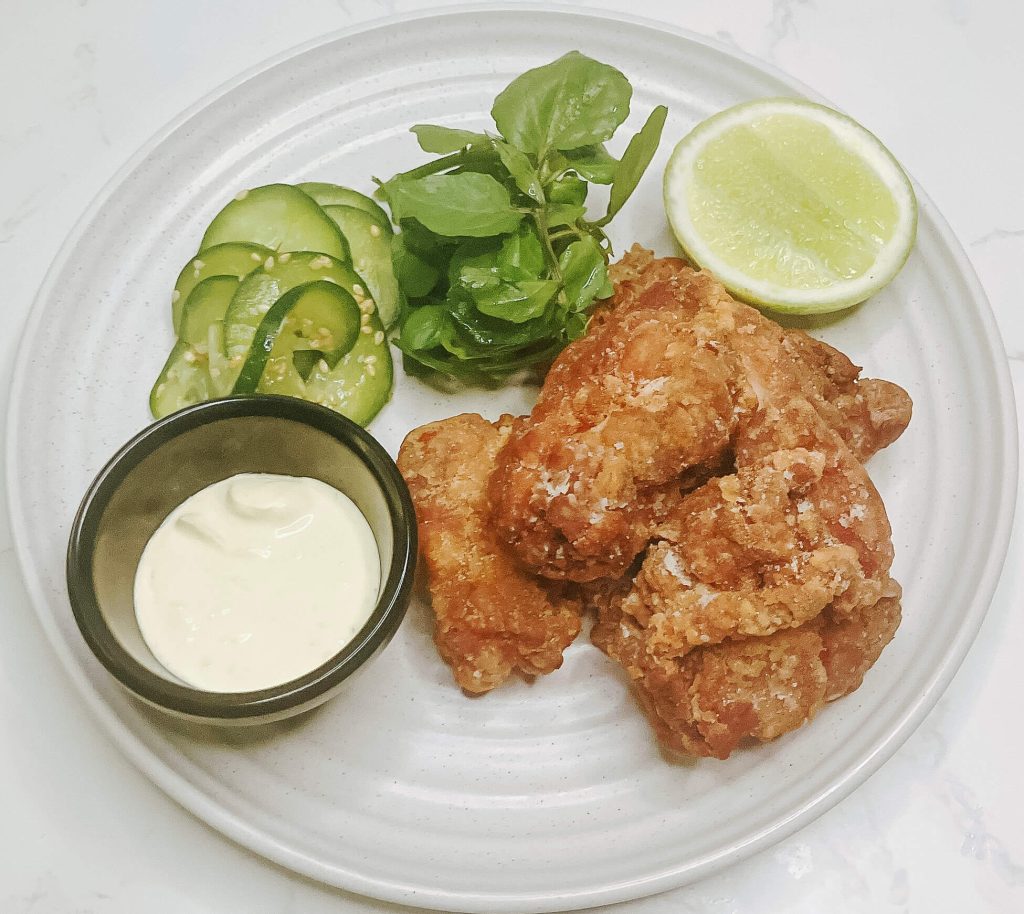
Crispy air fryer karaage chicken with quick cucumber pickles and wasabi sour cream dipping sauce.
Spicy Sambal Mayo
Ingredients (2:1 ratio, ~60 g)
- 40 g Kewpie mayonnaise
- 20 g sambal chili sauce
- Lime wedge (or dash of juice to taste)
Method
Mix mayo and sambal until smooth. Serve with lime wedge, or add a dash of juice to brighten the flavor.
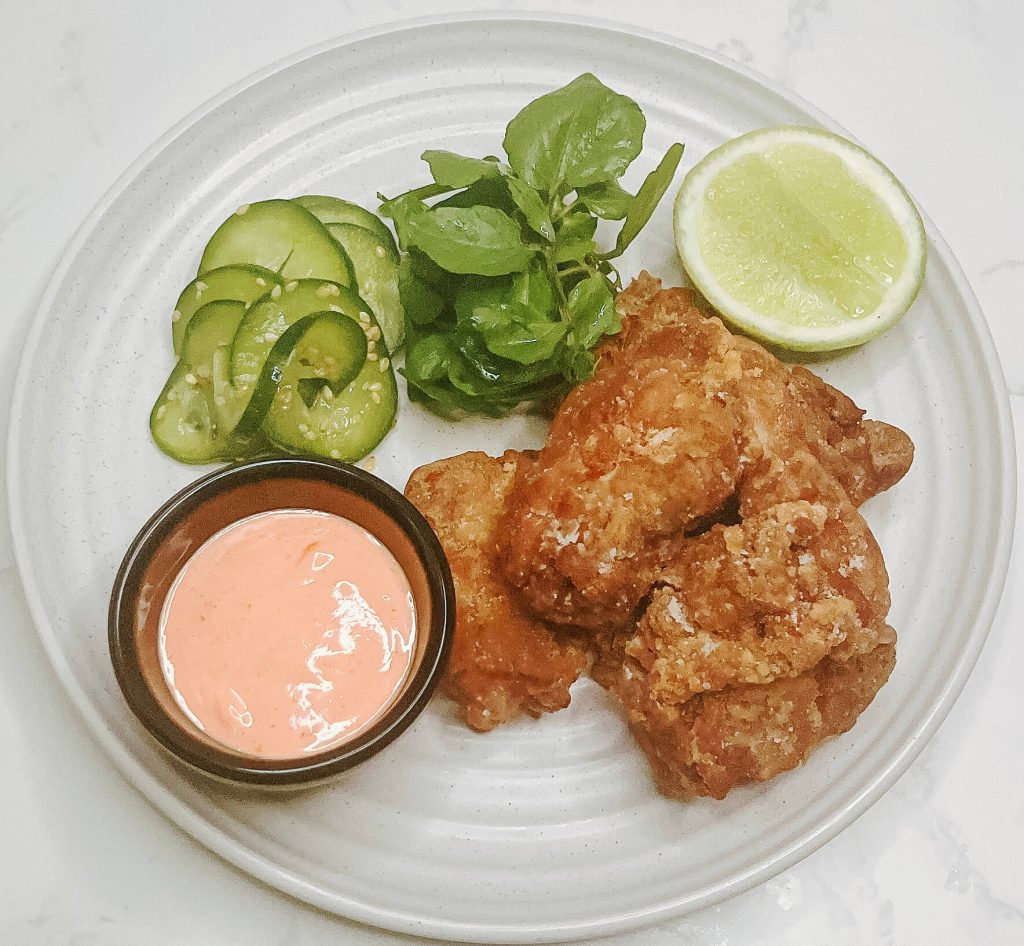
Crispy air fryer karaage chicken with quick cucumber pickles and sambal chilli mayo sauce.
Oroshi Ponzu
Ingredients (makes ~40 g)
- 30 g ponzu sauce
- 10 g grated daikon (oroshi)
- Lemon wedge on the side
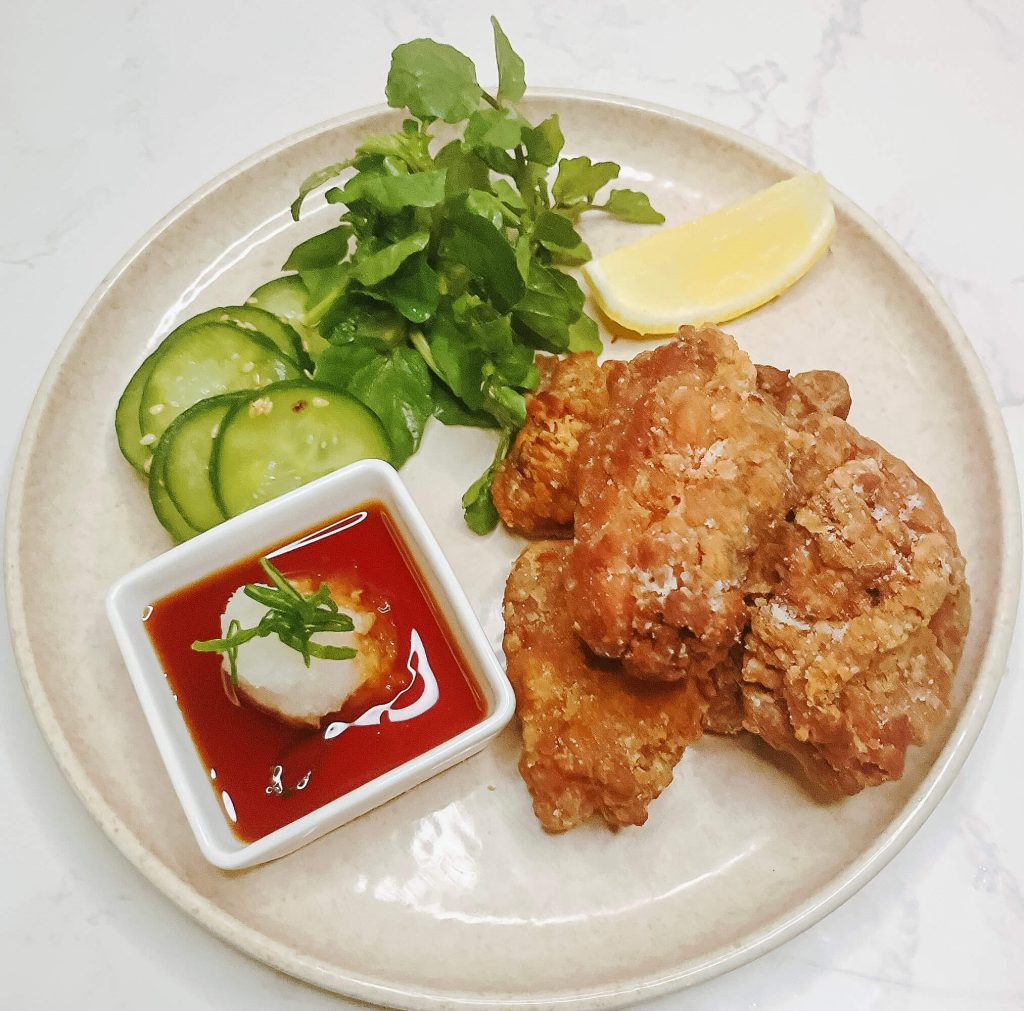
Crispy air fryer karaage chicken with quick cucumber pickles and oroshi ponzu dipping sauce.
For Serving
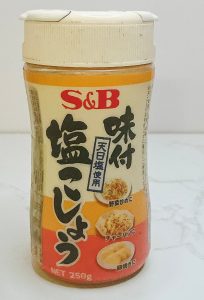
S&B Japanese salt and pepper – a simple dusting to finish karaage chicken
Japanese salt and pepper – a simple dusting that boosts umami.
Watercress – fresh, peppery greens to balance the fried chicken. (Optional)
Comparisons
See how the cut of chicken, coating, and cooking method change the flavor, texture, and finish of karaage chicken — so you can choose your perfect version.
Karaage Chicken – Cut Comparisons
See how the cut of chicken changes the flavor, juiciness, and texture of karaage chicken — so you can choose your perfect version.
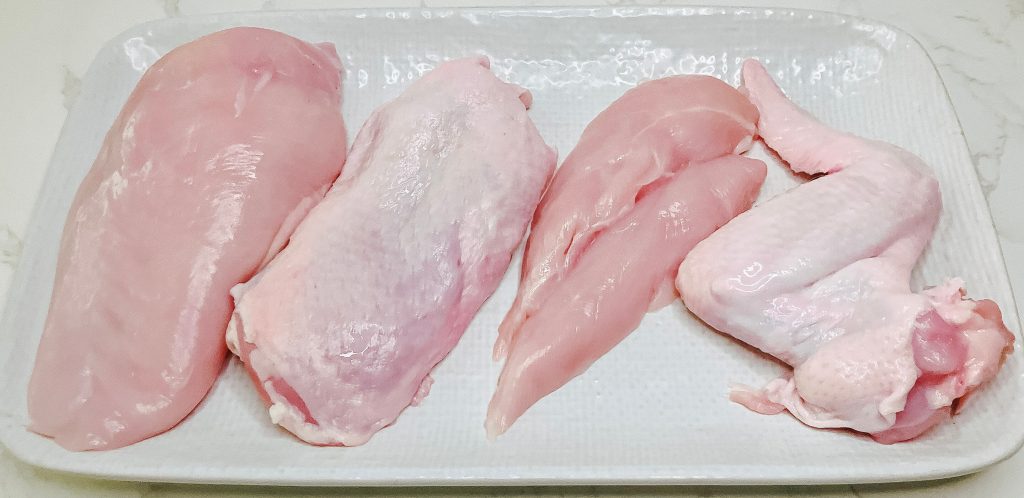
Chicken breast, thigh, tenderloin, and wing – the main cuts you can use for karaage chicken.” 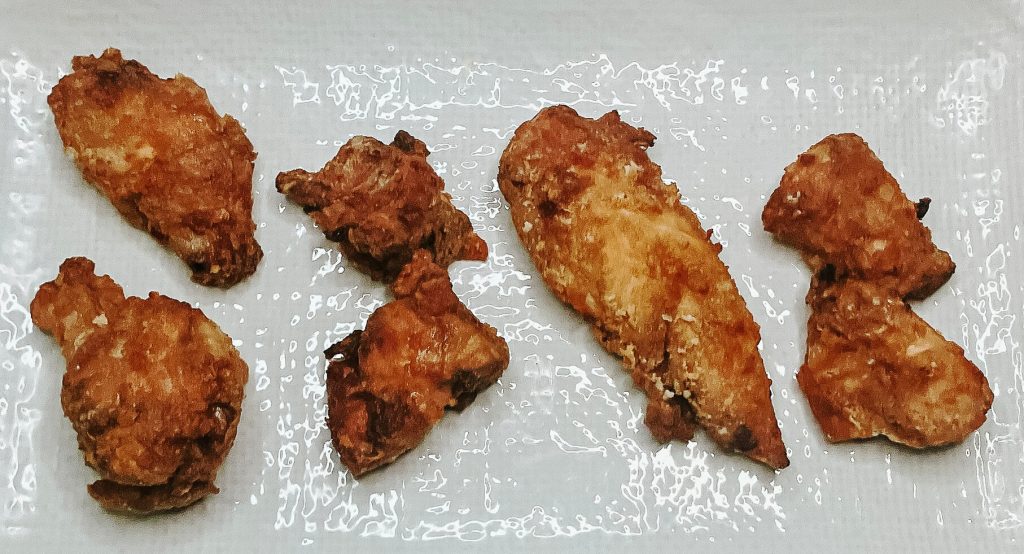
From left: wing, thigh, tenderloin, and breast – four cuts of chicken fried karaage style.”
Breast – cooks faster and gives a lighter bite with a clean flavor. It’s less fatty but still tender with the marinade. A good choice if you prefer leaner karaage.
Thigh – naturally fattier, so it stays juicier and more indulgent. This is the most common cut for karaage in Japan and the most forgiving if slightly overcooked.
Tenderloin – lean like breast but smaller, so it cooks quickly. It gives a soft, delicate texture, though it can dry out if over-fried.
Wing – has skin and bone, which add extra flavor and crispiness. A bit trickier to eat, but a favorite for those who love bold, juicy karaage.
All four cuts work — breast is lighter, thigh is juicier, tenderloin is delicate, and wing is rich and crispy.
Karaage Chicken – Coating Comparisons
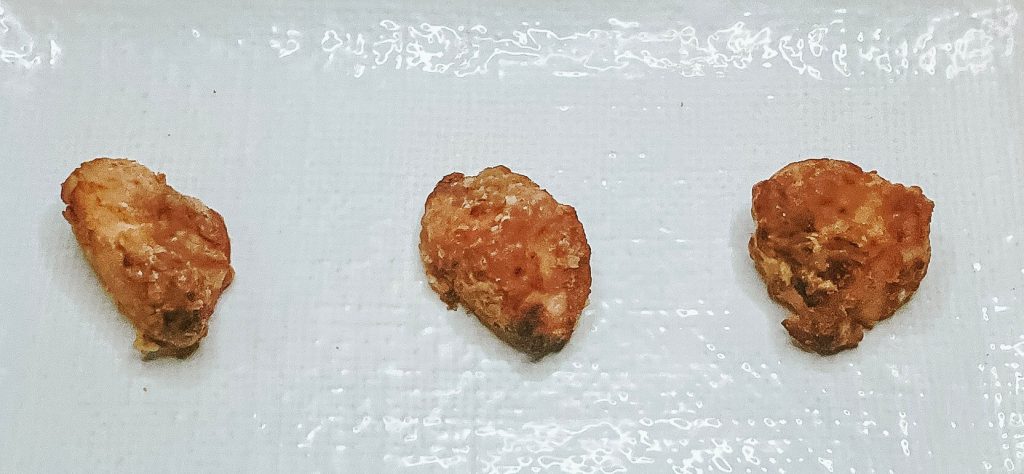 From left: rice–potato starch blend, potato starch, and plain flour coatings for karaage chicken.”
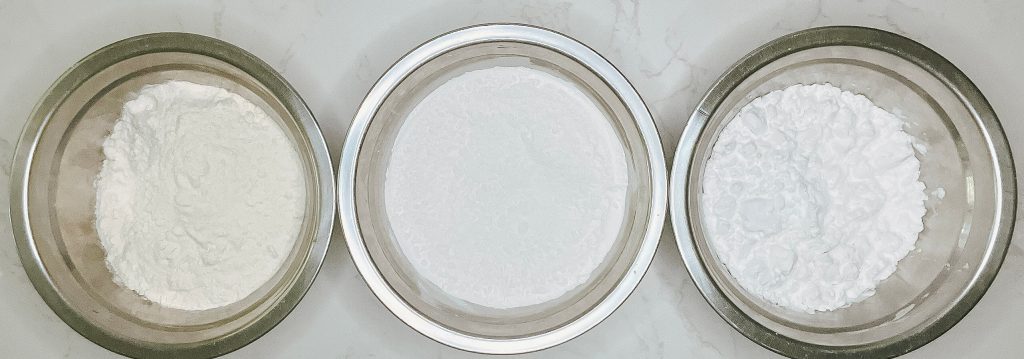 Plain flour, a rice–potato starch blend, and potato starch for karaage chicken coating tests.
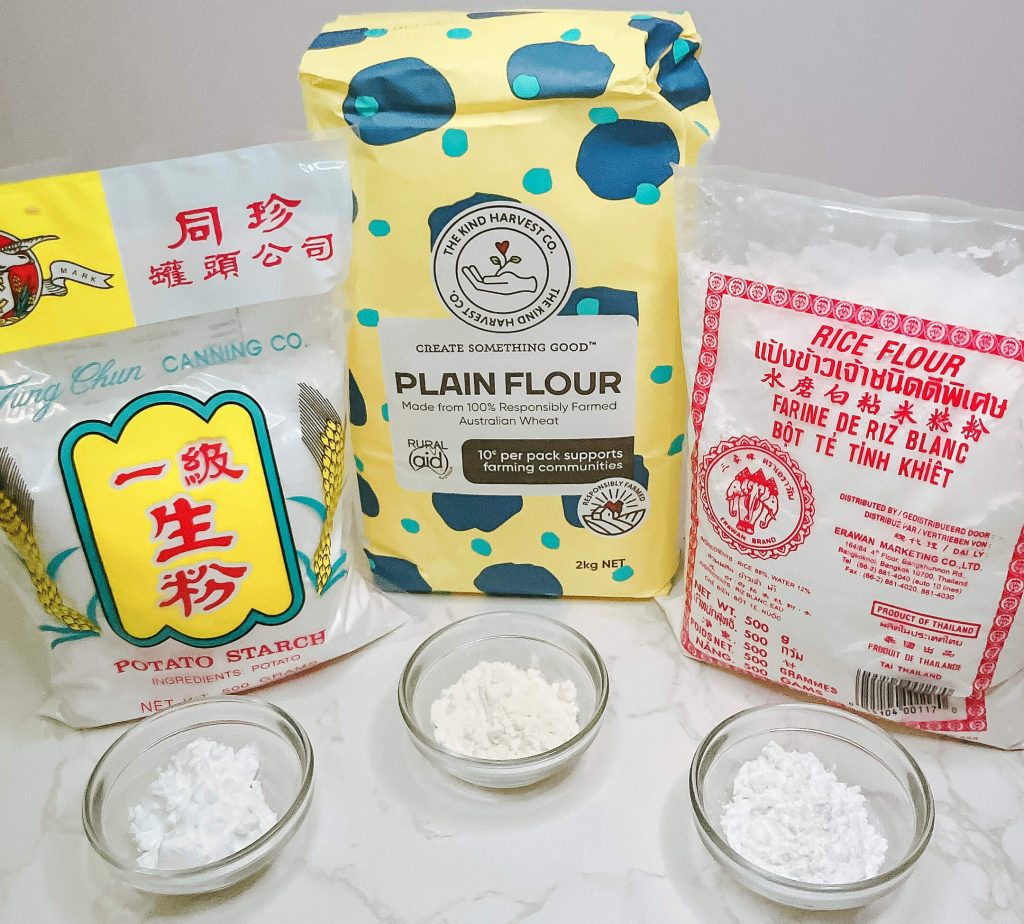 Potato starch, rice flour, and plain flour – the coating options for karaage chicken.”
Rice Flour + Potato Starch Blend – the best of both worlds. The rice flour makes the coating extra crunchy, while potato starch keeps it light. A great choice if you want a crisp bite that holds its texture.
Potato Starch – the traditional coating for Japanese karaage. It fries up into a thin, delicate crust that shatters lightly when you bite into it. Perfect if you’re after authenticity.
Plain Flour – the most common pantry option. It gives a softer, breaded-style coating that absorbs a little more oil but still tastes delicious. A good fallback if specialty starches aren’t available.
Each flour gives a different result — rice blend for crunch, potato starch for tradition, and plain flour for convenience.
Karaage Chicken – Air Fry vs. Deep Fry
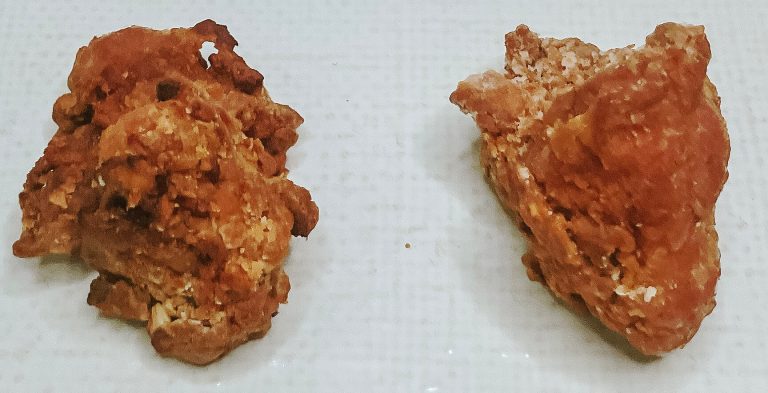 Left: air-fried karaage, right: deep-fried karaage — two cooking methods with different textures
Air Fry – a modern, lighter method. With just a light spray of oil, the karaage comes out crispy on the outside but less oily overall. It’s healthier and easier for everyday cooking, though the texture is slightly drier compared to deep fry.
Deep Fry – the traditional way. Frying in hot oil gives karaage its signature crisp, light crust with juicy meat inside. The flavor is richer, and the coating has that authentic crunch loved in Japan.
Both methods are great — air fry gives you a lighter, guilt-free karaage, while deep fry delivers the ultimate classic texture and taste.
Step by step Guide : Air Fryer Karaage chicken with Quick Cucumber Pickles
Steps – Karaage Chicken (Cut & Marinate)
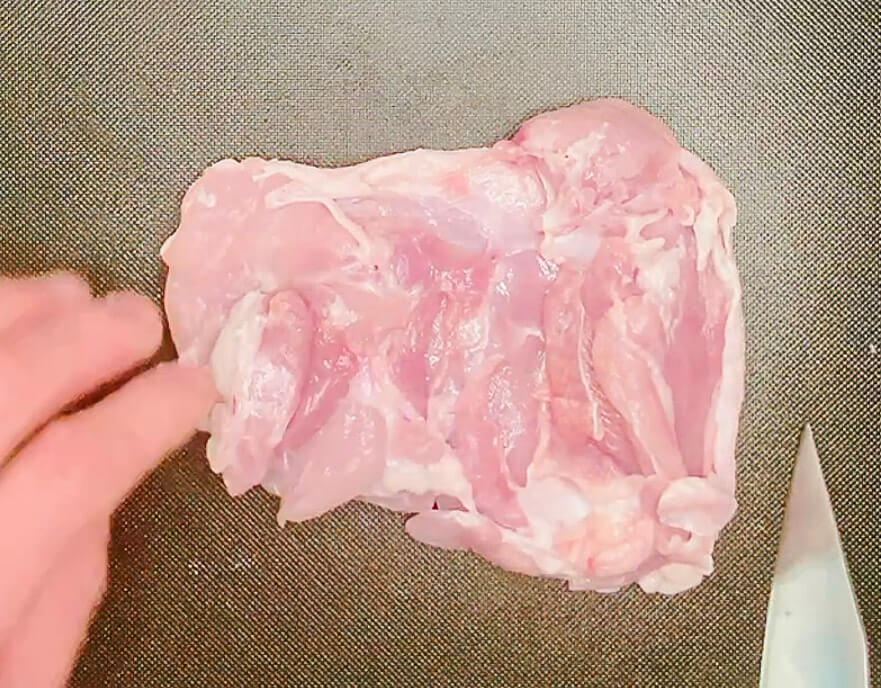
Chicken thigh trimmed and ready to be cut into bite-sized karaage pieces 
Chicken thigh pieces ready to be coated in the karaage marinade. 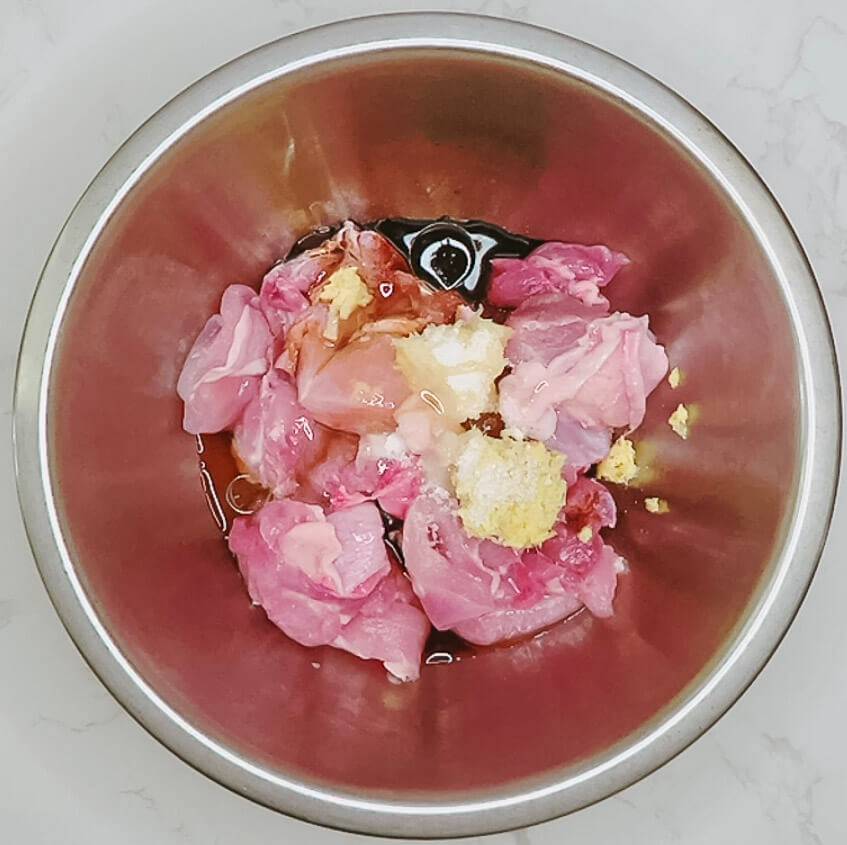
Chicken thigh with tamari, sake, ginger, garlic, oil, salt, and sugar – the base for karaage marinade 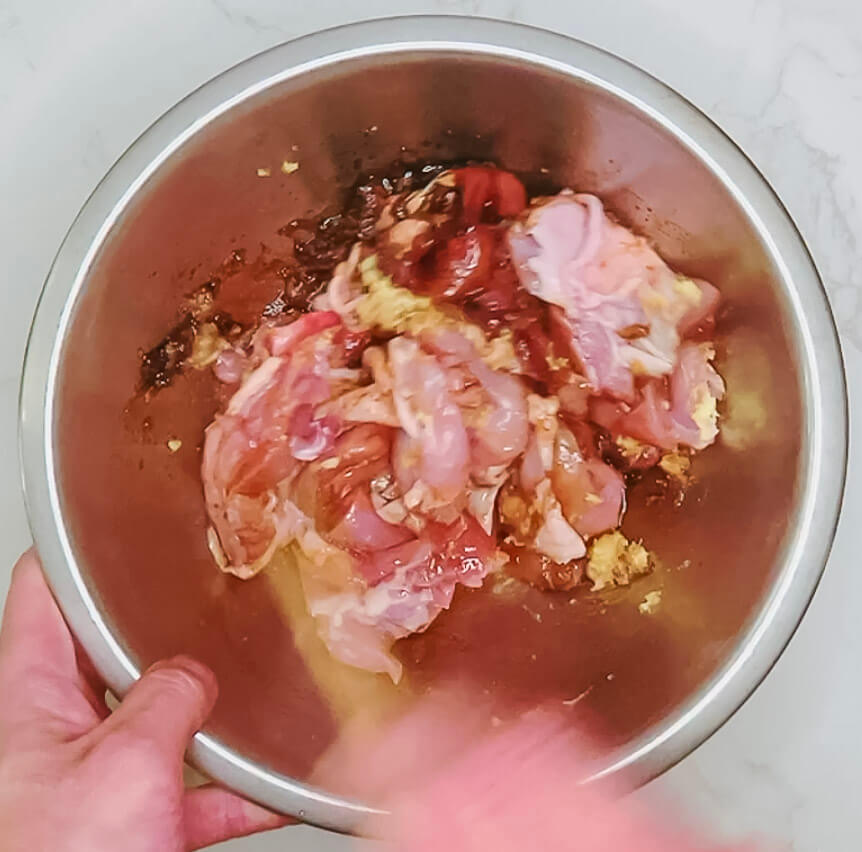
Mix chicken with tamari, sake, ginger, garlic, oil, salt, and sugar until evenly coated. 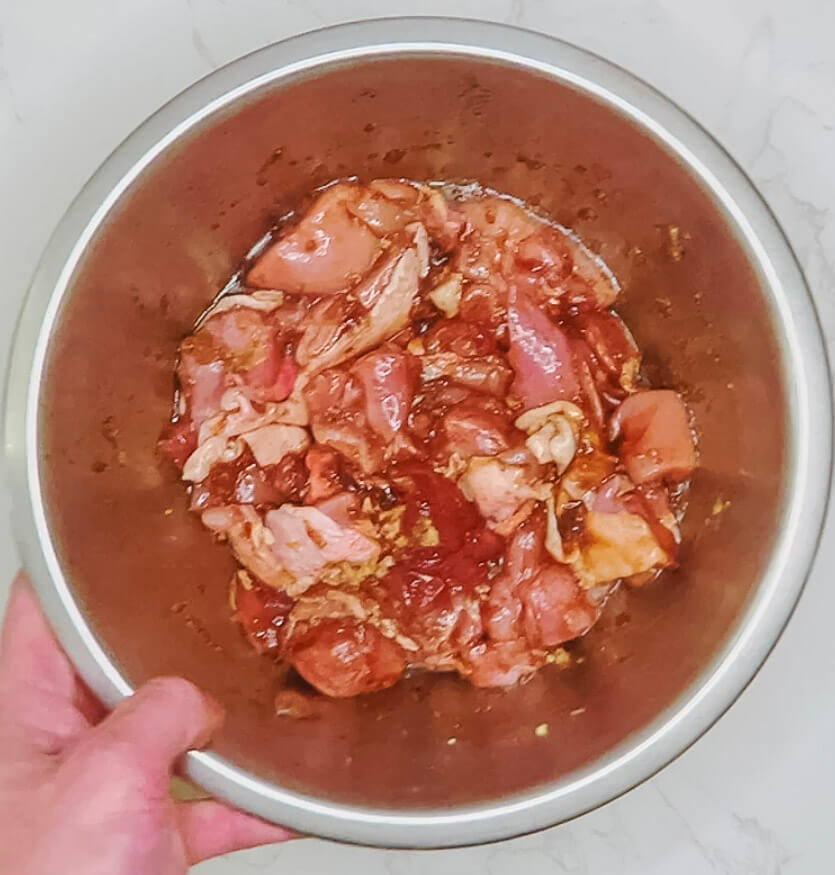
Let chicken rest in the marinade for 15–30 minutes to absorb flavor.
- Trim chicken thighs, removing excess fat.
- Cut into bite-size pieces, about 40 g each.
- Mix marinade – grated ginger, grated garlic, tamari (or soy sauce), sake, salt, sugar, and oil.
- Toss chicken until evenly coated.
- Marinate for 15–30 minutes in the refrigerator.
Steps – Karaage Chicken (Dusting: First & Second Coat)
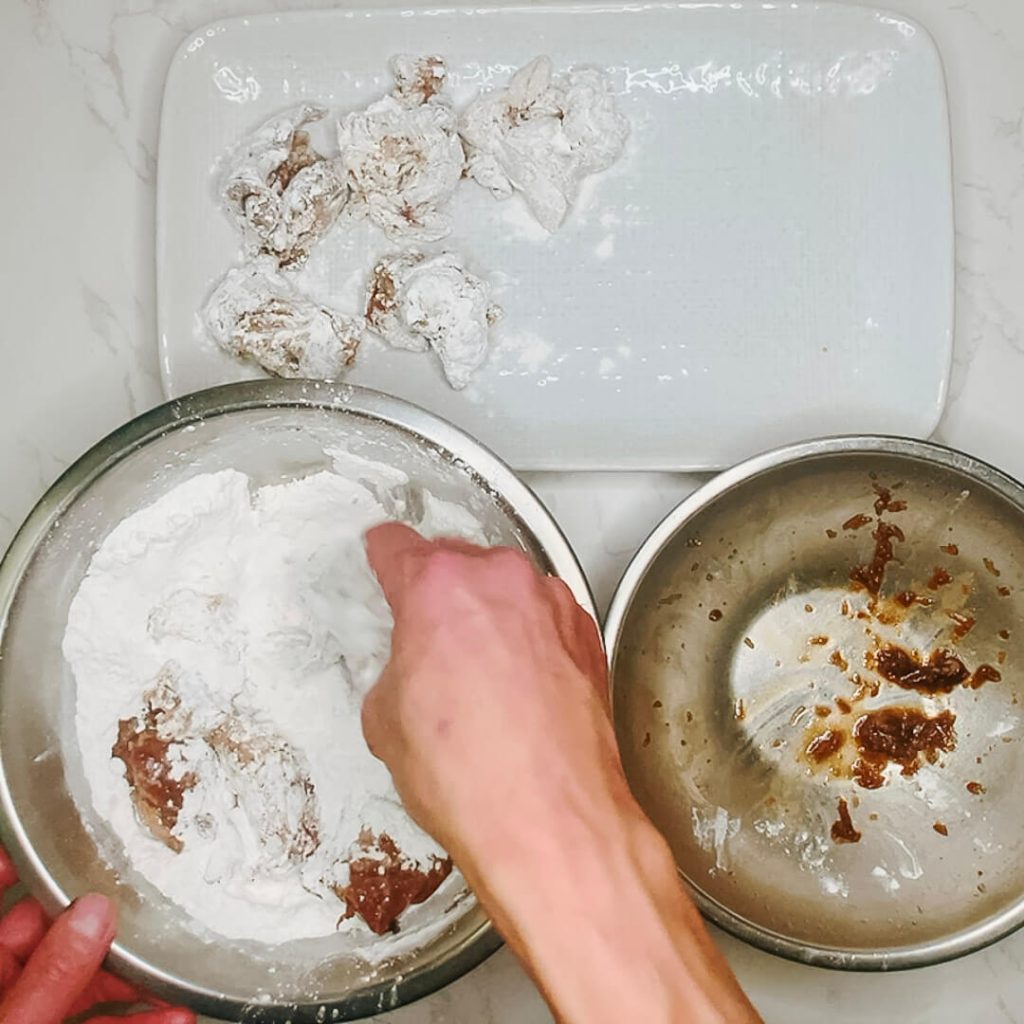
“Coat marinated chicken evenly in potato starch before frying.” 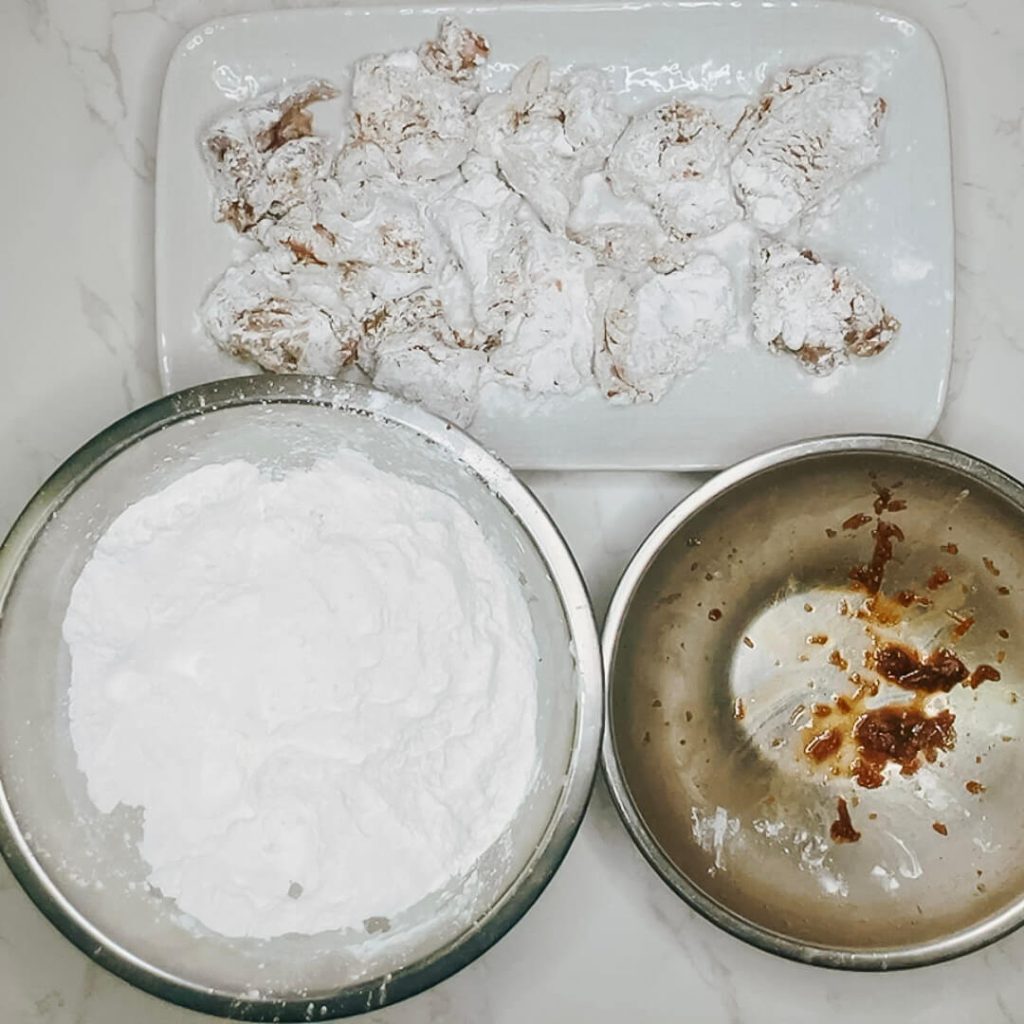
Chicken after the first starch coating, ready to rest before the second coat. 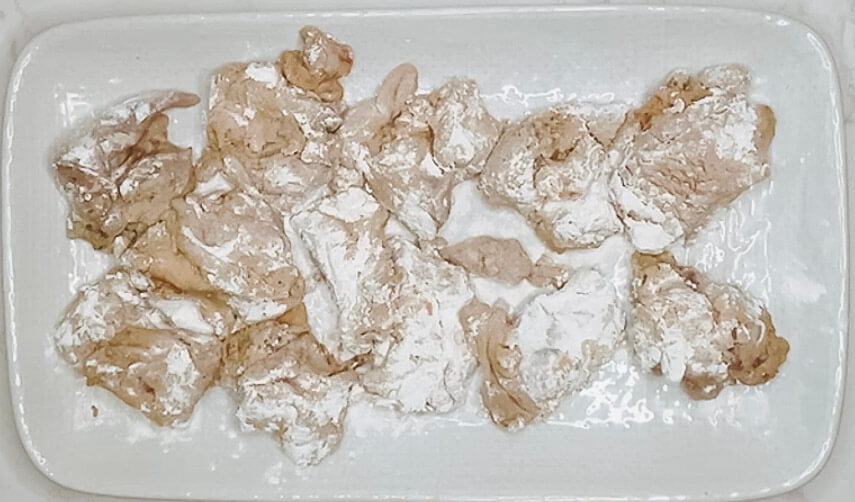
Chicken rested for 10 minutes after the first starch coating 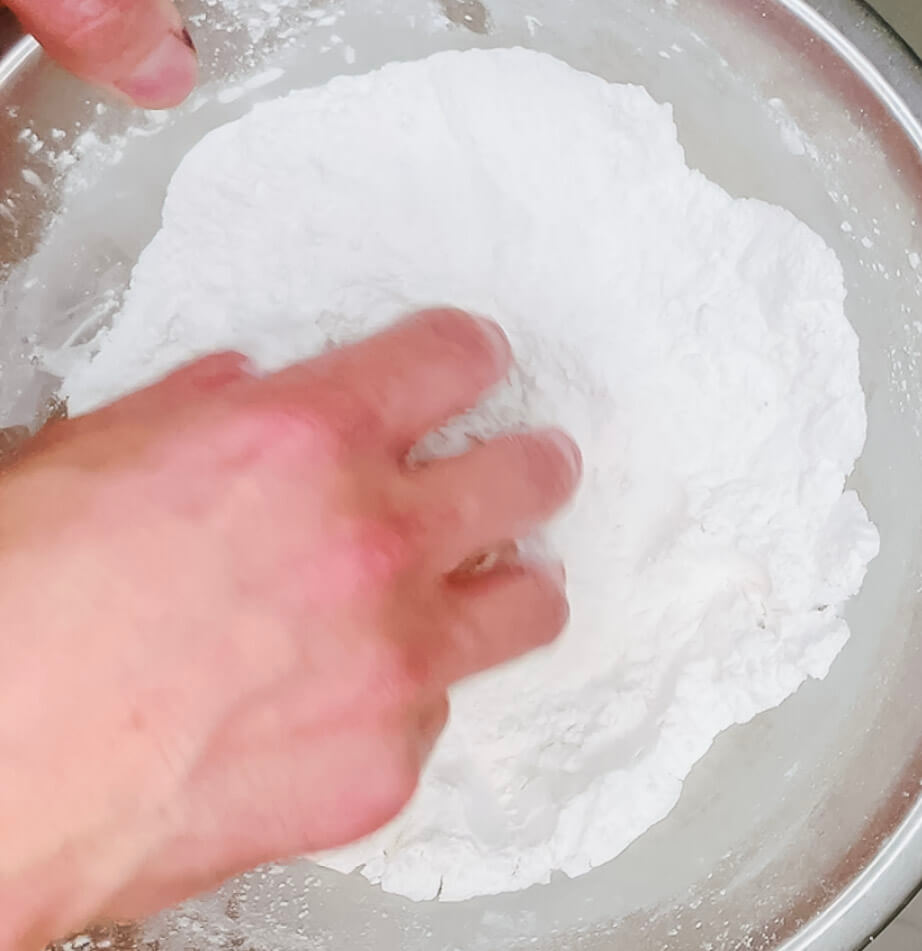
Applying a second starch coating for extra crispiness.
- Prepare starch for coating (potato starch, plain flour, or potato + rice blend).
- Dust (1st coat) – Lightly coat each piece, shaking off excess.
- Rest 5–10 minutes so the starch clings.
- Dust (2nd coat) – Re-coat lightly for extra crispness.
- Stage coated chicken on a tray, not overlapping.
Steps – Karaage Chicken (Air Frying)
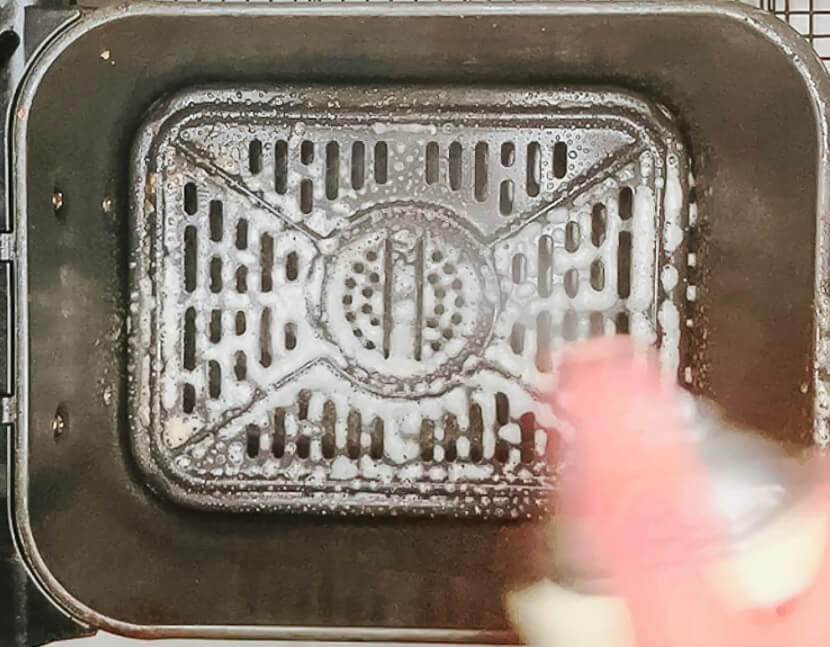
Lightly oil the preheated air fryer basket to stop the coating from sticking. 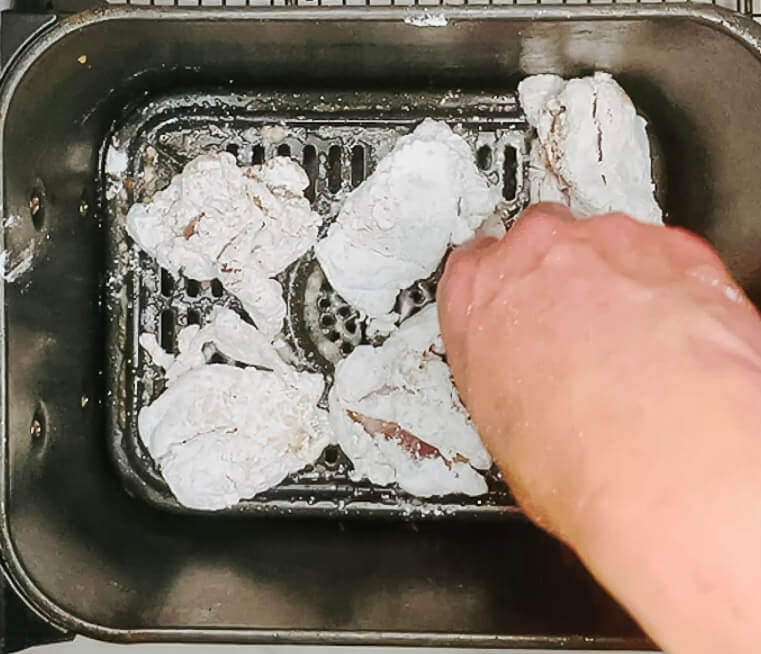
Arrange karaage pieces in a single layer in the air fryer basket. 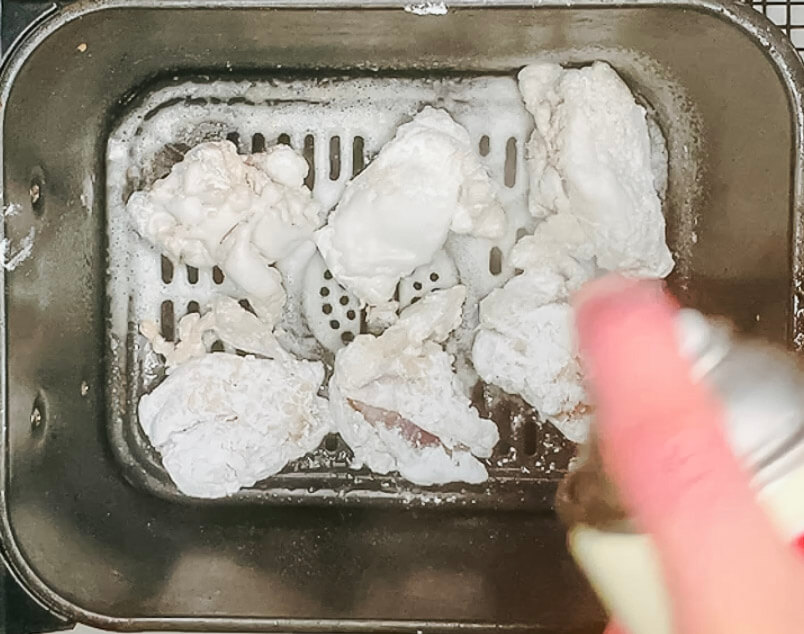
“Lightly spray coated chicken pieces with oil before air frying.” 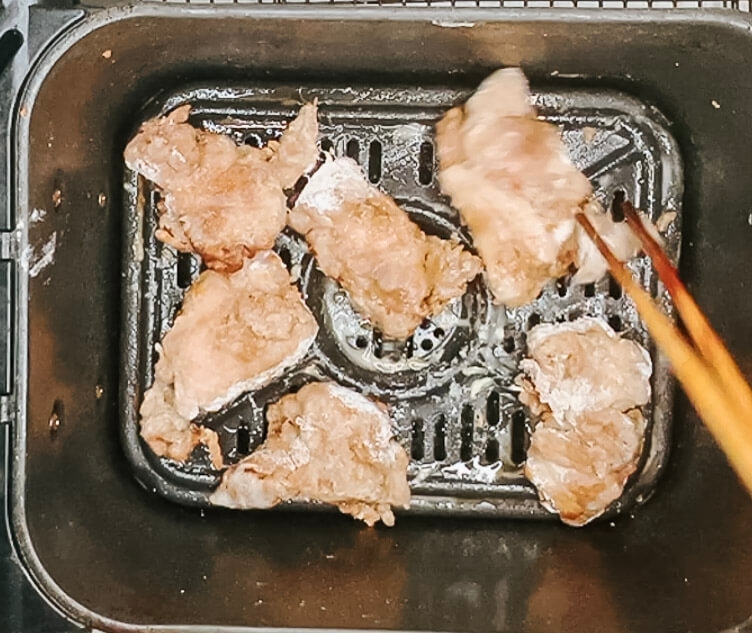
Flip chicken halfway through the first fry for even crisping. 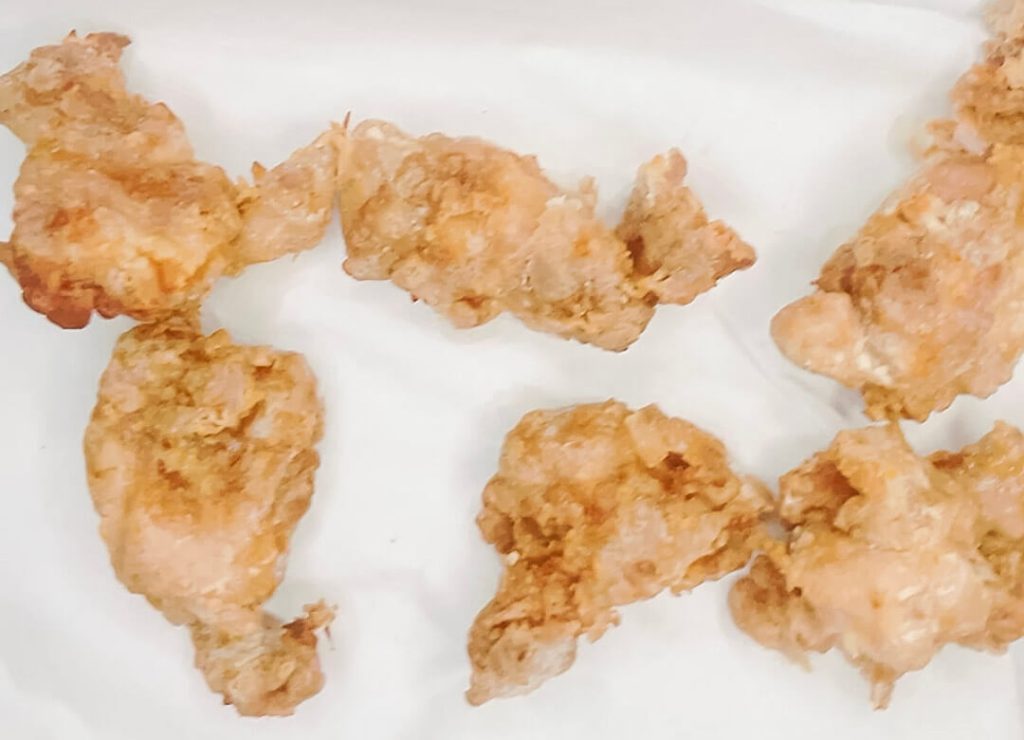
After the first fry, let the chicken rest before the second fry for extra crispiness 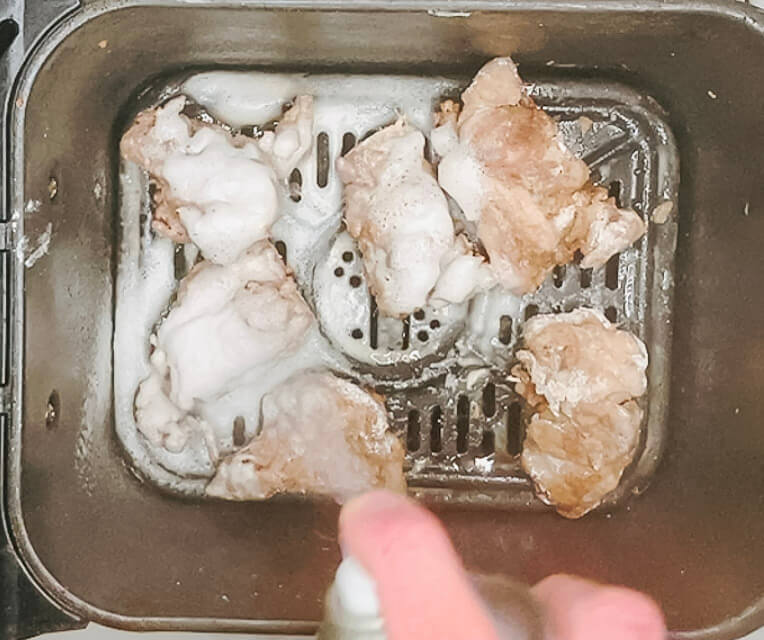
After flipping halfway, spray chicken again with oil for even browning. 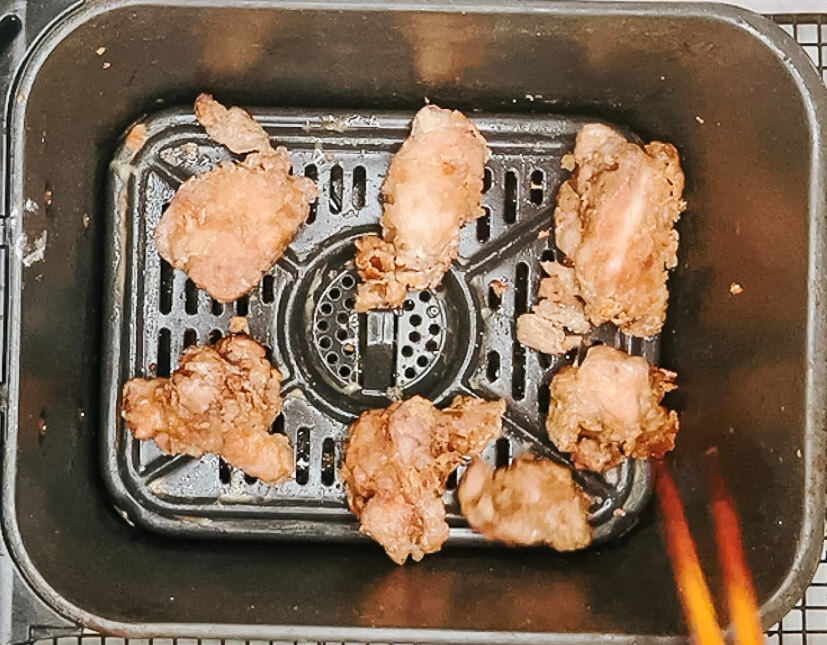
Flip chicken halfway through the second fry to crisp both sides evenly.” 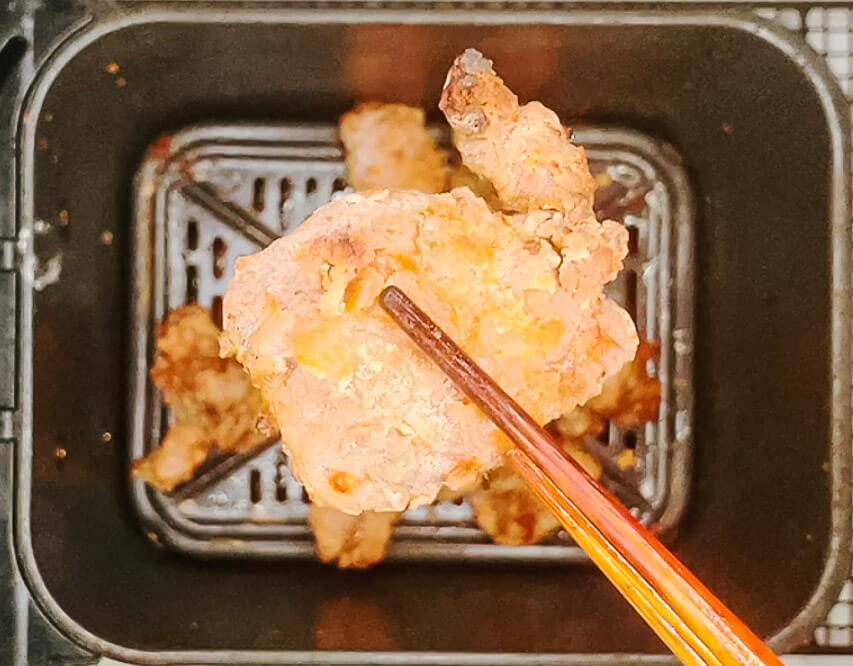
Golden, crispy karaage after the second fry — ready to serve
- Preheat air fryer to 200 °C / 390 °F.
- Oil basket lightly to prevent sticking.
- Arrange chicken in a single layer.
- First fry – Air fry 8–10 minutes, flipping halfway.
- Rest 2–3 minutes.
- Second fry – Increase to 240 °C / 465 °F and cook 3 minutes + 2 minutes until golden and crisp.
- If your air fryer doesn’t go up to 240 °C, leave the chicken in a little longer until the coating turns deep golden.
Chef’s Note – Deep Fry method
Traditional karaage is usually deep-fried twice for extra crunch:
- Fry at 160 °C / 320 °F for 3–4 minutes until just cooked.
- Rest 3–5 minutes.
- Return to hot oil at 185–190 °C / 365–375 °F for 45–75 seconds until golden and crispy.
Quick Cucumber Pickles (Asazuke-style)

Lightly salt the sliced cucumber to draw out excess water. 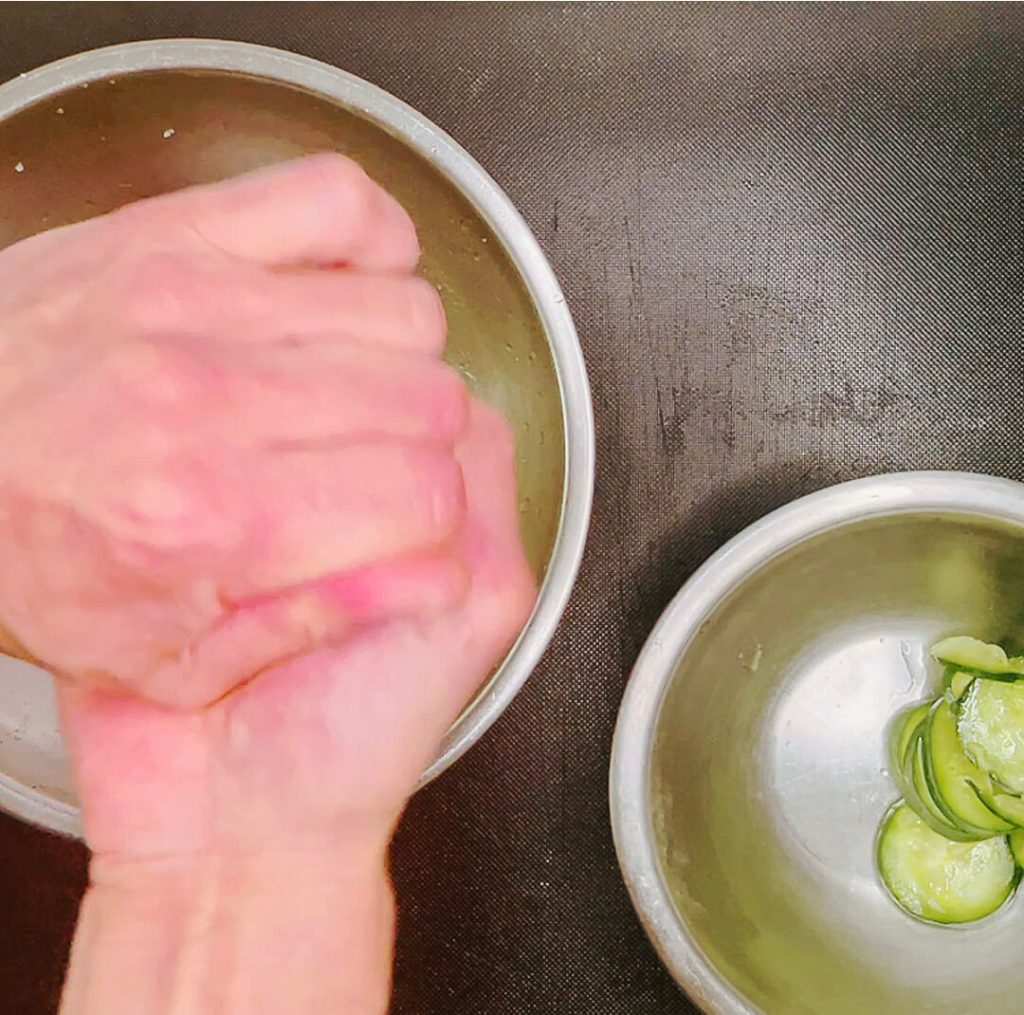
Gently squeeze the cucumbers after salting to release extra water. 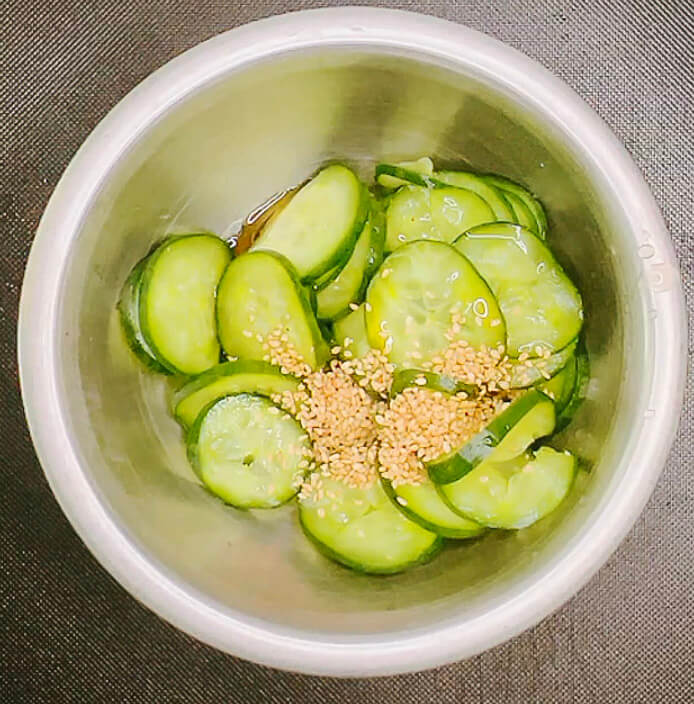
Add sesame seeds and seasoning to the cucumber before serving. 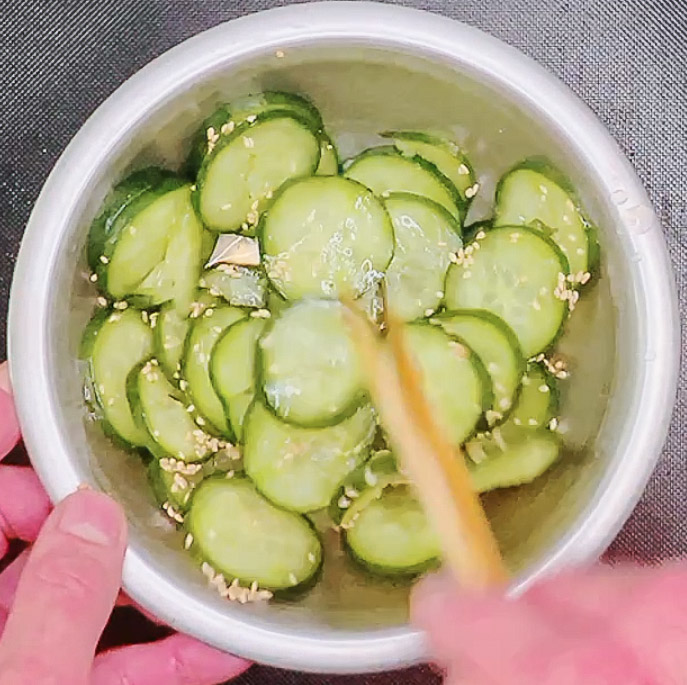
Mix cucumbers with sesame seeds and seasoning until evenly coated. 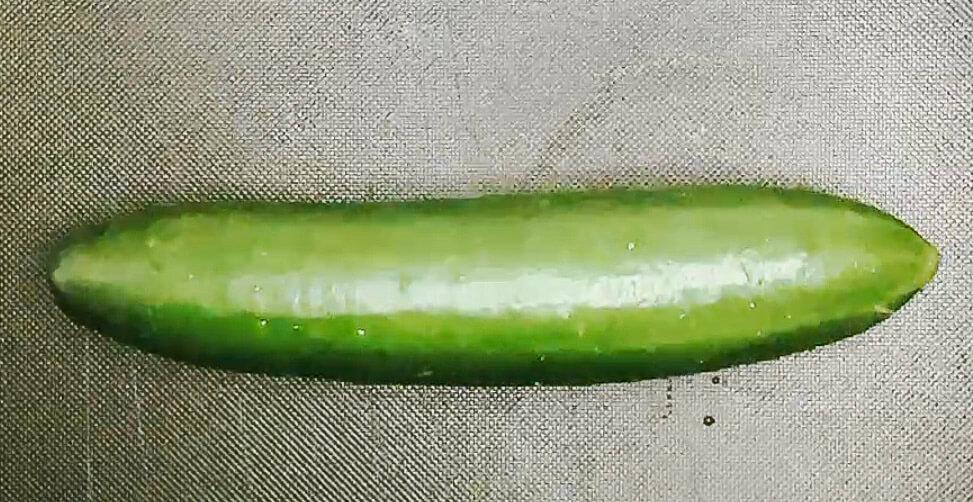
Fresh cucumber, the base for quick Japanese pickles. Description: 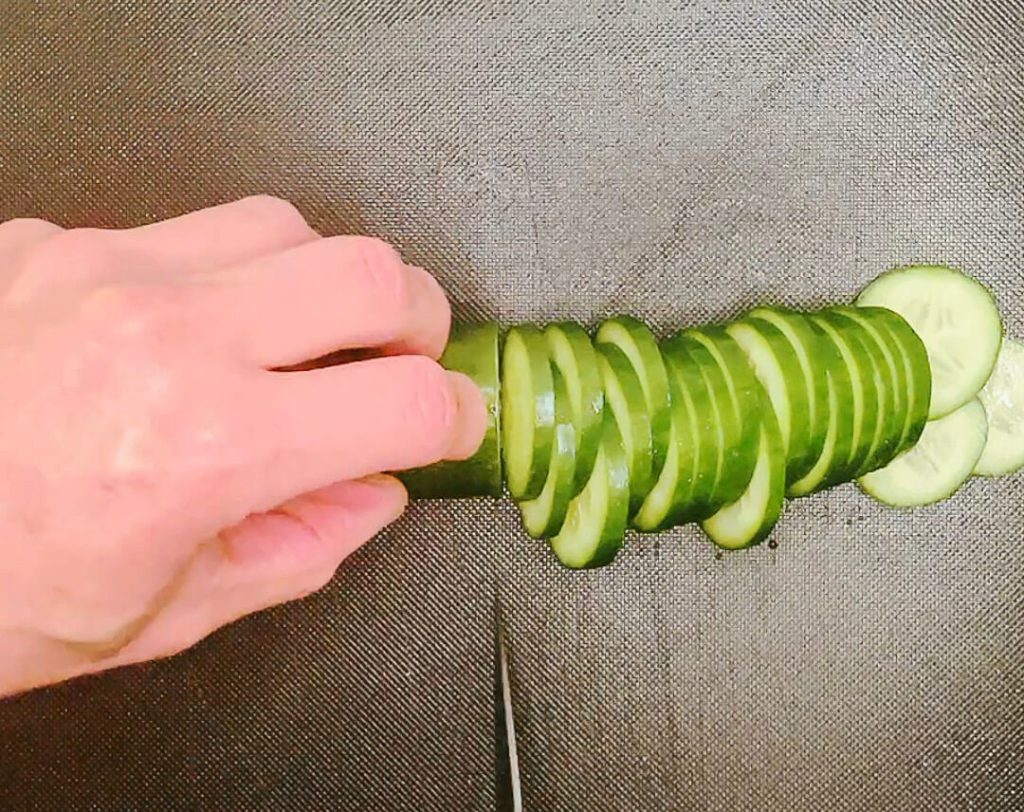
Slice cucumber into bite-size pieces for pickling.
These refreshing Japanese quick pickles (asazuke) are the perfect side for karaage chicken. They take just minutes to prepare — lightly salted to draw out excess water, then seasoned with sesame for crunch, freshness, and a clean flavor that balances fried foods beautifully.
Steps – Quick Cucumber Pickles
- Slice – Cut cucumber into thin rounds or half-moons.
- Salt – Toss with salt in a bowl and leave for 10 minutes to draw out water.
- Squeeze – Gently press the cucumbers to remove excess liquid.
- Season – Add sesame oil, sesame seeds, and a splash of rice vinegar (optional) for brightness. Mix until evenly coated.
- Serve – Enjoy immediately, or chill for 10–15 minutes for a slightly deeper flavor.
Chef’s Note: These pickles are best eaten the same day for maximum crunch. Add a pinch of chili or grated ginger if you’d like extra kick.
Steps – Assemble & Serve Air Fryer Karaage Chicken with Quick Cucumber Pickles

Arrange the karaage chicken neatly on a plate for serving 
Add dipping sauce to the plate alongside the karaage chicken. 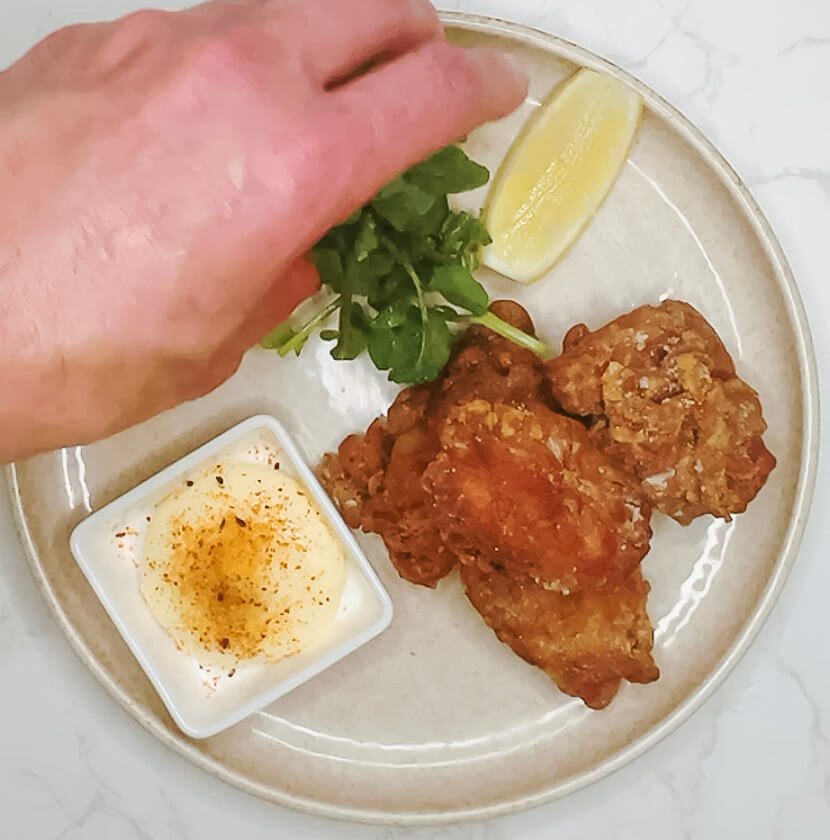
Arrange karaage chicken with dipping sauce, lemon, and watercress. Pickles come next. 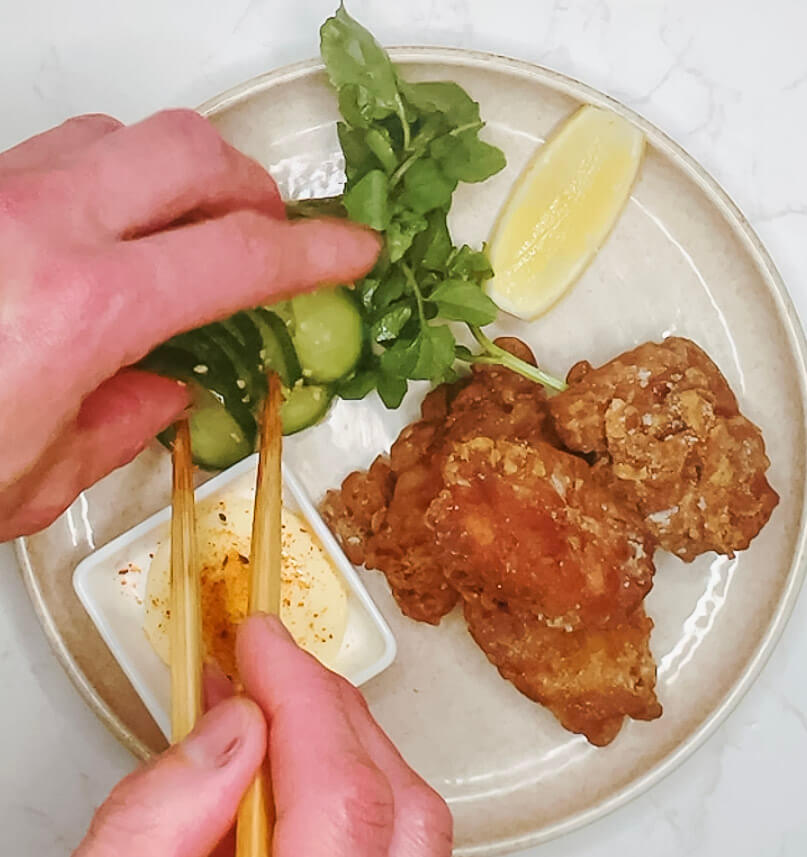
Finish the plate with refreshing cucumber pickles alongside the karaage chicken. 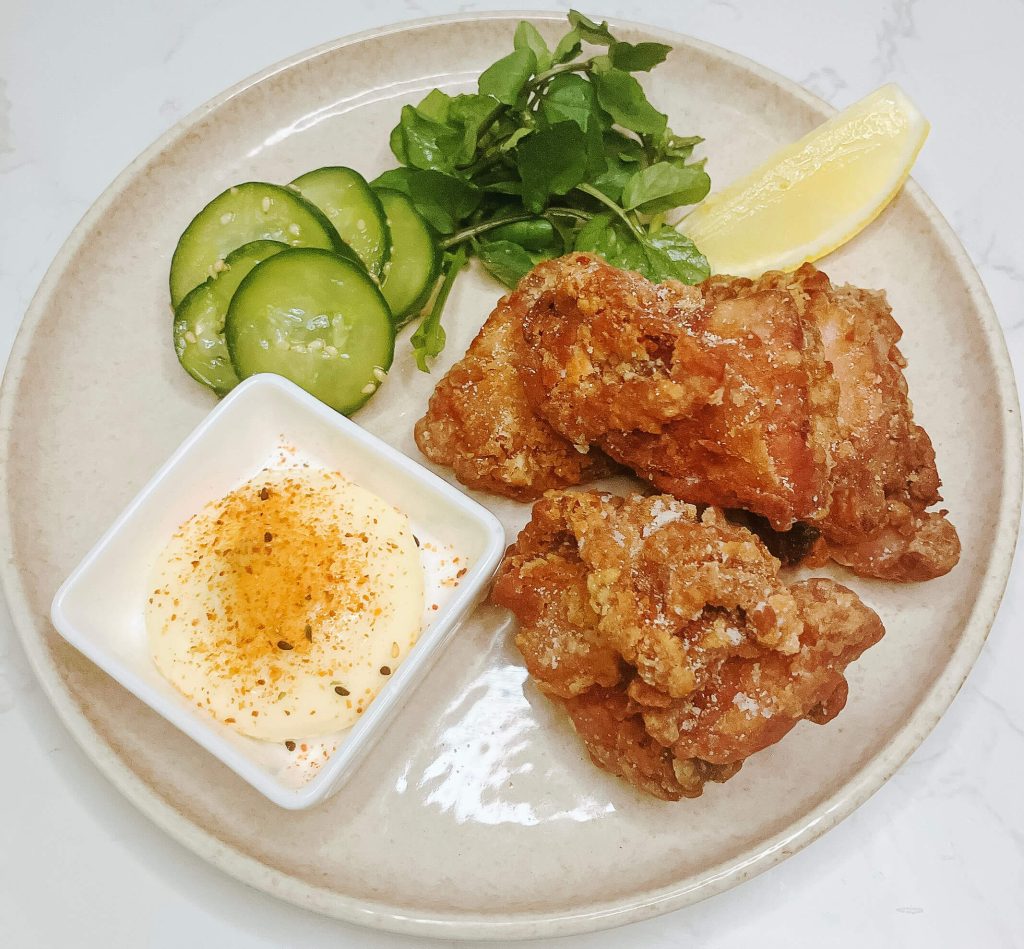
Crispy air fryer karaage chicken with refreshing cucumber pickle and dipping sauce.
.
- Arrange – Place the hot, crispy karaage chicken neatly on a serving plate.
- Add dipping sauce – Serve with your choice of sauce (e.g. shichimi mayo, wasabi sour cream, oroshi ponzu).
- Garnish – Add a wedge of lemon, fresh watercress, and a side of quick cucumber pickles for balance.
- Serve immediately – Karaage is best enjoyed hot, straight from the fryer, while the coating is still crisp.
Chef’s Note: A teishoku-style plate with rice and miso soup makes this a complete Japanese meal.
FAQ – Air Fryer Karaage Chicken with Quick Cucumber Pickles
Q: Can you air fry karaage chicken?
Yes — karaage works beautifully in the air fryer. You still get the soy–ginger flavor and crisp coating without the mess of deep frying. My recipe for air fryer karaage chicken with quick cucumber pickles uses a double-coat, double-fry method in the air fryer to mimic the traditional crunch.
Q: What flour is best for karaage chicken?
Traditionally, Japanese karaage uses potato starch for a thin, crisp crust. Rice flour makes the coating lighter and smoother, while plain flour is a softer, more pantry-friendly option. A potato + rice flour mix gives you the best of both worlds.
Q: Why double coat and double fry?
The first coat helps the marinade cling to the chicken, while the second coat adds extra crispness. Likewise, the first fry cooks the chicken through, and the second fry at a higher heat creates the signature golden, crunchy crust.
Q: Can I marinate karaage chicken in mayonnaise?
Yes! In Japan, it’s common to use mayonnaise as part of the marinade. It tenderizes the meat and adds richness. You can add a spoonful of mayonnaise to the marinade for extra richness and tenderness, reducing the oil slightly if needed.
Q: What sides go well with karaage chicken?
Classic pairings include shredded cabbage, lemon wedges, miso soup, and steamed rice. For this recipe, I like to add quick cucumber pickles for freshness. Potato salad or watercress also work beautifully to balance the richness of fried chicken.
Final Thoughts of Air Fryer Karaage Chicken with Quick Cucumber Pickles
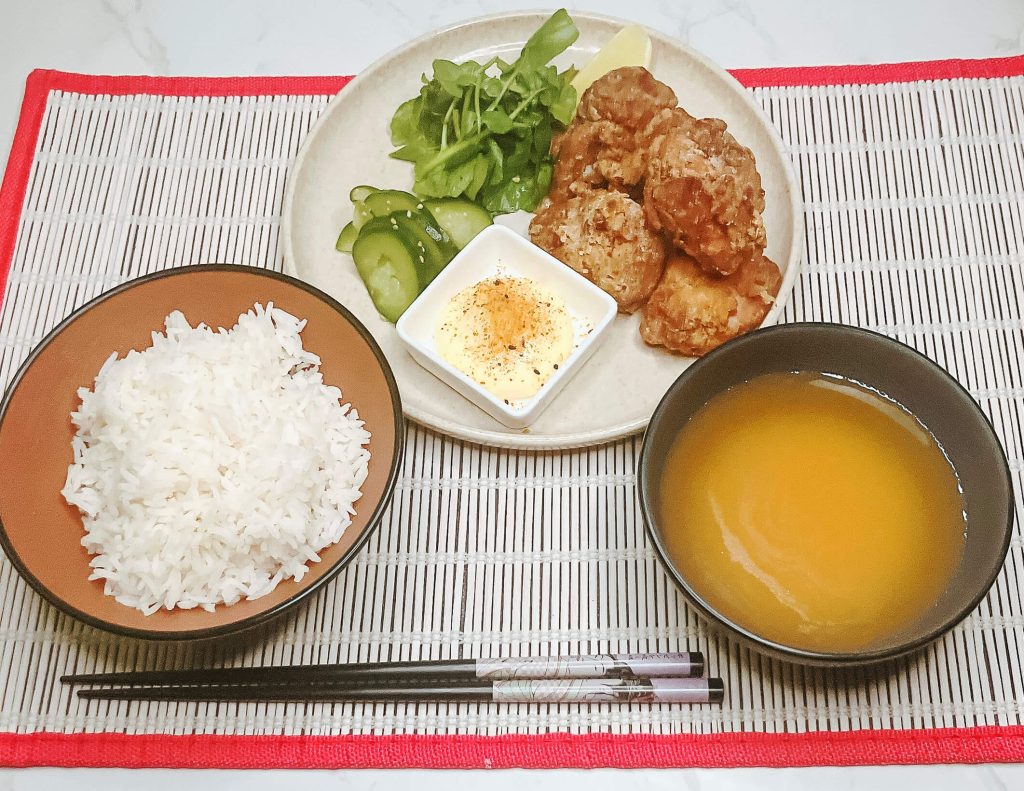
Karaage chicken served in a classic Japanese teishoku set with rice, miso soup, and pickles.
In Japan, there isn’t just one “authentic” karaage — there are a million recipes. Some lean on ginger and garlic, some are lighter, and some even marinate the chicken in mayonnaise (a very common home-cooking trick). That’s the beauty of karaage: it’s endlessly adaptable, and every family or shop has their own version.
After testing different cuts, coatings, and cooking methods, here’s what I’ve learned:
- Flour/Starch: Potato, rice, or a mix — the difference is subtle. Pick what you like or what you have.
- Cuts: Thigh is the classic, breast still works if cut chunky (40–50 g) and marinated well, tenderloin is delicate, and wing has great texture.
- Cooking: Deep-fry has the edge in crunch, but the air fryer is cleaner, easier, and practical for everyday cooking.
This recipe for air fryer karaage Chicken with Quick Cucumber Pickles delivers the same soy–ginger flavor and light, crisp crust I grew up eating in Japan — from bento boxes to teishoku sets and weeknight dinners. Later, when I ran my café in Sydney, karaage was a regular special. I served it with potato salad and a homemade miso chili jam — proof that sides are flexible too: lemon, pickles, watercress, or even a simple potato salad all work beautifully.
At its core, karaage is Japanese comfort food. There’s no single “right” way — just your way.
Extra Chefs note
When I ran my café in Sydney, karaage was a regular special. I kept the marinade lighter because I paired the chicken with a strong-flavored homemade miso chili jam. To get the right texture, I used mid wing lollipop — full of skin and collagen for juiciness, but easy to eat.
The chicken was dipped in egg white, dusted with a potato + rice flour mix, and left uncovered overnight in the fridge so the coating could dry. For service, I deep-fried in two stages: first at 160 °C / 320 °F until just cooked, then again at 200 °C / 390 °F for a couple of minutes until golden and crisp.
Air Fryer Karaage Chicken with Quick Cucumber Pickles
Equipment
- 1 air fryer for cooking karaage (390–465 °F / 200–240 °C)
- 3 mixing bowls for marinade, flour coating, and cucumber pickles
- 1 Tongs
- 1 chefs knife
- 1 Cutting Board
- 1 Grater For ginger and garlic
- 1 strainer
- 1 scale
Ingredients
For the Karaage Chicken Marinade
- 800 g chicken thighs breast, tenderloin, or wings (cut into 40–50 g chunks)
- 24 g ginger grated
- 20 g garlic grated
- 24 g tamari or soy sauce (≈ 1 ½ tbsp)
- 24 g sake ≈ 1 ½ tbsp
- 4 g salt ≈ ¾ tsp
- 8 g sugar ≈ 1 ½ tsp
- 16 g neutral oil ≈ 1 tbsp + 1 tsp
Quick Cucumber Pickles
- 400 g cucumber ≈ 2 medium, sliced
- 8 g salt ≈ 1 ½ tsp
- 24 g rice vinegar ≈ 2 tbsp, optional
- 8 g sesame oil ≈ 2 tsp
- 8 g toasted sesame seeds ≈ 2 tsp
For the Coating
- 40 g potato starch
- 80 g rice flour
For Serving (Optional)
- Lemon wedges
- Fresh watercress optional
- Japanese salt and pepper S&B Brand
Instructions
Karaage Chicken
- Trim chicken thighs (or other cuts) and cut into 40–50 g bite-sized pieces.
- In a bowl, combine grated ginger, grated garlic, tamari (or soy), sake, salt, sugar, and oil. Add chicken and toss until coated.
- Marinate for 15–30 minutes in the refrigerator.
- Mix potato starch and rice flour in a shallow bowl. Coat chicken pieces lightly in flour mix (1st coat), shake off excess, then rest 5–10 minutes.
- Coat again (2nd coat) for extra crispness. Place on a tray in a single layer.
- Preheat air fryer to 200 °C / 390 °F. Lightly oil the basket.
- Air fry chicken 8–10 minutes, flipping halfway. Rest 2–3 minutes.
- Increase heat to 240 °C / 465 °F and air fry another 3 + 2 minutes until golden and crisp.
- If your air fryer doesn’t reach 240 °C, extend the cooking time until the chicken is deep golden.
- In all cases, cook until the chicken reaches an internal temperature of 165 °F / 74 °C.
Quick Cucumber Pickles (Asazuke-style)
- Slice cucumber into thin rounds or half-moons.
- Toss with salt in a bowl and leave for 10 minutes to draw out water.
- Gently squeeze cucumber to remove excess liquid.
- Add sesame oil, sesame seeds, and rice vinegar (if using). Mix well.
Assemble & Serve
- Toss hot karaage lightly with Japanese salt & pepper for extra umami.
- Arrange hot karaage on a serving plate.
- Add a side of cucumber pickles.
- Garnish with lemon wedges and fresh watercress (optional).
- Serve immediately while chicken is crisp.
Notes
Recipe Notes
- Deep-Fry Method (Traditional): Fry chicken at 160 °C / 320 °F for 3–4 minutes until just cooked. Rest 3–5 minutes, then fry again at 185–190 °C / 365–375 °F for 45–75 seconds until golden and crisp.
- Serving Ideas: Karaage is delicious with lemon wedges and watercress. You can serve it as part of a teishoku meal with rice and miso soup, pair it with Japanese Fried Rice, or even use it in sandwiches and rice bowls.
- Optional Dipping Sauces: See blog post for 5 dipping sauce recipes — shichimi mayo, oroshi ponzu, sweet chili sour cream, wasabi sour cream, and sambal chili mayo.
- Cuts & Coatings: Thigh is classic, breast works if cut chunky, tenderloin is delicate, and wings give great texture. Potato starch is traditional, rice flour adds crunch, and plain flour is a good fallback — use what you have.
- Chef’s Tip: For a truly Japanese taste, toss the karaage in Japanese salt & pepper (shio kosho) while it’s still hot. This simple seasoning is a classic touch you’ll find in izakaya pubs across Japan — it sharpens the flavor, boosts umami, and makes the chicken irresistibly tasty
👉 Thanks for visiting! If you try this recipe, I’d love to hear how it turned out.
Leave a comment or tag me on Instagram @seasonedwithflavor — it makes my day!